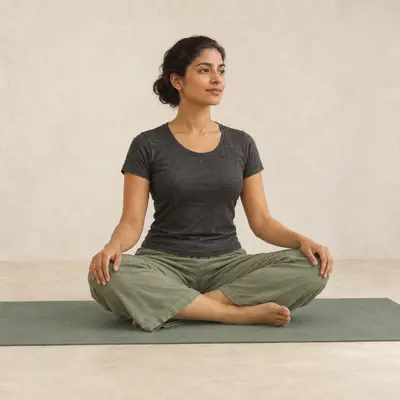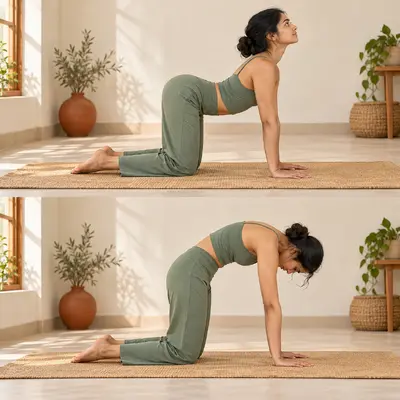
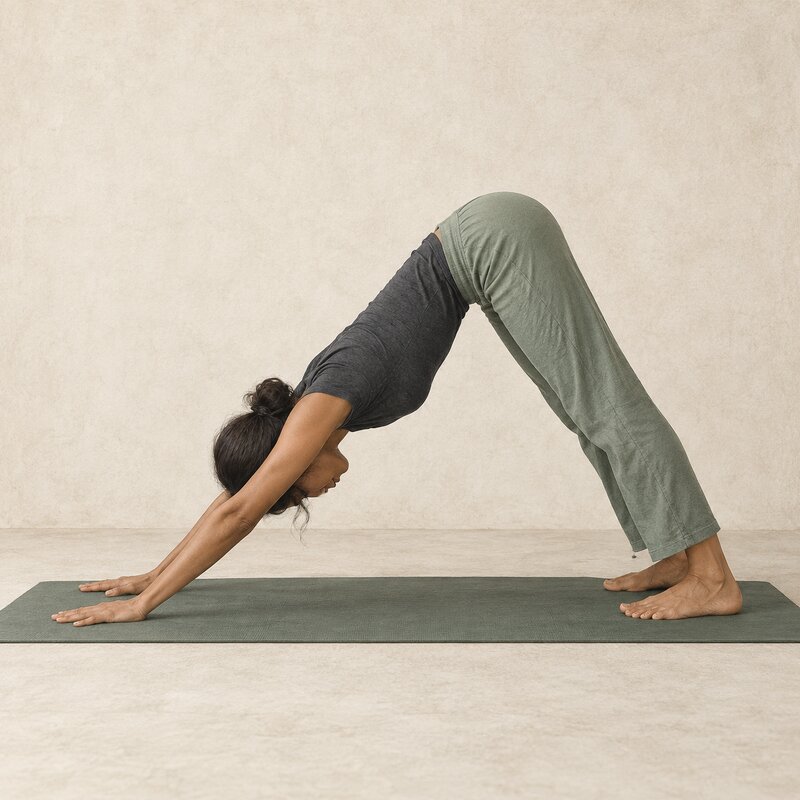
10min
Mobility
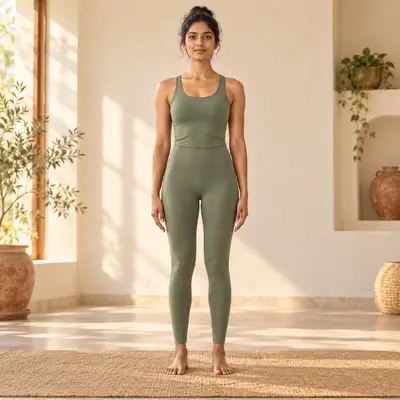
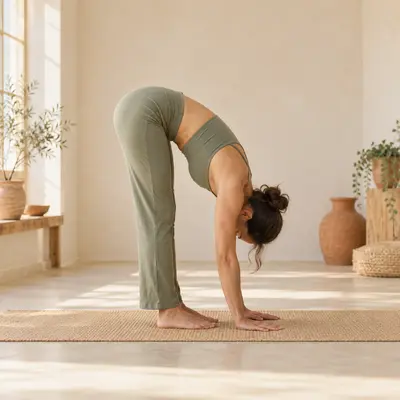
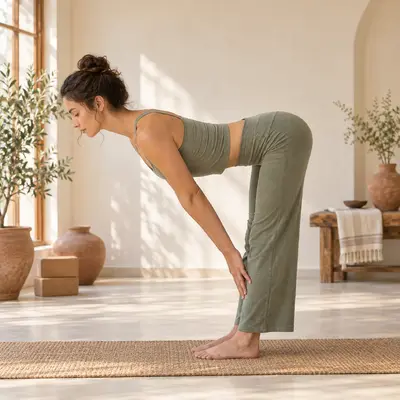
Vinyasa: Find Your Rhythm
A short slow flow linking folds, a knee-supported transition and standing poses.
Beginner · 14 poses
VinyāsaSay it: vin-YAH-sah
A flowing, breath-led style that links poses into continuous sequences — energising, creative and different every class.
Vinyasa is the style most people picture when they think of a modern yoga class: a smooth, rhythmic flow where one pose melts into the next, each movement carried by the breath. Because the sequence changes from teacher to teacher and class to class, no two sessions feel quite the same.
Vinyasa yoga links poses into a smooth, continuous flow, with each movement matched to an inhale or an exhale. Sequences change from class to class.
Vinyāsa is often translated as ‘to place in a special way’. The idea of linking breath and movement was central to the teaching of T. Krishnamacharya in Mysore in the early twentieth century, and it was carried forward by his students — including K. Pattabhi Jois, who developed Ashtanga Vinyasa. From the 1980s, teachers in the West began creating freer ‘flow’ classes that kept the breath-linked movement but dropped the fixed sequence. Today ‘vinyasa’ and ‘flow’ are among the most common labels on studio timetables.
A flowing, rhythmic class that builds heat, often to music, with sun salutations and creative sequences.
Pace: Continuous — one movement for each inhale or exhale, with few pauses.
Vinyasa combines strength, flexibility and cardiovascular work in one session. Moving continuously raises the heart rate, and the steady breath helps keep attention in the present. Many people find the rhythm meditative once they know the sequences.
Grew out of the teaching of T. Krishnamacharya and the Ashtanga method in the twentieth century; sequences vary freely from teacher to teacher.
A short slow flow linking folds, a knee-supported transition and standing poses.
Explore both sides through lunges and Warriors, then slow down with floor work.
A fuller slow flow with a repeated standing passage, balance and a gentle floor finish.
The pace of vinyasa can tempt you to rush. Keep the breath smooth, use knee-down options in plank and chaturanga, and rest whenever you need. Repetitive weight-bearing on the hands can irritate wrists and shoulders, so build up slowly.
Educational guidance, not medical advice. Classes vary widely between teachers — ask about the level and pace before you join.
Yes. A typical class builds strength and raises your heart rate, especially in faster or ‘power’ flows.
Yes, in a class designed for beginners. Learn the main poses first in a hatha or slow-flow class if you find a regular class too fast.
Teachers often use ‘take a vinyasa’ to mean a short linking sequence: plank, chaturanga, upward-facing dog and downward-facing dog.
No. Ashtanga follows the same set sequence every time; vinyasa sequences change from class to class.