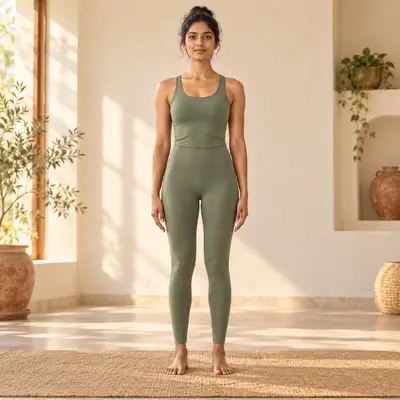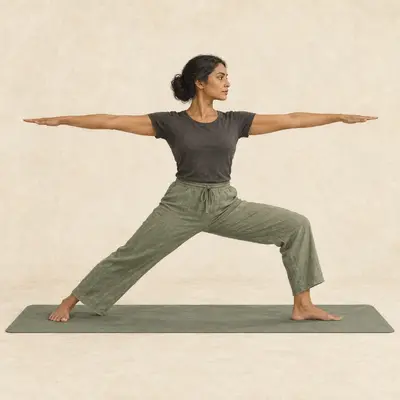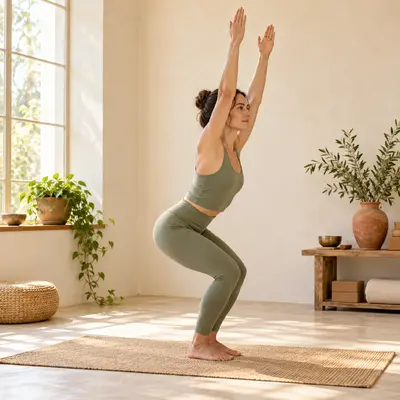
High Lunge
High Lunge challenges strength and balance while lengthening the hip flexors. A slightly wider stance makes it much more stable.
- Level
- Intermediate
- Hold
- 5–8 breaths per side
- Focus
- Strength and balance in a lunge
- Steps
- 6 cues · ~1 min

- Feet on train tracks, not a tightrope
- Back heel reaches back
- Ribs in, arms up
Step by step
How to do High Lunge
StartBegin in Downward Dog.
- 1
Step the right foot forward between the hands.
- 2
Keep the back heel lifted, back leg long and strong.
- 3
Bend the front knee toward 90°, knee over ankle.
- 4
Feet roughly hip-width apart, like on train tracks.
- 5
Inhale and lift the torso, arms reaching overhead.
- 6
Draw the lower ribs in and lengthen the tailbone down.
- ↩
Coming out. Lower the hands to the floor and step back to Downward Dog; repeat on the other side.
Breath
Steady breathing; exhale to sink deeper.
Focus
Strength and balance in a lunge
Why practise it
Strengthens legs, builds balance and stretches the hip flexors.
Alignment
Cues & common mistakes
Aim for Hips square forward, back leg active, torso stacked above hips.
Teacher’s cues
- “Feet on train tracks, not a tightrope”
- “Back heel reaches back”
- “Ribs in, arms up”
Watch out for
Narrow stance causing wobbling and overarching the lower back.
Make it yours
Easier, harder, supported
Lower the back knee (Low Lunge) or keep hands on hips.
- Twisting High Lunge
- Hands at heart
- Blocks under hands
In a sequence
Where it fits in a flow
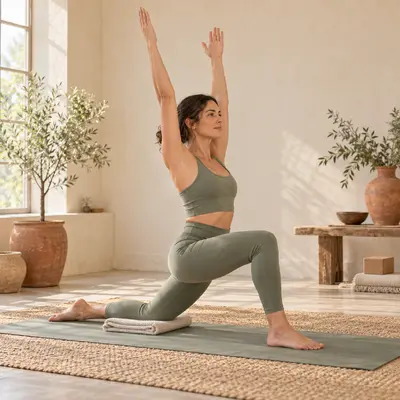 BeforeLow Lunge
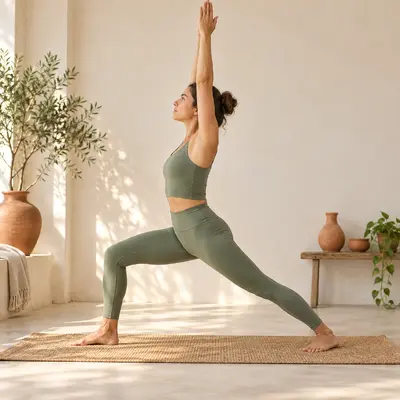 This poseHigh Lunge
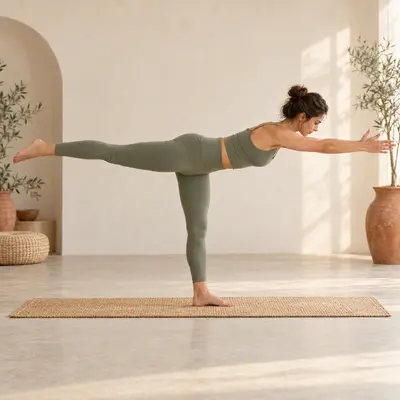 AfterWarrior III
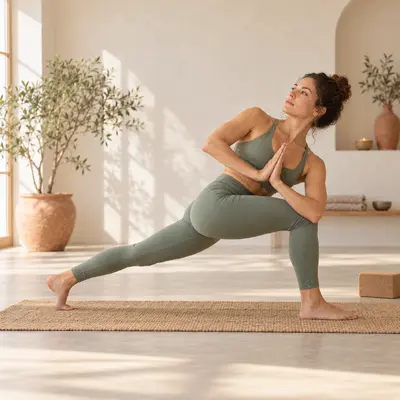 AfterRevolved Side Angle
Good to know
Questions
High Lunge vs Warrior I — what's the difference?
In High Lunge the back heel is lifted; in Warrior I the back foot is flat and turned out.
Ashwa Sanchalana is the 'equestrian' lunge from Sun Salutation; this is its raised version.
What helps
Props that make this easier
- Non-slip yoga mat A 4–6 mm mat with good grip makes standing poses steadier. View on Amazon
- Cork yoga block Brings the floor closer in forward folds and supported poses. View on Amazon
- Cotton yoga strap Extends your reach in hamstring and shoulder stretches. View on Amazon
As an Amazon Associate, YogiSoul earns from qualifying purchases. Links open Amazon in your country’s store.
Keep exploring