वीरभद्रासन १
Warrior I
Warrior I combines strength in the legs with lift through the torso. A wider stance width (not just length) makes squaring the hips more comfortable.

- Hold
- 5–8 breaths per side
- Level
- Beginner
- Family
- Standing, standing
- Focus
- Leg strength and upward lift
- Works
- Legs
- Hip flexors
- Shoulders
- You’ll need
- Wall for back heel
- Found in
- Hatha, Gentle
- “Ground the back heel”
- “Hips point forward”
- “Lift from the waist”
Step by step
How to do Warrior I
StartStand in Mountain Pose.
- 1
Step the left foot back about a metre, turning it out 30–45°.
- 2
Keep feet hip-width apart for stability.
- 3
Square the hips toward the front of the mat as much as comfortable.
- 4
Bend the front knee over the ankle.
- 5
Press the back heel down firmly.
- 6
Inhale and raise the arms overhead, shoulders soft.
- Out
Coming out. Straighten the front leg, step forward to Mountain Pose and change sides.
Breath
Full, steady breaths; lift through the chest on inhales.
Focus
Leg strength and upward lift
Why practise it
Strengthens legs and back, stretches hip flexors and calves, builds focus.
Go deeper
Warrior I: what to know
Width matters more than length
Warrior I asks the hips to face forward while the back heel is down, which is hard if the feet are on a tightrope. Step the feet about hip-width apart, as if on two train tracks, rather than heel to heel. A slightly shorter stance also helps. The hips will rarely be perfectly square; turning them as far forward as is comfortable, without the back knee collapsing, is enough.
How to do Warrior I
- From Mountain Pose, step the left foot back about a leg’s length, keeping the feet hip-width apart
- Turn the back foot out about 45 degrees and press the outer edge of the back heel down
- Bend the front knee towards 90 degrees, with the knee over the ankle
- Draw the hips towards facing the front, and lengthen the tailbone down so the lower back does not arch
- Lift the arms overhead, shoulder-width apart, with the shoulders relaxed
- Hold for 5 to 8 breaths, then step forward and switch sides
Warrior I vs Warrior II vs High Lunge
- Warrior I: back heel down, hips and chest facing forward, arms up
- Warrior II: back foot parallel to the back of the mat, hips and chest open to the side, arms out
- High Lunge: back heel lifted, hips facing forward; easier on the back ankle and hips
Making it work for you
If the back heel will not stay down, lift it and practise High Lunge, or shorten the stance. Place the hands on the hips or at the heart if the shoulders are tight or tired. Keep the front knee bend shallower with knee pain, and keep the gaze forward rather than up if you have neck problems.
Alignment
Cues & common mistakes
Aim for Front knee over ankle; back leg straight; pelvis neutral; arms in line with ears.
Teacher’s cues
- “Ground the back heel”
- “Hips point forward”
- “Lift from the waist”
Watch out for
Narrow stance forcing the hips to twist, and arching the lower back.
Make it yours
Easier, harder, supported
Shorter stance, wider feet, hands on hips.
- Humble Warrior
- Arms in cactus shape
- Wall for back heel
In a sequence
Where it fits in a flow
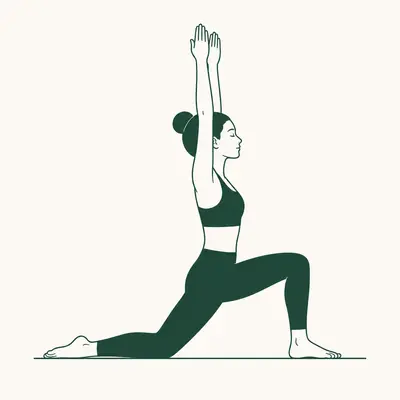 BeforeLow Lunge
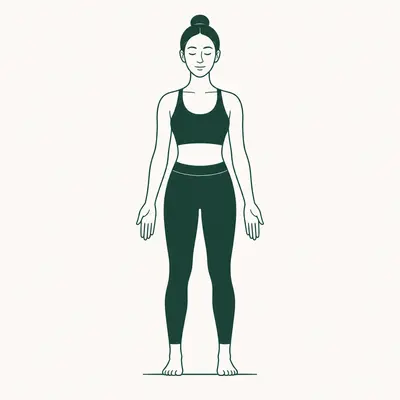 BeforeMountain Pose
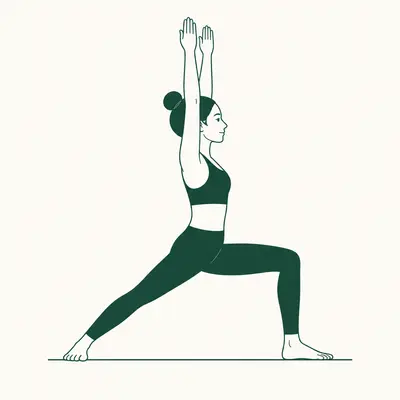 This poseWarrior I
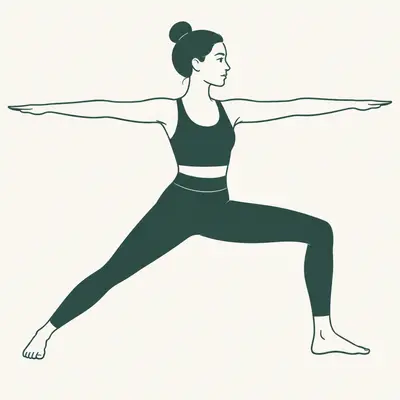 AfterWarrior II
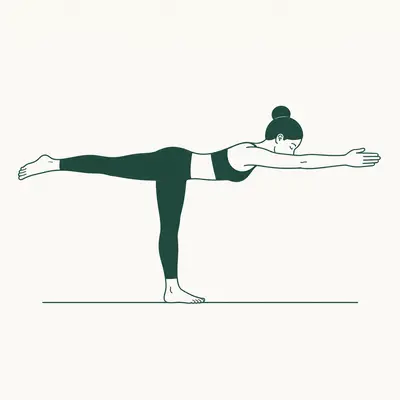 AfterWarrior III
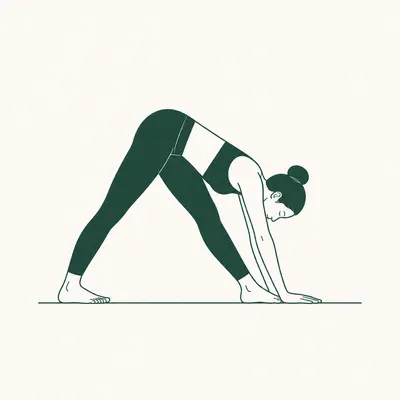 AfterPyramid Pose
Good to know
Questions
What is Warrior 1 good for?
Strengthening the legs, glutes and back, and stretching the hip flexors and calves of the back leg.
Should my hips be square in Warrior 1?
Aim to turn them towards the front, but most bodies cannot square fully with the heel down. A wider stance helps.
What is the difference between Warrior 1 and Warrior 2?
In Warrior 1 the hips and chest face forward with the arms up; in Warrior 2 they open to the side with the arms out.
How long should I hold Warrior 1?
5 to 8 breaths per side, building to 30 to 60 seconds for strength.
Why does my back foot hurt in Warrior 1?
The ankle may be tight or the stance too long. Shorten the stance, turn the back foot out more or lift the back heel into High Lunge.
The first of the three warrior poses popularised in 20th-century hatha.
What helps
Props that make this easier
- Non-slip yoga mat A 4–6 mm mat with good grip makes standing poses steadier. View on Amazon
- Cork yoga block Brings the floor closer in forward folds and supported poses. View on Amazon
- Cotton yoga strap Extends your reach in hamstring and shoulder stretches. View on Amazon
As an Amazon Associate, YogiSoul earns from qualifying purchases. Links open Amazon in your country’s store.
More standing poses
All standing poses
Mountain Pose
Tadasana

Warrior II
Virabhadrasana II

Chair Pose
Utkatasana