Chair Pose
Utkatasana means 'fierce' or 'powerful' pose. It strengthens the legs and builds heat, and appears in Sun Salutation B.
- Level
- Beginner
- Hold
- 5–8 breaths
- Focus
- Leg and core strength
- Steps
- 7 cues · ~1 min

- Sit back, not down
- Weight in the heels
- Ribs knit in
Step by step
How to do Chair Pose
StartStand in Mountain Pose with feet together or hip-width apart.
- 1
Stand with feet together or hip-width apart.
- 2
Inhale and raise the arms overhead, palms facing each other.
- 3
Exhale and bend the knees, sitting the hips back as if onto a chair.
- 4
Shift weight into the heels so you could lift the toes.
- 5
Keep the knees behind the toes and pointing straight ahead.
- 6
Lengthen the torso forward slightly, ribs drawing in.
- 7
Hold, breathing steadily.
- ↩
Coming out. Inhale, press through the feet to stand; lower the arms to Mountain Pose.
Breath
Steady breaths; it is common to want to hold the breath here, so keep it flowing.
Focus
Leg and core strength
Why practise it
Strengthens thighs, glutes and ankles, builds heat and stamina.
Alignment
Cues & common mistakes
Aim for Weight in the heels, knees over ankles, long spine angled forward, arms in line with ears.
Teacher’s cues
- “Sit back, not down”
- “Weight in the heels”
- “Ribs knit in”
Watch out for
Knees shooting forward past toes, overarching the lower back and lifting the shoulders.
Make it yours
Easier, harder, supported
Hands on hips or at the heart; smaller knee bend; back against a wall.
- Revolved Chair (twist)
- Block squeeze between thighs
- Block between thighs
- Wall behind you
In a sequence
Where it fits in a flow
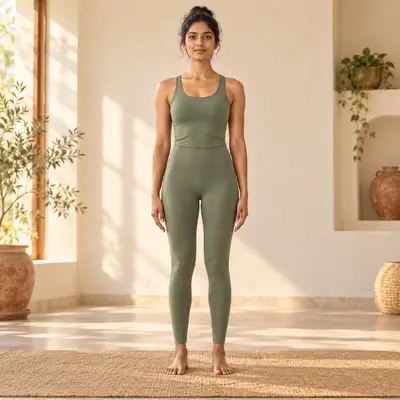 BeforeMountain Pose
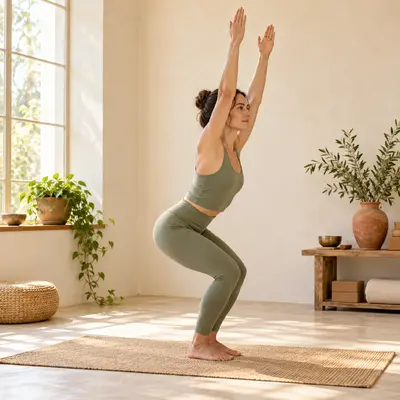 This poseChair Pose
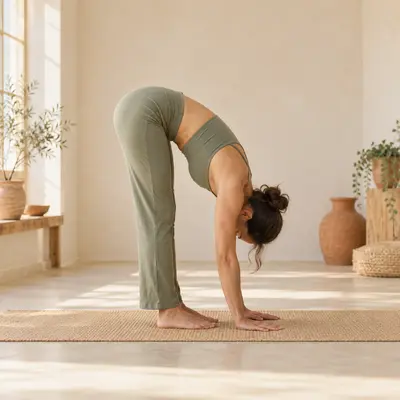 AfterStanding Forward Fold
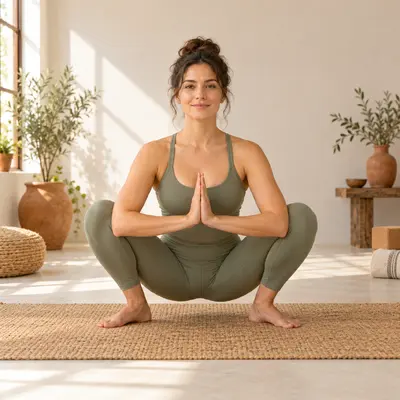 AfterGarland Pose
Good to know
Questions
Why is it called Fierce Pose?
Utkata translates as powerful or fierce, describing the effort the pose demands.
Part of Sun Salutation B in the Ashtanga system.
What helps
Props that make this easier
- Non-slip yoga mat A 4–6 mm mat with good grip makes standing poses steadier. View on Amazon
- Cork yoga block Brings the floor closer in forward folds and supported poses. View on Amazon
- Cotton yoga strap Extends your reach in hamstring and shoulder stretches. View on Amazon
As an Amazon Associate, YogiSoul earns from qualifying purchases. Links open Amazon in your country’s store.