
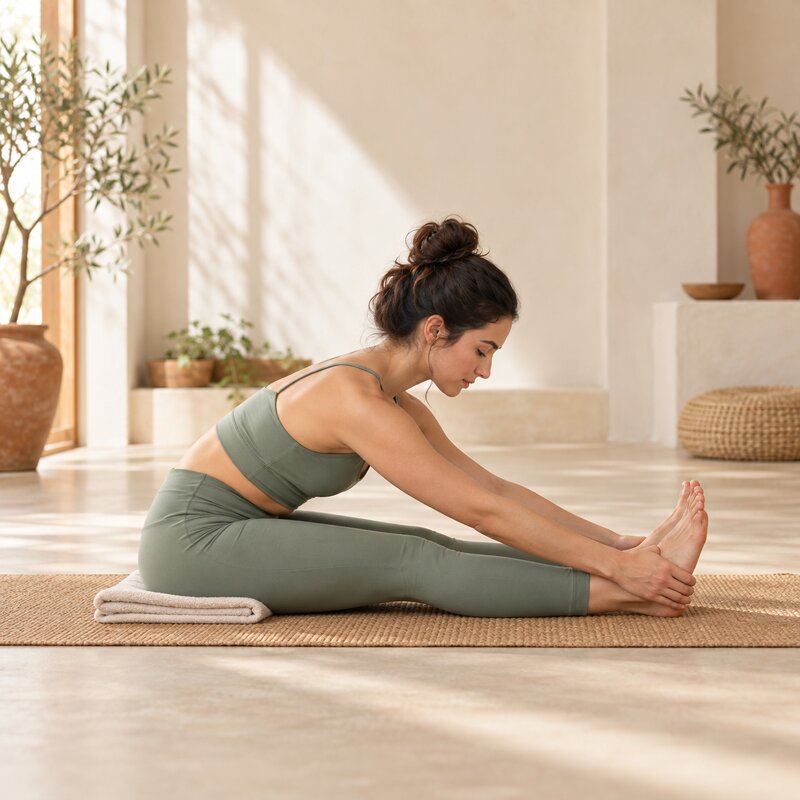
10min
Mobility
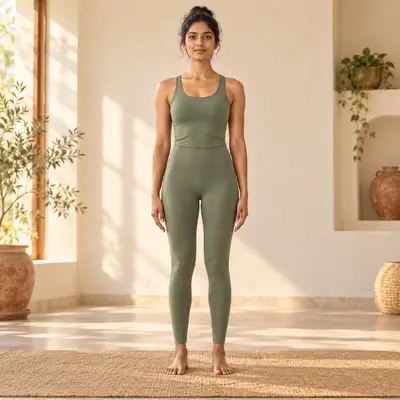
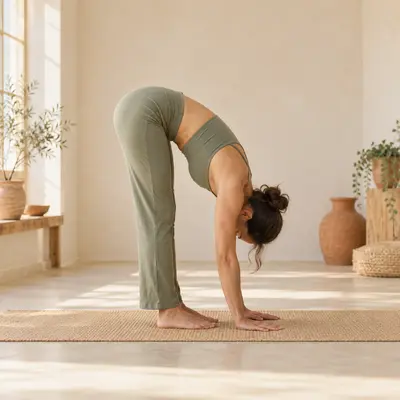
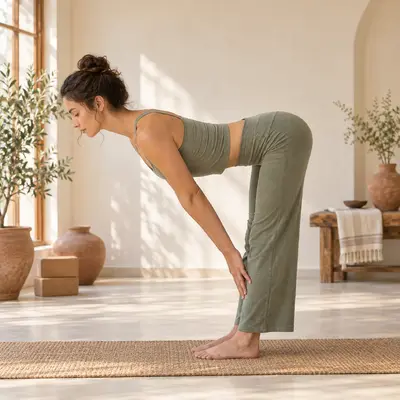
Ashtanga Preparation: Breath and Folds
Prepare for learning Ashtanga with a repeated standing pattern, simple seated work and rest.
Beginner · 11 poses
AṣṭāṅgaSay it: ash-TAHNG-uh
A disciplined, set sequence of poses linked by breath and practised the same way every time — demanding, traditional and deeply rhythmic.
Ashtanga is yoga with a fixed map. Every practice follows the same sequence of poses in the same order, linked by breath and counted movements. That repetition is the point: by practising the same series again and again, you can see your own progress clearly and the practice becomes a moving meditation.
Ashtanga yoga is a set sequence of poses practised in the same order every time, linked by breath, with a fixed number of breaths in each pose. Students learn the sequence gradually.
Aṣṭāṅga means ‘eight limbs’, a reference to the eightfold path described in Patanjali’s Yoga Sutras — ethics, self-discipline, posture, breath, withdrawal of the senses, concentration, meditation and absorption. The physical method known as Ashtanga Vinyasa was developed by K. Pattabhi Jois, a student of T. Krishnamacharya, who taught in Mysore from the 1940s. It reached the West in the 1970s and inspired many later styles, including vinyasa and power yoga.
Either a ‘led’ class following the teacher’s count, or Mysore style, where each student practises the sequence at their own pace with individual help.
Pace: Brisk and continuous, following a fixed count of breaths for each pose and transition.
Ashtanga builds strength, stamina and flexibility together. The combination of ujjayi breathing, bandhas (energy locks) and drishti (a fixed gaze point) — known together as tristhana — trains concentration. Because the sequence never changes, it can be practised at home once learned.
The method taught by K. Pattabhi Jois in Mysore, India. The name borrows the ‘eight limbs’ of Patanjali’s Yoga Sutras.
Prepare for learning Ashtanga with a repeated standing pattern, simple seated work and rest.
Repeat an adapted standing-to-floor passage, then explore Triangle and a seated fold.
A repeatable preparation with adapted transitions, standing shapes and an uncomplicated finish.
Ashtanga is physically demanding. Respect your limits in deep forward folds, binds and lotus — forcing them is a common cause of knee and hamstring injuries. Learn the sequence gradually with a qualified teacher, and take rest days.
Educational guidance, not medical advice. Classes vary widely between teachers — ask about the level and pace before you join.
A self-paced class where each student practises their own part of the sequence while the teacher gives individual help. It is named after the city where Pattabhi Jois taught.
A full Primary Series usually takes about ninety minutes. Beginners practise a shorter version and add poses over time.
It is often more demanding because the full sequence is long and includes deep poses. But beginners can start with just part of it.
Traditionally, practice is skipped on full and new moon days, and one day each week. Many practitioners keep this as a regular rest rhythm.
No. The linked sessions are original preparation exercises with adapted transitions. Learn the traditional order and breath count gradually with an Ashtanga teacher.