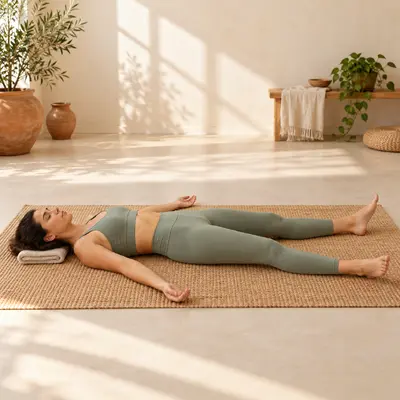
You need very little to practise. These are the few props that genuinely make poses, rest and meditation easier, with what each one is for and what to look for when you buy.
Only props that earn a place in a home practice
Plain advice on what to look for, and when to skip
Each link opens Amazon in your own country
As an Amazon Associate, YogiSoul earns from qualifying purchases.
Start here
Start with a kit
Not sure where to begin? Pick the set that matches how you like to practise.
No. A non-slip surface is the one thing that helps from day one. Firm books, a belt and a couple of cushions cover the rest while you find out what you enjoy; buy props once you know you will use them.
How thick should a yoga mat be?
Most people do well with 4–6 mm. Thinner mats feel more stable in balancing poses; thicker mats are kinder to knees but can feel wobbly when you stand on one leg.
Cork or foam yoga block?
Cork is heavier, firmer and grippier, which suits poses where you lean weight on the block. Foam is lighter and softer, which is nice for travel and for sitting on.
Why do the buttons open different Amazon stores?
Each button opens Amazon in your own country’s store, Amazon.in in India and Amazon.com elsewhere, so you see local prices and delivery options.
Do you earn from these links?
Yes. As an Amazon Associate, YogiSoul earns from qualifying purchases at no extra cost to you. That helps keep our guides free. We only list props that genuinely make a home practice easier.
Short answers on YouTube.
Calm, one-minute explainers on practice and tradition, from Yoga Nidra to why we say Namaste.