अधो मुख श्वानासन
Downward-Facing Dog
Downward Dog is one of the most practised yoga poses, used as both a stretch and a transition. Bent knees are perfectly fine — a long spine matters more than straight legs.

- Hold
- 5–10 breaths
- Level
- Beginner
- Family
- Forward fold, inversion
- Focus
- Long spine; hamstring and shoulder opening
- Works
- Hamstrings
- Calves
- Shoulders
- Back
- You’ll need
- Blocks under hands, Rolled mat edge under heels
- Found in
- Hatha, Gentle
- “Hips up and back”
- “Press through the knuckles”
- “Bend the knees to lengthen the spine”
Step by step
How to do Downward-Facing Dog
StartBegin in Tabletop.
- 1
From Tabletop, walk the hands a palm's length forward, spread the fingers wide.
- 2
Tuck the toes under.
- 3
Exhale and lift the knees, sending the hips up and back.
- 4
Keep the knees bent at first to lengthen the spine fully.
- 5
Press the floor away, turning the upper arms outward to widen the shoulders.
- 6
Gradually straighten the legs and draw the heels toward (not necessarily to) the floor.
- 7
Let the head hang between the upper arms, neck relaxed.
- Out
Coming out. Lower the knees to the mat and sit back into Child's Pose.
Breath
Deep, slow breaths; let each exhale send the hips higher.
Focus
Long spine; hamstring and shoulder opening
Why practise it
Stretches the hamstrings, calves and the long muscles of the back, and strengthens the shoulders, arms and upper back. As a mild inversion it is often described as energising, and in a flow it is the place you return to between more demanding poses.
Go deeper
Downward-Facing Dog: what to know
What Downward Dog works
- Stretches: hamstrings, calves, Achilles tendons and the muscles along the sides of the back
- Strengthens: shoulders, arms, upper back and the muscles that hold the shoulder blades steady
- Lengthens the spine, especially when the knees are bent
Bent knees are not cheating
Most people have hamstrings that are too tight to straighten the legs and keep a long back at the same time. Bending the knees lets the pelvis tip forward so the spine can lengthen, which is the real aim of the pose. Over weeks of practice the legs straighten on their own; the heels may never reach the floor, and that is fine.
If your wrists complain
- Spread the fingers wide and press firmly through the base of the index finger and thumb
- Shift a little weight back towards the legs by bending the knees more
- Place the hands on blocks, or put a folded mat under the heel of each hand
- Try Dolphin Pose on the forearms instead
How long to hold it
In a flowing class you usually hold Downward Dog for five breaths before moving on. As a pose on its own, build up to about a minute. If you can only stay a few breaths, rest in Child’s Pose and come back to it; short, repeated holds are better than one strained one.
Downward Dog in a sequence
It is part of the classical Sun Salutation, where it links Plank or Upward Dog with the forward fold at the top of the mat. On its own, a few rounds of Tabletop to Downward Dog make a simple warm-up, and pedalling the feet (bending one knee, then the other) is a gentle way to ease into the calves.
Alignment
Cues & common mistakes
Aim for Hands shoulder-width, feet hip-width; spine long; ears in line with upper arms.
Teacher’s cues
- “Hips up and back”
- “Press through the knuckles”
- “Bend the knees to lengthen the spine”
Watch out for
Forcing the legs straight so the lower back rounds; letting the chest sink so the weight hangs in the shoulders; walking the hands too close to the feet; and gripping the floor with the heels instead of letting them move towards it.
Make it yours
Easier, harder, supported
Hands on blocks or a chair seat; keep knees bent; try Dolphin for sensitive wrists.
- Three-legged Dog
- Pedalling the feet
- Blocks under hands
- Rolled mat edge under heels
In a sequence
Where it fits in a flow
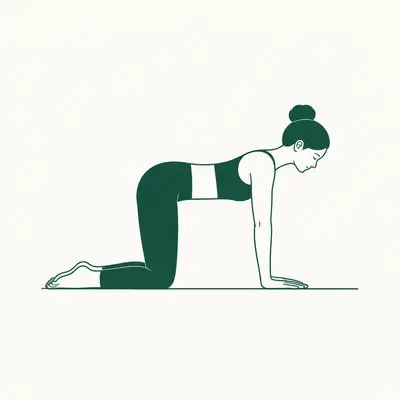 BeforeTabletop
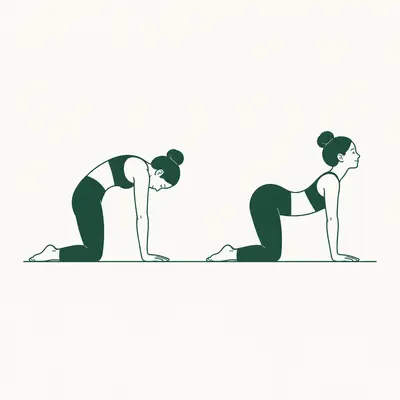 BeforeCat–Cow
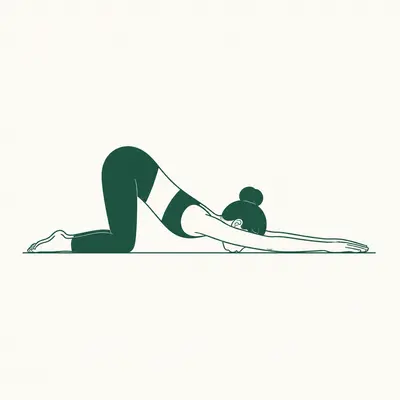 BeforeExtended Puppy
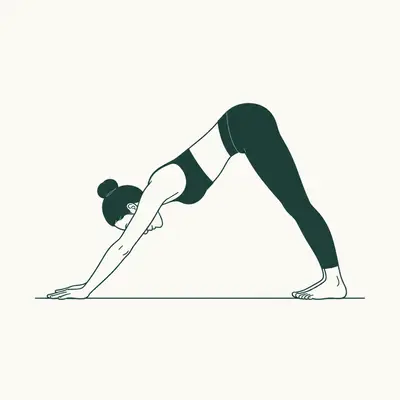 This poseDownward-Facing Dog
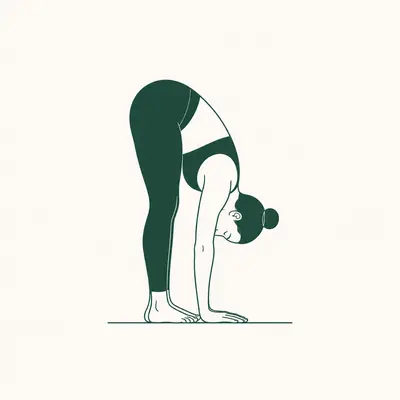 AfterStanding Forward Fold
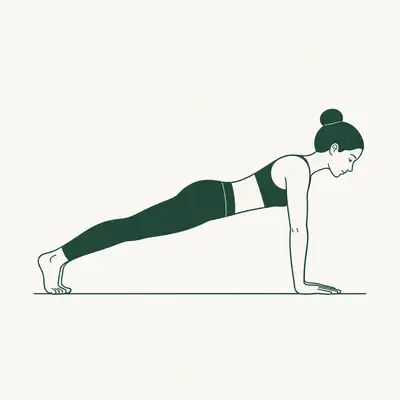 AfterPlank Pose
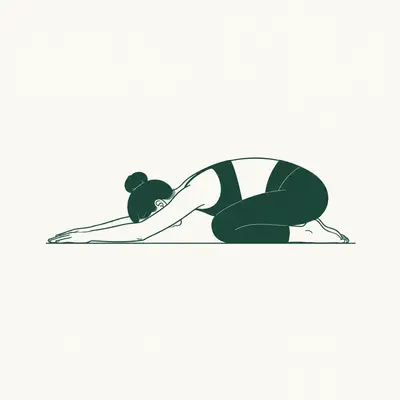 AfterChild’s Pose
Good to know
Questions
Do my heels need to touch the floor?
No. Heel height depends on your anatomy and the length of your calves; aim for a long spine first.
Is Downward Dog a resting pose?
For experienced practitioners it can feel restful, but for most people it is active. Child’s Pose is the true rest.
Why is it called Downward Dog?
It looks like the long stretch a dog makes when it wakes up. The Sanskrit name means the same: adho (downward), mukha (face), svana (dog).
Why does Downward Dog hurt my shoulders?
Usually because the chest is sinking and the weight is hanging in the shoulder joints. Bend the knees, press the floor away and widen the shoulder blades. Ease off if pain persists.
Is Downward Dog safe in pregnancy?
Many people continue it in early pregnancy. Later on, or with high blood pressure, keep the head above the heart by placing the hands on a chair. Check with your midwife or doctor.
Svana means dog; part of the classical Sun Salutation sequence.
What helps
Props that make this easier
- Non-slip yoga mat A 4–6 mm mat with good grip makes standing poses steadier. View on Amazon
- Cork yoga block Brings the floor closer in forward folds and supported poses. View on Amazon
- Cotton yoga strap Extends your reach in hamstring and shoulder stretches. View on Amazon
As an Amazon Associate, YogiSoul earns from qualifying purchases. Links open Amazon in your country’s store.
More forward fold poses
All forward fold poses
Child’s Pose
Balasana

Standing Forward Fold
Uttanasana

Half Forward Fold
Ardha Uttanasana