A Sun Salutation, or Surya Namaskar in Sanskrit, is a flowing sequence of yoga poses linked to the breath. You fold, lengthen, step back, lift your chest and return to standing, with each movement following a breath in or out. One round takes about a minute, and a few rounds make a good warm-up or a short practice on their own.
There is no single correct version. Different schools teach different sequences. This guide covers Sun Salutation A, which is common in modern classes, as well as the classical 12-step version and ways to make either one easier.
What does Surya Namaskar mean?
Sūrya means sun, and namaskāra means a respectful bow, the same root as namaste. So Surya Namaskar means "bowing to the sun".
Honouring the sun is an old practice in India, but the exact history of this sequence is debated. It became widely known in the early twentieth century, in part through Bhawanrao Pant Pratinidhi, the Raja of Aundh, who promoted it as daily exercise. Teachers such as T. Krishnamacharya and his students later shaped the versions most people practise today.
How to do Sun Salutation A
Move slowly at first, and let your breath set the pace. If a step feels rushed, take an extra breath.
- Mountain Pose. Stand tall with your feet together or hip-width apart. Breathe out.
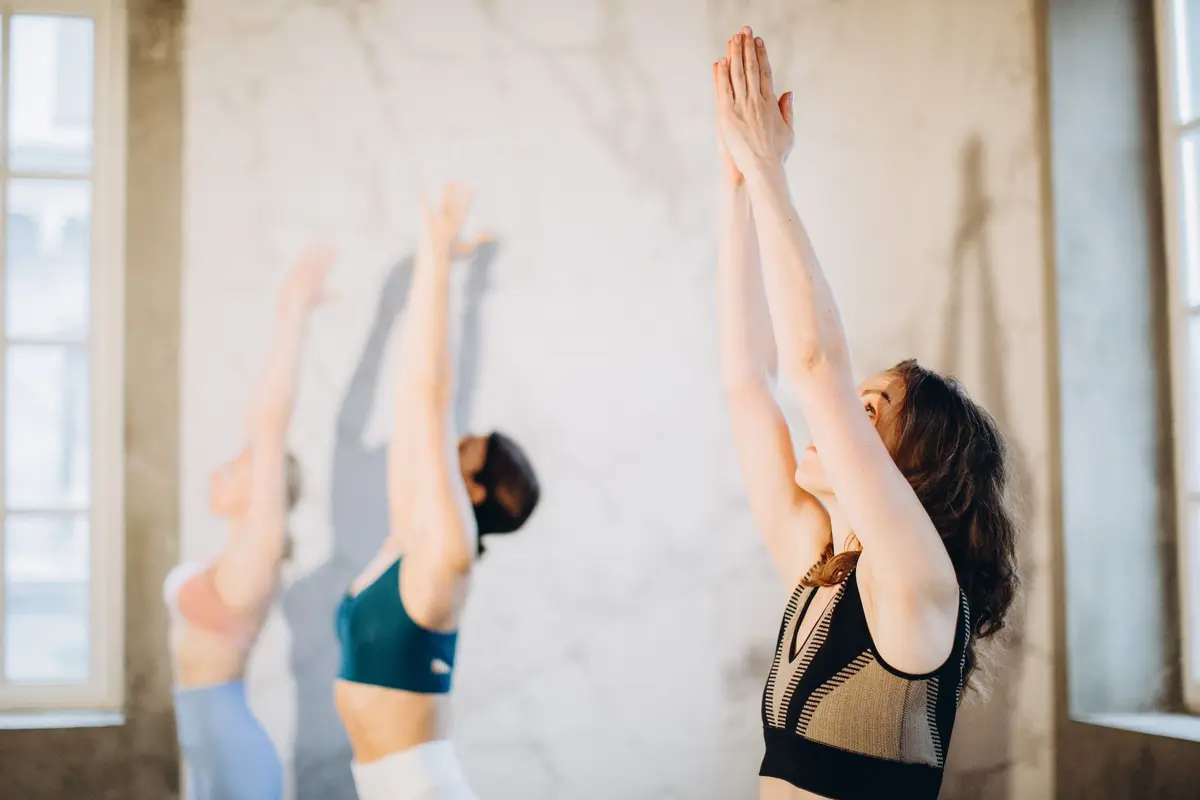
- Upward Salute. Breathing in, sweep your arms up overhead.
- Standing Forward Fold. Breathing out, hinge at your hips and fold, bending your knees as much as you need.
- Half Forward Fold. Breathing in, lift halfway with a long spine, hands on your shins or fingertips on the floor.
- Plank Pose, then lower. Breathing out, step back to Plank and lower with control. Keep your knees down if you need to.
- Cobra Pose. Breathing in, press lightly into your hands and lift your chest. Stronger students may take Upward-Facing Dog.
- Downward-Facing Dog. Breathing out, lift your hips up and back. Stay for up to five breaths.
- Half Forward Fold. Step or walk your feet to your hands. Breathing in, lift halfway.
- Standing Forward Fold. Breathing out, fold.
- Upward Salute. Breathing in, rise with a long back and reach your arms up.
- Mountain Pose. Breathing out, bring your hands to your heart or down by your sides.
That is one round. Pause for a breath or two, and begin again.
The classical 12 steps
Many traditions teach a 12-step version, in which a lunge takes the place of the step back. Each side is one half of a full round.
| Step | Pose | Breath |
|---|---|---|
| 1 | Prayer position (Pranamasana) | Out |
| 2 | Raised arms (Hasta Uttanasana) | In |
| 3 | Hand to foot fold (Padahastasana) | Out |
| 4 | Low lunge, right leg back (Ashwa Sanchalanasana) | In |
| 5 | Plank or Downward-Facing Dog | Out or hold |
| 6 | Eight-point salute (Ashtanga Namaskara), knees, chest and chin down | Out or hold |
| 7 | Cobra (Bhujangasana) | In |
| 8 | Downward-Facing Dog (Parvatasana) | Out |
| 9 | Low lunge, right foot forward | In |
| 10 | Hand to foot fold | Out |
| 11 | Raised arms | In |
| 12 | Prayer position | Out |
Next time, repeat with your left leg stepping back. The details and breathing differ from one school to another, so follow your own teacher if they teach it differently.
Easier options
- Keep your knees bent in every forward fold, so that your lower back stays long.
- Lower your knees before your chest, instead of lowering from Plank.
- Replace Cobra with a low Sphinx Pose, or simply rest on your belly for a breath.
- Rest in Child's Pose instead of Downward-Facing Dog when your wrists or shoulders need a break.
- Use blocks under your hands, to bring the floor closer.
- Use a chair. Seated arm raises, folds and gentle backbends follow the same breathing rhythm when getting to the floor is hard.
Common mistakes
- Rushing. Moving faster than your breath turns the sequence into a scramble. Slow down.
- Locking your knees in the fold. This pulls on your lower back. Bend them.
- Dropping through Plank. Letting your hips sag strains your lower back. Lower your knees instead.
- Pushing up with your hands in Cobra. Use your back muscles to lift, and keep your elbows soft.
- Looking up too sharply. Keep the back of your neck long, particularly as you reach overhead.
Benefits of Sun Salutation
Sun Salutations move most of the body in a short time. They bend the spine forward and back, stretch your legs and work your arms, shoulders and core, and they raise your heart rate, especially at a brisker pace. Many people also find that linking movement to the breath helps them feel calmer and more focused.
Studies on Surya Namaskar are generally small, so some claims go further than the evidence. A claim that it detoxifies the body, or helps you lose weight quickly on its own, should be treated with caution. As with any regular movement, the most reliable benefits tend to come with consistency.
How many rounds should you do?
| Your practice | Rounds | Pace |
|---|---|---|
| Complete beginner | 2–4 | Slow, with extra breaths |
| Regular warm-up | 4–6 | One breath per movement |
| Stronger short practice | 8–12 | Steady, resting as needed |
The tradition of 108 rounds is sometimes practised at special events, such as the seasonal changes. It is very demanding and is not a goal you need to have. Stop when your form starts to slip.
Morning is the traditional time, facing east if you can, but any time works. Practise on a mostly empty stomach if that feels better.
Who should take care
- Wrist, shoulder or lower-back problems. Use the options above, and avoid anything that causes pain.
- High blood pressure or heart problems. Move slowly, keep your head above your heart if you are told to, and check with your doctor first.
- Dizziness or low blood pressure. Rise from folds slowly, and pause if you feel lightheaded.
- Pregnancy. Widen your stance, avoid lying on your belly, and ask a qualified prenatal teacher how to adapt the sequence.
- Recent surgery or injury. Get advice from your clinician before starting.
Questions
How long does one Sun Salutation take?
About a minute at a steady pace, or longer if you stay for five breaths in Downward-Facing Dog.
Is it good to do Sun Salutations every day?
Many people do, and a few gentle rounds suit most healthy bodies. Take a rest day or choose an easier version if you feel sore.
What is the difference between Surya Namaskar A and B?
Sun Salutation B is longer and stronger. It adds Chair Pose and Warrior I to the sequence, and it asks for more strength and stamina.
Can beginners do Sun Salutations?
Yes. Start with two to four slow rounds, bend your knees and lower your knees to the floor whenever you need to.
Should I breathe through my nose?
Most teachers suggest breathing through your nose. If you run out of breath, slow down or rest for a moment.
Can Sun Salutations replace a full yoga practice?
They make a good short practice when time is limited. Adding a few standing poses, a twist and some quiet rest gives a more complete session.
Updated 4 November 2026 by the YogiSoul editorial team. Read our editorial policy and wellness policy.