बालासन
Child’s Pose
Balasana is the go-to resting pose in yoga. You can return to it whenever you need to slow your breath or take a break during practice.

- Hold
- 30 seconds–3 minutes
- Level
- Beginner
- Family
- Forward fold, kneeling
- Focus
- Rest and gentle back release
- Works
- Hips
- Lower back
- Shoulders
- You’ll need
- Bolster or pillows under torso, Blanket between hips and heels
- Found in
- Hatha, Gentle
- “Let the forehead be heavy”
- “Breathe into the back body”
- “Nothing to do here”
Step by step
How to do Child’s Pose
StartKneel on the mat with big toes touching.
- 1
Kneel with big toes together and knees together or mat-width apart.
- 2
Sit the hips back toward the heels.
- 3
Fold forward, laying the torso on or between the thighs.
- 4
Rest the forehead on the mat, a block or stacked fists.
- 5
Extend arms forward or rest them alongside the body, palms up.
- 6
Soften the shoulders and let the back widen with each breath.
- Out
Coming out. Walk the hands back toward the knees and slowly roll up to sitting, head last.
Breath
Breathe into the back of the ribs and feel the back expand on each inhale.
Focus
Rest and gentle back release
Why practise it
Calming and restful; gently stretches the lower back, hips, thighs, ankles and, with the arms forward, the shoulders and the sides of the back. It is the pose you can return to at any point in practice to slow the breath and recover.
Go deeper
Child’s Pose: what to know
Knees together or apart?
- Knees together: the belly rests on the thighs and the back rounds more, giving a deeper stretch through the lower back
- Knees wide (big toes touching): the torso sinks between the thighs, opening the hips and leaving room for the belly and chest
- Wide knees suit pregnancy, larger bodies and anyone who feels squashed with the knees together
Arms forward or by your sides
With the arms stretched forward, Child’s Pose becomes a gentle shoulder and lat stretch: press the palms lightly into the floor and let the armpits sink. With the arms resting back beside the feet, palms up, the shoulders relax completely and the pose is more restful. Use the first version as a stretch in the middle of practice and the second when you want to rest.
Child’s Pose variations
- Side stretch: walk both hands over to one side to lengthen the opposite side of the body, then switch
- Lat stretch: with knees wide, reach the arms forward and press the hips back towards the heels
- Supported: a bolster or two cushions lengthwise under the chest and head, for a fully restorative version
- Standing or chair version: fold forward over the thighs from a seated position if kneeling isn’t possible
If you can’t sit on your heels
If the hips don’t reach the heels, or the knees or ankles complain, add props rather than forcing it. A folded blanket between the hips and heels, a rolled blanket under the ankles, or padding under the knees all help. Resting the forehead on a block or on stacked fists keeps the neck relaxed if the head doesn’t reach the floor.
Breathing in Child’s Pose
Because the front of the body rests on the thighs, Child’s Pose is a natural place to feel the breath in the back of the body. As you inhale, notice the back of the ribs and the waist widening; as you exhale, let the hips sink a little more. A few slow breaths here are often enough to settle a racing heart in a busy class.
Alignment
Cues & common mistakes
Aim for Hips sink toward heels; neck relaxed with forehead supported.
Teacher’s cues
- “Let the forehead be heavy”
- “Breathe into the back body”
- “Nothing to do here”
Watch out for
Forcing the hips down when knees are uncomfortable; holding the head up and straining the neck.
Make it yours
Easier, harder, supported
Place a blanket between hips and heels or under knees. Use a bolster lengthwise under the torso for full support.
- Wide-knee Child's Pose
- Extended Puppy for more shoulder stretch
- Bolster or pillows under torso
- Blanket between hips and heels
In a sequence
Where it fits in a flow
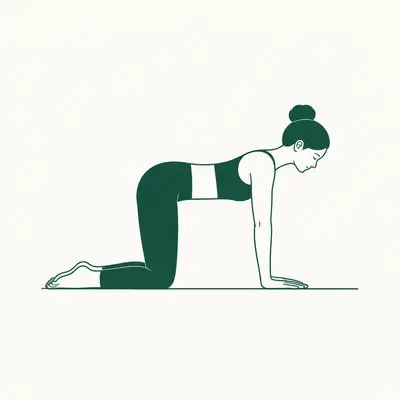 BeforeTabletop
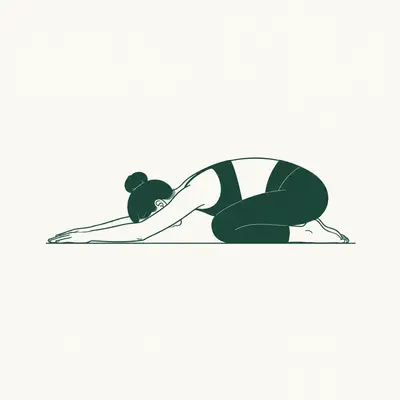 This poseChild’s Pose
- AfterTabletop
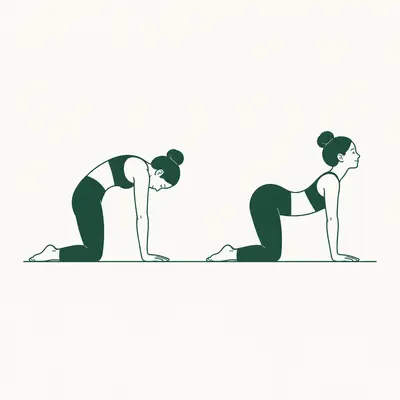 AfterCat–Cow
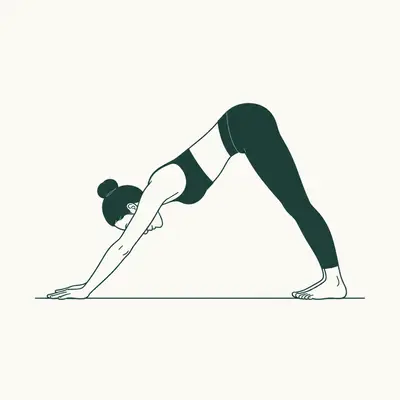 AfterDownward-Facing Dog
Good to know
Questions
Can I rest in Child’s Pose during class?
Yes. It is always available as a pause, whatever the class is doing.
How long should I hold Child’s Pose?
Anywhere from a few breaths to three minutes. Supported versions can be held for five minutes or more.
What does Child’s Pose stretch?
The lower back, hips, thighs, knees and the tops of the feet; with the arms forward, also the shoulders and the sides of the back.
Is Child’s Pose good for lower back pain?
Many people find the gentle rounding relieving. If it increases your pain, try lying on your back with knees hugged in instead, and check with a health professional.
Can Child’s Pose help with gas or bloating?
The gentle pressure of the thighs on the belly can help some people release trapped wind. Knees together gives more pressure.
Bala means child; a modern resting posture used across most styles.
What helps
Props that make this easier
- Non-slip yoga mat A 4–6 mm mat with good grip makes standing poses steadier. View on Amazon
- Cork yoga block Brings the floor closer in forward folds and supported poses. View on Amazon
- Cotton yoga strap Extends your reach in hamstring and shoulder stretches. View on Amazon
As an Amazon Associate, YogiSoul earns from qualifying purchases. Links open Amazon in your country’s store.
More forward fold poses
All forward fold poses
Downward-Facing Dog
Adho Mukha Svanasana

Standing Forward Fold
Uttanasana

Half Forward Fold
Ardha Uttanasana