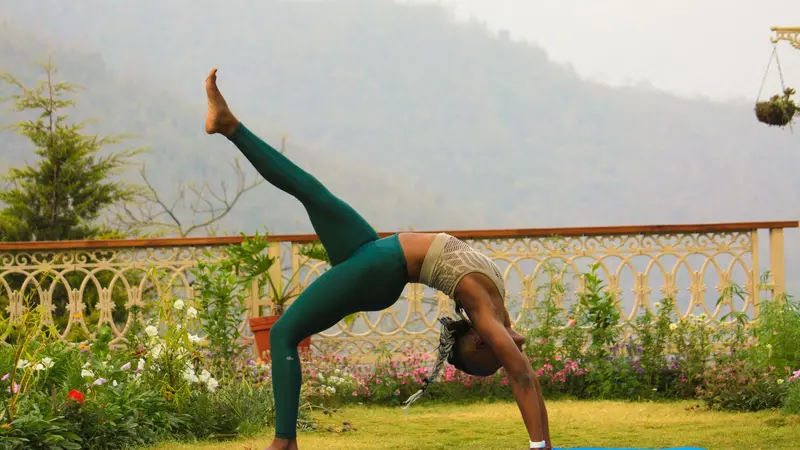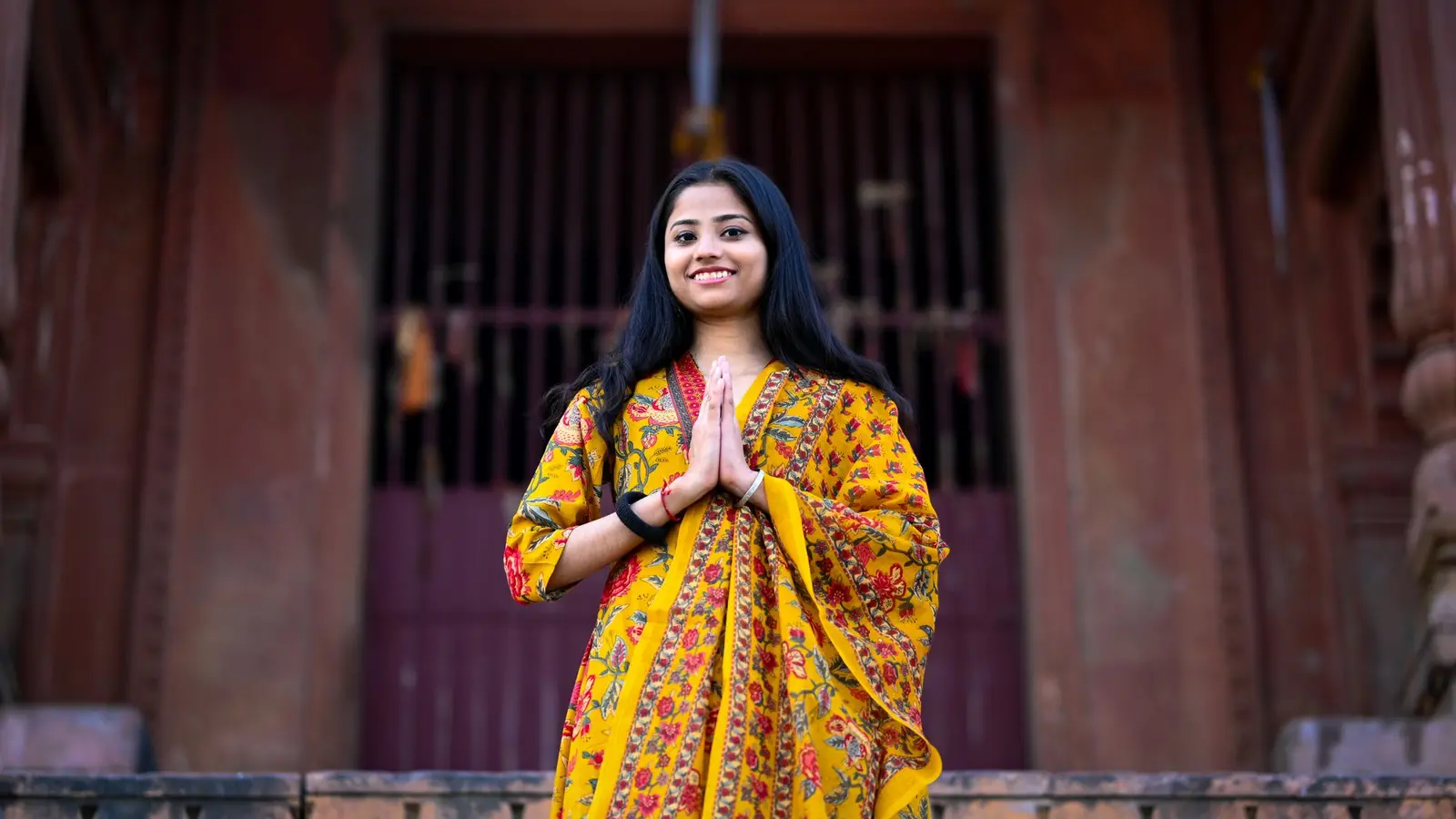
Namaste means "I bow to you". It is a respectful greeting used every day in India and Nepal to say hello and goodbye, usually with the palms pressed together in front of the chest and a slight bow of the head. In yoga classes around the world, teachers and students often say namaste at the end of practice as a sign of respect and gratitude.
The word comes from Sanskrit. It is short, simple and polite, and you can say it to anyone. This guide explains where it comes from, what it means in everyday life and in yoga, how to pronounce it, and how to use it with care.
What does namaste mean?
Namaste is made of two Sanskrit words:
| Part | Sanskrit | Meaning |
|---|---|---|
| Namaḥ | नमः | a bow, a respectful salutation |
| Te | ते | to you |
When the two words join, the sounds blend into one word: namaste (नमस्ते). Literally, it means "a bow to you" or "I bow to you". The bow is a sign of respect. It says, in effect, "I see you, and I greet you with respect."
In Hindi, Nepali, Marathi and many other languages of South Asia, namaste is simply the ordinary, polite way to greet someone. It is not religious in itself, although it is also used in worship, where a person bows to a deity in the same way.
"The divine in me honours the divine in you"
In Western yoga classes you may hear namaste translated as "the divine in me honours the divine in you" or "the light in me sees the light in you". These are beautiful ideas, but they are not a literal translation. They are interpretations that grew up as yoga spread to Europe and North America.
There is a real idea behind them. Many Indian traditions hold that the same consciousness lives in every being, so bowing to another person is also a way of honouring what is sacred in them. If that meaning speaks to you, you can hold it in mind as you bow. Just remember that, for most people who say namaste every day, it simply means a warm and respectful hello.
Namaste and namaskar
Namaskar (नमस्कार, namaskāra) comes from the same root: namaḥ plus kāra, "doing". It means "the act of bowing" and is used as a greeting in much the same way as namaste. In many places, namaskar sounds a little more formal. You will also recognise the word in Surya Namaskar, the sun salutation, which is a sequence of bows to the sun.
How to do the namaste gesture
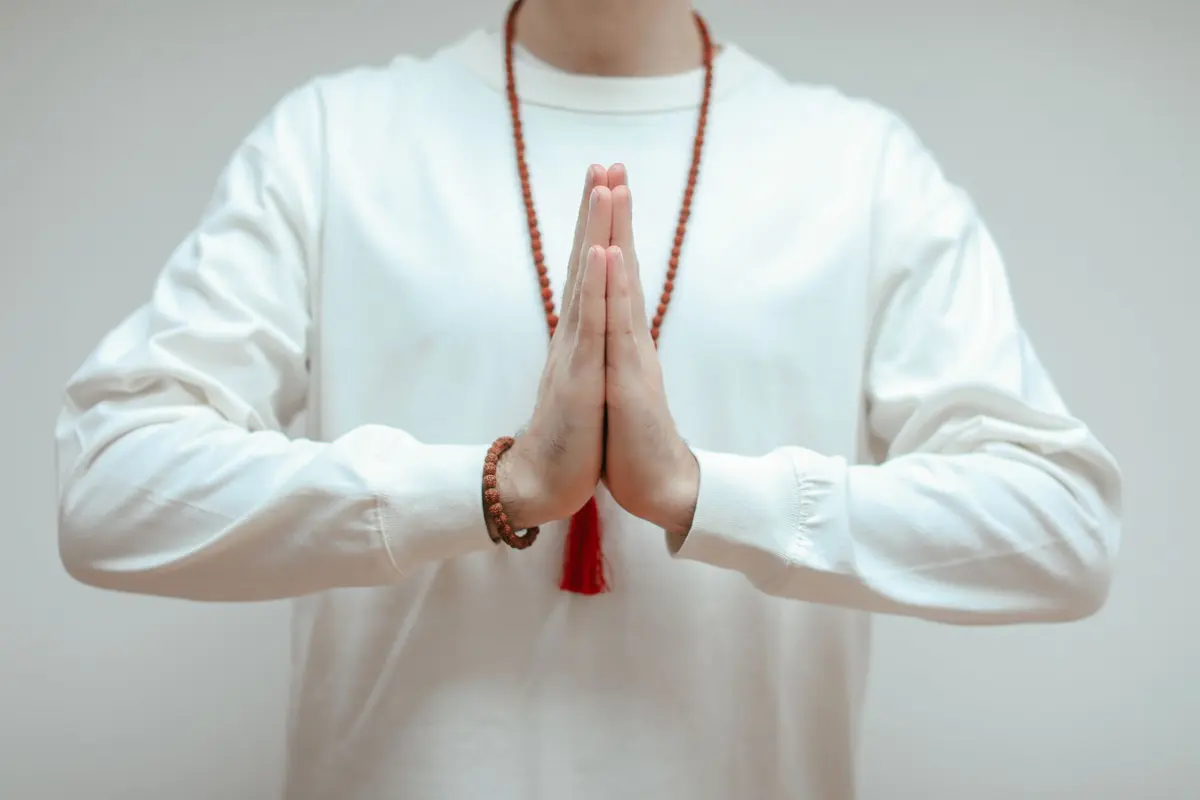
The hand gesture that goes with namaste is called Anjali mudra, the gesture of offering. You can read more about it in our guide to yoga mudras.
- Bring the palms together. Press the palms and fingers together lightly, fingers pointing up.
- Place the hands at the heart. Rest the thumbs lightly against the breastbone, elbows soft.
- Bow the head a little. A small nod is enough. Lower the eyes or keep a gentle gaze on the other person.
- Say the word, or don't. You can say "namaste" aloud, or simply make the gesture. In India the gesture alone is understood.
In India and Nepal people sometimes raise the hands higher to show deeper respect: to the forehead for a teacher or elder, and above the head in a temple. A deeper bow shows more respect, too.
How to pronounce namaste
Say it in three short syllables: nuh-muh-STAY. In Hindi the stress is light and fairly even, and the "t" is soft, made with the tongue touching the back of the teeth. Many English speakers say "nah-mah-STAY", which is widely understood.
When to say namaste
- As a greeting in India or Nepal. It works for hello and goodbye, with strangers, shopkeepers, hosts and elders. It is especially polite with older people.
- At the end of a yoga class. Many teachers close practice with namaste and a bow. Students usually return the bow.
- At the end of meditation. Bowing with Anjali mudra is a gentle way to close a sitting, perhaps after loving-kindness meditation.
- Instead of a handshake. Namaste needs no touch, which makes it a respectful choice in many settings.
Saying namaste with respect
Namaste is a living word from living cultures, not only a yoga term. A few simple habits keep it respectful:
- Use it sincerely. Say it when you mean to greet or thank someone, not as a joke or a slogan.
- Learn what it means. Knowing that it means "I bow to you" makes the bow more honest.
- Follow the local custom. If you travel in India or Nepal, watch how people greet one another and do the same.
- It is fine not to say it. If you teach yoga and namaste does not feel natural to you, a simple "thank you" is perfectly respectful too.
The spirit of namaste is close to the yogic idea of ahimsa, non-harming, and to the other ethical guidelines in our guide to the yamas and niyamas: meet each person with respect and goodwill.
A one-minute namaste practice
Try this at the end of your next practice, or at any quiet moment in the day.
- Stand in Mountain Pose or sit comfortably, spine long.
- Bring the palms together at the heart in Anjali mudra.
- Take three slow breaths. With each exhale, let the shoulders soften.
- Think of someone you are grateful for, and silently wish them well.
- Bow the head gently and say "namaste", aloud or silently.
Questions
What does namaste mean literally?
Literally, namaste means "I bow to you" or "a bow to you". It comes from the Sanskrit words namaḥ, a bow or salutation, and te, to you.
Is namaste hello or goodbye?
Both. In India and Nepal namaste is used to greet someone when you meet and when you part, much like "hello" and "goodbye" in English.
Is namaste a religious word?
Not in everyday use. Namaste is the ordinary polite greeting for people of many faiths in South Asia. The same gesture is also used in Hindu and Buddhist worship, where it expresses reverence.
What language is namaste?
Namaste comes from Sanskrit and is used today in Hindi, Nepali, Marathi, Bengali and many other South Asian languages.
Why do yoga classes end with namaste?
Teachers use it to thank students and close the practice with respect. Students bow back to thank the teacher. It is a tradition in many studios, not a rule, and some teachers close in other ways.
What is the difference between namaste and namaskar?
They mean the same thing and are used in the same way. Namaste means "I bow to you"; namaskar means "the act of bowing". In some places namaskar sounds slightly more formal.
Updated 4 November 2026 by the YogiSoul editorial team. Read our editorial policy and wellness policy.