आञ्जनेयासन
Low Lunge
Anjaneyasana is named after Hanuman (Anjaneya), son of Anjana. It is one of the best poses for tight hip flexors from sitting.

- Hold
- 5–8 breaths per side
- Level
- Beginner
- Family
- Hip opening, kneeling
- Focus
- Hip-flexor stretch
- Works
- Hip flexors
- Quads
- Chest
- You’ll need
- Blanket under back knee, Blocks under hands
- Found in
- Hatha, Gentle
- “Hips forward and down”
- “Tailbone heavy”
- “Lift through the heart”
Step by step
How to do Low Lunge
StartBegin in Downward Dog or Tabletop.
- 1
Step the right foot forward between the hands.
- 2
Lower the left knee to the mat, padding it with a blanket.
- 3
Stack the right knee over the ankle.
- 4
Lift the torso and rest hands on the front thigh, or raise the arms.
- 5
Draw the tailbone slightly down and shift the hips forward to stretch the front of the left hip.
- 6
Keep the chest lifted and shoulders relaxed.
- Out
Coming out. Lower the hands, step back to Downward Dog or Tabletop and switch sides.
Breath
Inhale to lift the chest; exhale to sink the hips forward gently.
Focus
Hip-flexor stretch
Why practise it
Stretches the hip flexors and the front of the thigh of the back leg, opens the chest and works the legs and core for balance. It is one of the most direct stretches for the front of the hips, which can feel tight after long periods of sitting.
Go deeper
Low Lunge: what to know
How to do Low Lunge
- From Downward Dog or Tabletop, step the right foot forward between the hands
- Lower the left knee to the mat, with padding under it
- Stack the right knee roughly over the right ankle
- Lift the chest and place the hands on the front thigh, on blocks or reach the arms up
- Draw the lower belly in gently and let the hips sink forward a little
- Hold for 5 to 8 breaths, then step back and switch sides
Stretch the hip, not the lower back
A common mistake is to sink the hips forward and arch the lower back, which takes the stretch away from the hip flexors and loads the back instead. Tuck the tailbone slightly and draw the lower belly in. You should feel the stretch at the front of the back hip and thigh. Move the hips forward only as far as you can keep that.
Variations
- Hands on blocks: for more support and an easier balance
- Quad stretch: bend the back knee and hold the back foot or use a strap
- Side bend: reach the arm on the back-leg side up and over
- Twist: place the opposite hand outside the front knee and open the chest
- Lizard Pose: step the front foot wide and lower the forearms for a deeper hip opener
Knees and safety
Pad the back knee generously with a folded blanket, or tuck the back toes and lift the knee slightly. Keep the backbend small if you have lower back problems. If kneeling is not possible, a standing lunge with the hands on a chair or a lying hip flexor stretch at the edge of a bed are alternatives.
Alignment
Cues & common mistakes
Aim for Front knee over ankle; hips square; lower back long, not crunched.
Teacher’s cues
- “Hips forward and down”
- “Tailbone heavy”
- “Lift through the heart”
Watch out for
Front knee drifting past the toes, overarching the lower back.
Make it yours
Easier, harder, supported
Hands on blocks; extra padding; keep hips higher.
- Arms overhead with gentle backbend
- Hold back foot for quad stretch
- Blanket under back knee
- Blocks under hands
In a sequence
Where it fits in a flow
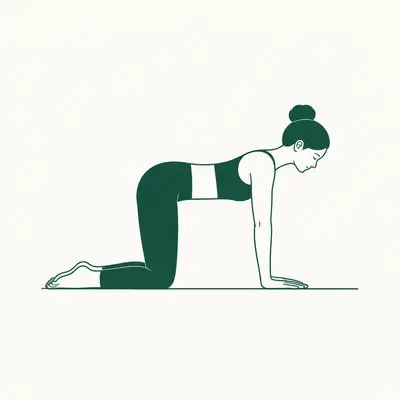 BeforeTabletop
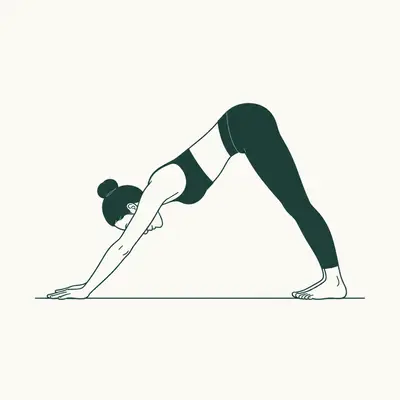 BeforeDownward-Facing Dog
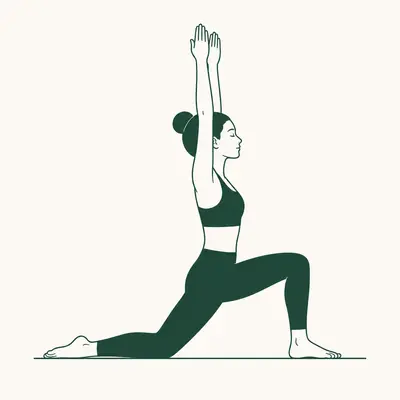 This poseLow Lunge
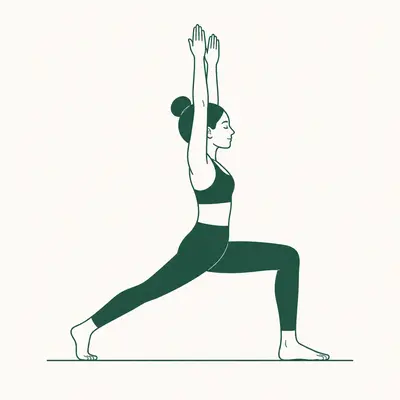 AfterHigh Lunge
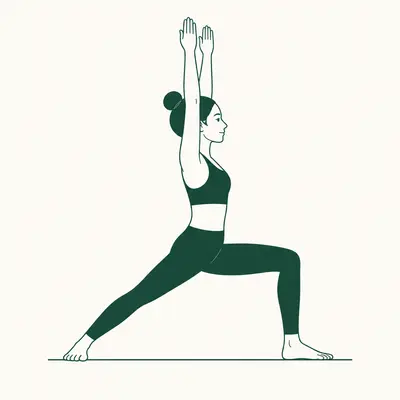 AfterWarrior I
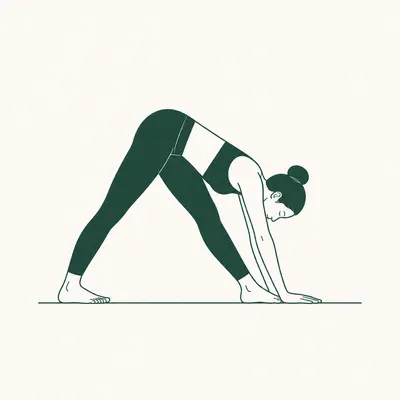 AfterPyramid Pose
Good to know
Questions
What does Low Lunge stretch?
Mainly the hip flexors and the front of the thigh of the back leg, plus the chest when the arms lift.
How long should I hold Low Lunge?
5 to 8 breaths per side, or up to a minute or two for a deeper stretch.
Why does my back knee hurt in Low Lunge?
Pressure on the kneecap. Use a folded blanket or cushion, or lift the knee slightly with the back toes tucked.
Is Low Lunge good for tight hips from sitting?
Yes. It is one of the most direct stretches for the hip flexors, which often feel tight after long periods of sitting.
What does Anjaneyasana mean?
It is named after Anjaneya, another name for Hanuman, the monkey god famous for his great leap.
Commemorates Hanuman's great leap; part of many Sun Salutation variations.
What helps
Props that make this easier
- Non-slip yoga mat A 4–6 mm mat with good grip makes standing poses steadier. View on Amazon
- Cork yoga block Brings the floor closer in forward folds and supported poses. View on Amazon
- Cotton yoga strap Extends your reach in hamstring and shoulder stretches. View on Amazon
As an Amazon Associate, YogiSoul earns from qualifying purchases. Links open Amazon in your country’s store.
More hip opening poses
All hip opening poses
Bound Angle Pose
Baddha Konasana

Garland Pose
Malasana

Pigeon Pose
Eka Pada Rajakapotasana