Mountain Pose
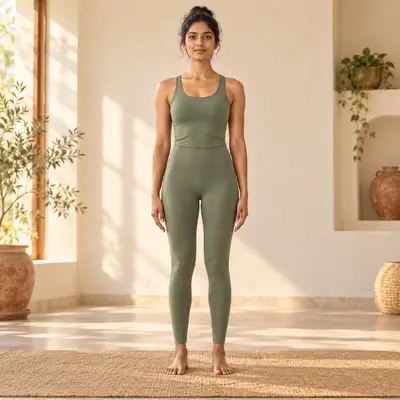
Tadasana looks like simply standing, but it is the blueprint for every standing pose. Learning to distribute weight evenly and stack the body over the feet improves posture on and off the mat.
- Level
- Beginner
- Hold
- 5–10 breaths
- Focus
- Standing balance and posture
- Steps
- 7 cues · ~1 min

- Root down to rise up
- Four corners of the feet grounded
- Ribs soft, collarbones wide
Step by step
How to do Mountain Pose
StartStand at the front of your mat, feet together or hip-width apart.
- 1
Stand with feet together or hip-width apart, outer edges parallel.
- 2
Lift and spread your toes, then lay them down long on the mat.
- 3
Balance weight evenly between the heels and balls of the feet, inner and outer edges.
- 4
Engage the thighs gently, knees soft rather than locked.
- 5
Let the tailbone lengthen toward the floor without tucking hard.
- 6
Lift the side waist, broaden across the collarbones and relax the shoulders down.
- 7
Arms hang by your sides, palms facing the thighs or forward; crown of head lifts toward the ceiling.
- ↩
Coming out. Simply relax and walk or step into the next pose.
Breath
Steady, even nasal breaths. Feel the ribs widen in all directions on each inhale.
Focus
Standing balance and posture
Why practise it
Builds postural awareness, foot strength and balance; a calm, grounding pause between standing poses.
Alignment
Cues & common mistakes
Aim for Ankles, knees, hips, shoulders and ears roughly in one vertical line; chin level; weight evenly through four corners of each foot.
Teacher’s cues
- “Root down to rise up”
- “Four corners of the feet grounded”
- “Ribs soft, collarbones wide”
Watch out for
Locking the knees, pushing the ribs forward, gripping the toes and lifting the chin.
Make it yours
Easier, harder, supported
Stand with feet hip-width for more stability, or with your back against a wall to feel alignment.
- Urdhva Hastasana: arms raised overhead
- Eyes closed for a balance challenge
- Wall (optional)
- Block between thighs (optional)
In a sequence
Where it fits in a flow
 This poseMountain Pose
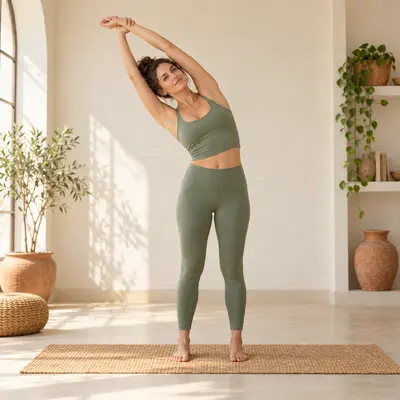 AfterStanding Side Bend
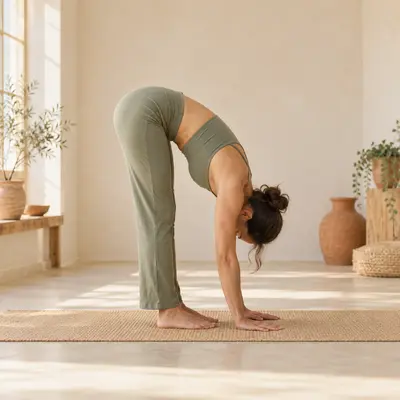 AfterStanding Forward Fold
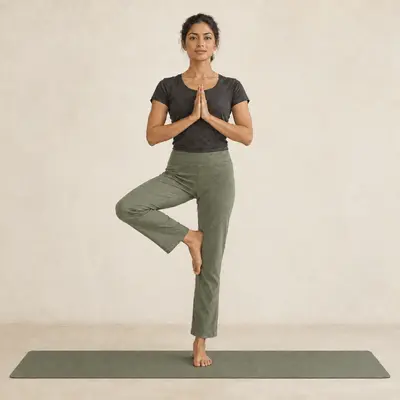 AfterTree Pose
Good to know
Questions
Should feet be together or apart in Tadasana?
Both are taught. Feet together is traditional; hip-width is more stable and suits most beginners.
Is Mountain Pose good for posture?
Practising it builds awareness of how you stand, which many people find carries into daily posture.
Tada means mountain; in Ashtanga it is called Samasthiti, 'equal standing', the pose that opens and closes the sun salutations.
What helps
Props that make this easier
- Non-slip yoga mat A 4–6 mm mat with good grip makes standing poses steadier. View on Amazon
- Cork yoga block Brings the floor closer in forward folds and supported poses. View on Amazon
- Cotton yoga strap Extends your reach in hamstring and shoulder stretches. View on Amazon
As an Amazon Associate, YogiSoul earns from qualifying purchases. Links open Amazon in your country’s store.