पश्चिमोत्तानासन
Seated Forward Fold
Paschimottanasana stretches the 'west side' of the body — the back of the body from heels to head. Use a strap and bent knees so you fold from the hips.

- Hold
- 1–3 minutes
- Level
- Beginner
- Family
- Forward fold, seated
- Focus
- Back-body stretch and calm
- Works
- Hamstrings
- Calves
- Back
- You’ll need
- Blanket under hips, Strap around feet, Bolster on thighs
- Found in
- Hatha, Gentle
- “Lead with the heart”
- “Belly toward thighs”
- “Let gravity work”
Step by step
How to do Seated Forward Fold
StartBegin in Staff Pose.
- 1
Sit in Staff Pose on a folded blanket.
- 2
Inhale and lengthen up, arms overhead if you like.
- 3
Exhale and hinge forward from the hips, keeping the spine long.
- 4
Hold the shins, ankles, feet or a strap around the feet.
- 5
Bend the knees if needed so the belly moves toward the thighs.
- 6
Once you reach your edge, let the spine round gently and relax.
- Out
Coming out. Inhale and slowly roll up to sitting.
Breath
Long exhales; lengthen on inhale, fold a little more on exhale.
Focus
Back-body stretch and calm
Why practise it
Stretches the hamstrings, calves and the muscles along the back. Held quietly with slow breathing, many people find it calming, and it is often used towards the end of a practice to wind down.
Go deeper
Seated Forward Fold: what to know
Fold from the hips, not the waist
The fold should start at the hip joints, with the pelvis tipping forward. If the hamstrings are tight, the pelvis tilts back instead and the lower back rounds, which is where people feel strain. Sitting on a folded blanket tips the pelvis forward and makes a big difference. Think of bringing the belly towards the thighs rather than the nose to the knees.
Tight hamstrings? Use these
- Sit on a folded blanket or cushion so the hips are higher than the heels
- Bend the knees, as much as you need, so the belly can rest on the thighs
- Loop a strap around the soles of the feet and hold it with straight arms
- Rest the chest on a bolster or cushion on the legs for a restorative version
Active or passive?
In an active version, you keep the spine long and move a little deeper with each exhale for 5 to 10 breaths. In a passive or Yin-style version, you let the spine round gently, support the body with props and stay for 2 to 5 minutes, letting gravity do the work. Both are useful; choose based on how your body feels and the aim of your practice.
Safety
Keep the knees bent and avoid deep rounding if you have a lower back injury, a disc problem or sciatica. In pregnancy, widen the legs so the belly has room. Ease off if you feel pulling behind the knee or in the sit bones rather than along the back of the legs.
Alignment
Cues & common mistakes
Aim for Move from the hip creases; avoid pulling yourself down with the arms.
Teacher’s cues
- “Lead with the heart”
- “Belly toward thighs”
- “Let gravity work”
Watch out for
Rounding the lower back from the start, pulling yourself down with the arms, locking or forcing the knees straight, and holding the breath in an effort to fold deeper.
Make it yours
Easier, harder, supported
Bend knees; use a strap; rest torso on a bolster.
- Head-to-Knee Pose
- Restorative bolster version
- Blanket under hips
- Strap around feet
- Bolster on thighs
In a sequence
Where it fits in a flow
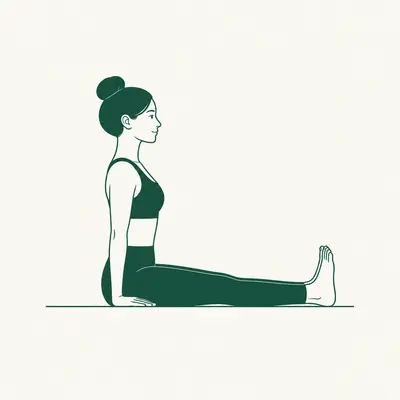 BeforeStaff Pose
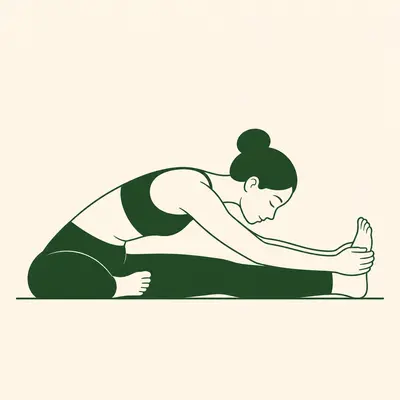 BeforeHead-to-Knee Pose
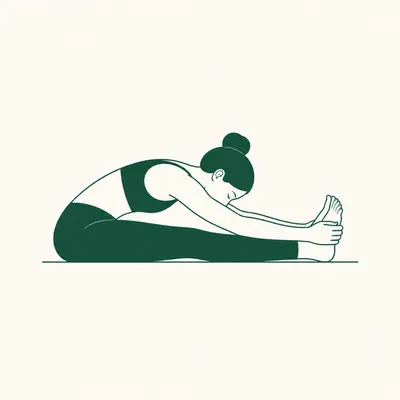 This poseSeated Forward Fold
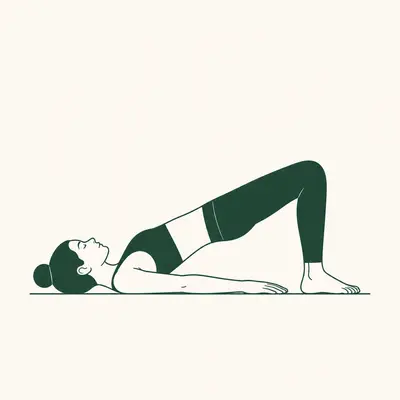 AfterBridge Pose
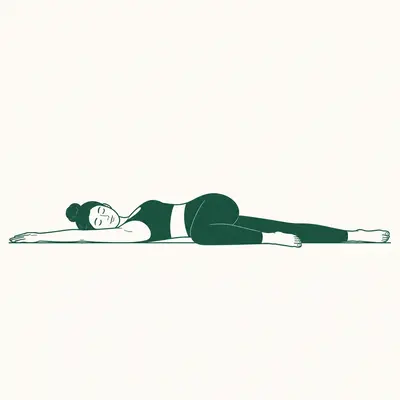 AfterReclined Twist
Good to know
Questions
Why can’t I touch my toes in Seated Forward Fold?
Usually tight hamstrings and calves. Bend the knees, sit on a blanket and use a strap. Touching the toes is not the goal; folding from the hips is.
Should I keep my legs straight?
Only if your back can stay long. Bent knees are better than a rounded lower back.
How long should I hold Paschimottanasana?
5 to 10 breaths in an active practice, or 2 to 5 minutes in a supported, Yin-style version.
What does Seated Forward Fold stretch?
Mainly the hamstrings, calves and the muscles along the back of the body.
What does Paschimottanasana mean?
Intense stretch of the west. Paschima means west, referring to the back of the body, as practitioners traditionally faced east.
Praised in the Hatha Yoga Pradipika as among the foremost asanas.
What helps
Props that make this easier
- Non-slip yoga mat A 4–6 mm mat with good grip makes standing poses steadier. View on Amazon
- Cork yoga block Brings the floor closer in forward folds and supported poses. View on Amazon
- Cotton yoga strap Extends your reach in hamstring and shoulder stretches. View on Amazon
As an Amazon Associate, YogiSoul earns from qualifying purchases. Links open Amazon in your country’s store.
More forward fold poses
All forward fold poses
Child’s Pose
Balasana

Downward-Facing Dog
Adho Mukha Svanasana

Standing Forward Fold
Uttanasana