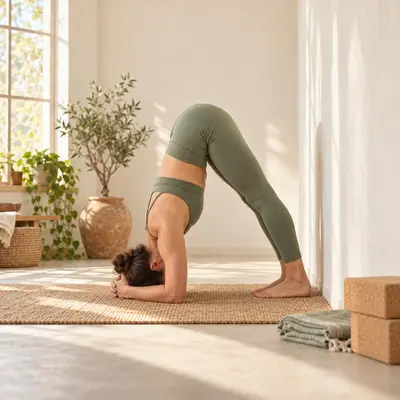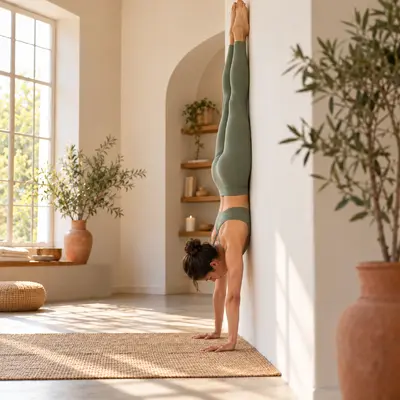
Supported Shoulderstand
Called the 'queen of asanas', Sarvangasana requires correct setup with blankets to protect the cervical spine. Learn it with a qualified teacher.
- Level
- Advanced
- Hold
- 10 breaths to 3 minutes
- Focus
- Inversion
- Steps
- 6 cues · ~2 min

- Neck free
- Elbows shoulder-width
Step by step
How to do Supported Shoulderstand
StartLie with shoulders on folded blankets and head on the floor.
- 1
Stack blankets; lie with shoulders on the edge, head on the floor.
- 2
Bend the knees and bring the feet near the hips.
- 3
Swing the legs up and support the back with your hands.
- 4
Walk the hands toward the shoulder blades.
- 5
Extend the legs upward.
- 6
Keep the neck still; don't turn the head.
- ↩
Coming out. Lower the knees to the forehead, release the hands and roll down slowly.
Breath
Steady breathing.
Focus
Inversion
Why practise it
Traditionally considered calming and nourishing.
Alignment
Cues & common mistakes
Aim for Weight on shoulders, not neck.
Teacher’s cues
- “Neck free”
- “Elbows shoulder-width”
Watch out for
Without blankets, placing weight on the neck.
Make it yours
Easier, harder, supported
Legs Up the Wall.
- Half shoulderstand at a wall
- Two to three folded blankets
- Wall
In a sequence
Where it fits in a flow
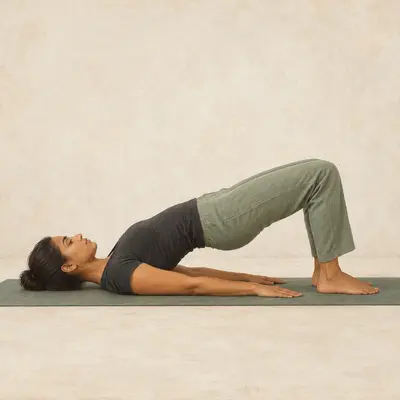 BeforeBridge Pose
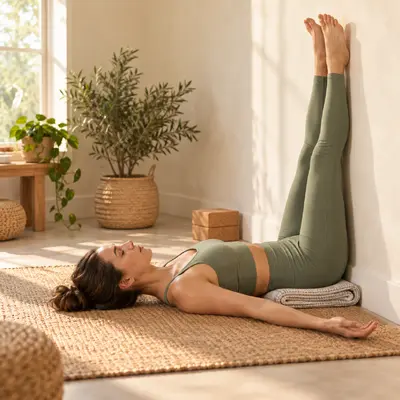 BeforeLegs Up the Wall
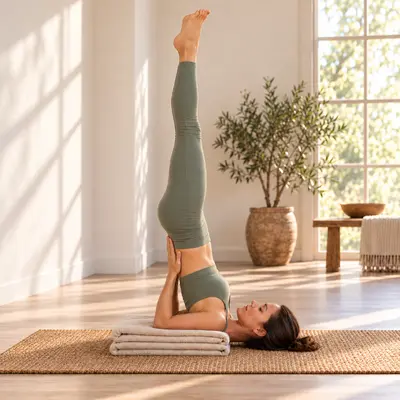 This poseSupported Shoulderstand
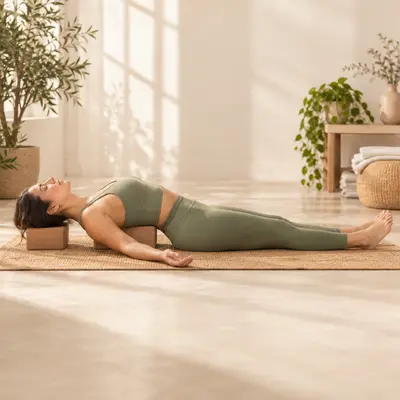 AfterFish Pose
Good to know
Questions
Why use blankets?
They keep the neck in a gentler curve and protect the cervical spine.
Sarva means all, anga limb — said to benefit the whole body.
What helps
Props that make this easier
- Non-slip yoga mat A 4–6 mm mat with good grip makes standing poses steadier. View on Amazon
- Cork yoga block Brings the floor closer in forward folds and supported poses. View on Amazon
- Cotton yoga strap Extends your reach in hamstring and shoulder stretches. View on Amazon
As an Amazon Associate, YogiSoul earns from qualifying purchases. Links open Amazon in your country’s store.
Keep exploring