मालासन
Garland Pose
Malasana is a natural resting squat used across many cultures. Props under the heels or hips make it comfortable for most bodies.

- Hold
- 5–10 breaths
- Level
- Beginner
- Family
- Hip opening, squat
- Focus
- Deep hip opening
- Works
- Hips
- Groin
- Ankles
- Lower back
- You’ll need
- Rolled blanket under heels, Block under hips
- Found in
- Hatha
- “Heels heavy”
- “Heart lifts”
- “Elbows press knees open”
Step by step
How to do Garland Pose
StartStand with feet slightly wider than hip-width, toes turned out.
- 1
Stand with feet slightly wider than the hips, toes out.
- 2
Bend the knees and lower the hips toward the floor.
- 3
Place a blanket under the heels if they lift, or sit on a block.
- 4
Bring palms together at the heart.
- 5
Press the elbows gently into the inner knees.
- 6
Lengthen the spine upward.
- Out
Coming out. Place hands on the floor and either straighten the legs into a fold or sit down.
Breath
Breathe into the belly and lower back.
Focus
Deep hip opening
Why practise it
Opens the hips, groin and inner thighs, stretches the ankles, calves and lower back, and strengthens the feet and ankles. A deep squat is a natural resting position in many parts of the world, and practising it can help you keep the mobility to get down to and up from the floor.
Go deeper
Garland Pose: what to know
How to do Malasana
- Stand with the feet a little wider than the hips, toes turned out slightly
- Bend the knees and lower the hips towards the floor, keeping the heels down if you can
- Bring the palms together at the chest and press the elbows lightly into the inner knees
- Lift the chest and lengthen the spine
- Hold for 5 to 10 breaths, then place the hands down and straighten the legs slowly to come up
If your heels lift
Heels that lift are very common and usually come from tight calves and ankles, or simply the shape of your bones. Place a rolled blanket or wedge under the heels, take the feet wider and turn the toes out more. Sitting on a block takes weight off the knees and lets you relax into the hips. Ankle mobility often improves with regular, short practice.
Variations
- Supported: sit on one or two blocks under the hips
- Wall squat: lean the back against a wall as you lower
- Twisting Garland: place one hand on the floor and reach the other arm up
- Bound Garland (advanced): wrap the arms around the shins and clasp the hands behind the back
Safety
Use a block under the hips and keep the squat shallower if you have knee pain or a knee injury, and stop if you feel pain inside the knee. In pregnancy, a supported squat is often used in later stages, but avoid deep squatting if there is a reason to avoid pressure on the pelvic floor and check with your midwife or doctor.
Alignment
Cues & common mistakes
Aim for Knees in line with toes; spine as long as possible.
Teacher’s cues
- “Heels heavy”
- “Heart lifts”
- “Elbows press knees open”
Watch out for
Collapsing the chest, knees caving in.
Make it yours
Easier, harder, supported
Sit on a block; heels on a rolled blanket.
- Twisting Garland
- Rolled blanket under heels
- Block under hips
In a sequence
Where it fits in a flow
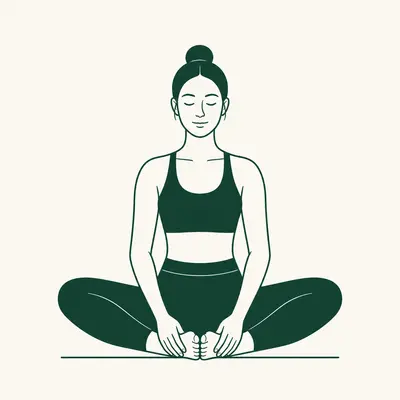 BeforeBound Angle Pose
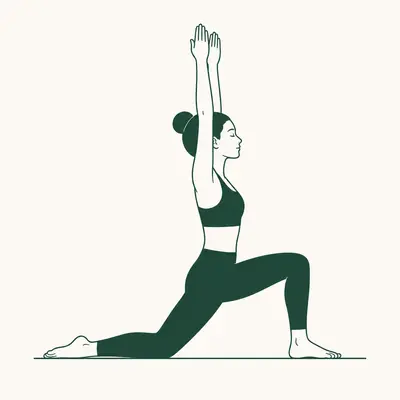 BeforeLow Lunge
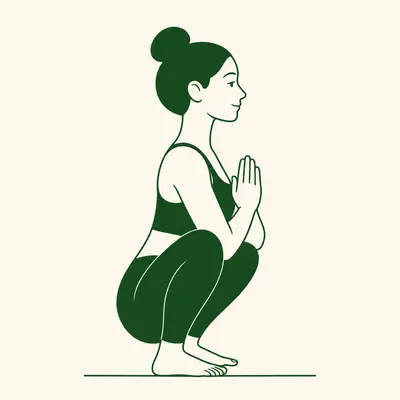 This poseGarland Pose
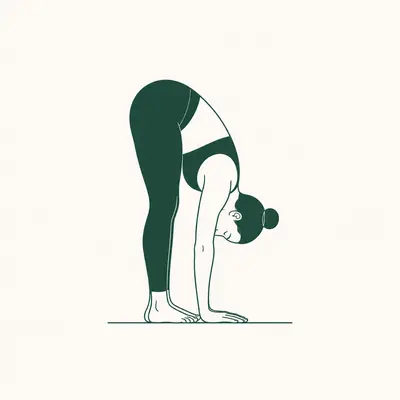 AfterStanding Forward Fold
Good to know
Questions
What is Malasana good for?
Opening the hips and groin, stretching the ankles and lower back, and keeping the mobility to squat comfortably.
Why can’t I keep my heels down in a squat?
Usually tight calves and ankles or bone structure. Put a rolled blanket under the heels and take the feet wider.
How long should I hold Malasana?
5 to 10 breaths, or up to a minute or two with a block under the hips.
Is Malasana bad for your knees?
Not for most people, but deep squatting can bother sensitive knees. Sit on a block and stop if it hurts inside the knee.
What does Malasana mean?
Mala means garland in Sanskrit, referring to the arms wrapping around the body in the bound version.
Mala means garland, referring to the arms encircling the body in a full binding variation.
What helps
Props that make this easier
- Non-slip yoga mat A 4–6 mm mat with good grip makes standing poses steadier. View on Amazon
- Cork yoga block Brings the floor closer in forward folds and supported poses. View on Amazon
- Cotton yoga strap Extends your reach in hamstring and shoulder stretches. View on Amazon
As an Amazon Associate, YogiSoul earns from qualifying purchases. Links open Amazon in your country’s store.
More hip opening poses
All hip opening poses
Bound Angle Pose
Baddha Konasana

Low Lunge
Anjaneyasana

Pigeon Pose
Eka Pada Rajakapotasana