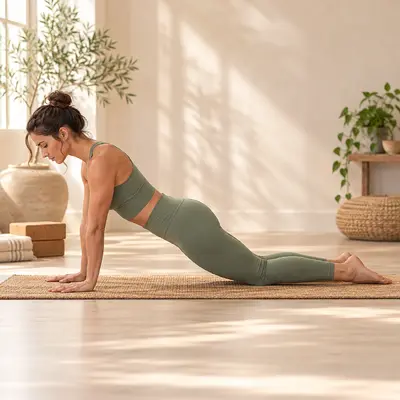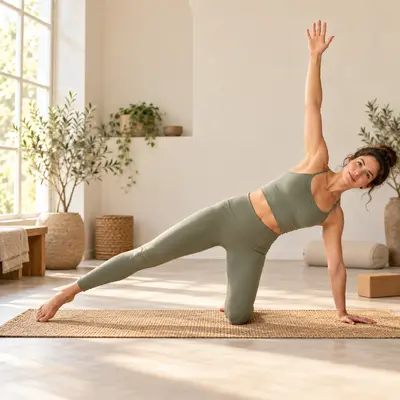
Tabletop
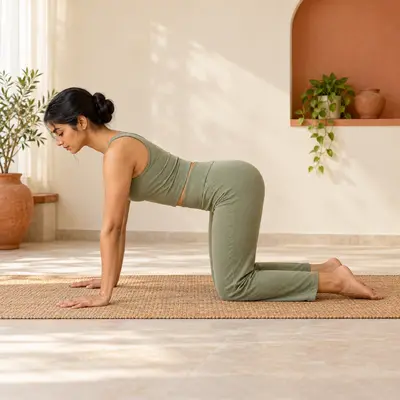
Tabletop is a neutral base on hands and knees. It teaches shoulder and core stability and is used as a transition throughout most yoga classes.
- Level
- Beginner
- Hold
- 5–10 breaths
- Focus
- Neutral spine and shoulder stability
- Steps
- 6 cues · ~1 min

- Push the floor away
- Long spine from tail to crown
- Elbow creases face each other
Step by step
How to do Tabletop
StartCome onto your hands and knees on the mat.
- 1
Place hands under shoulders, fingers spread wide, middle fingers pointing forward.
- 2
Place knees under hips, hip-width apart, tops of the feet down.
- 3
Press evenly through the whole hand, especially the base of the index finger and thumb.
- 4
Draw the navel gently toward the spine to support the lower back.
- 5
Lengthen from tailbone to crown so the spine is long and roughly flat.
- 6
Gaze at the floor slightly ahead of the hands, keeping the neck in line.
- ↩
Coming out. Sit back toward your heels into Child's Pose, or move on to Cat–Cow.
Breath
Easy nasal breathing; let the belly move with the breath while the spine stays steady.
Focus
Neutral spine and shoulder stability
Why practise it
Builds wrist and shoulder strength and core awareness; a gentle warm-up for the spine.
Alignment
Cues & common mistakes
Aim for Wrists under shoulders, knees under hips, neck in line with the spine.
Teacher’s cues
- “Push the floor away”
- “Long spine from tail to crown”
- “Elbow creases face each other”
Watch out for
Sinking into the shoulders, locking the elbows and letting the lower back sag.
Make it yours
Easier, harder, supported
Pad the knees with a blanket. For sensitive wrists, make fists or come onto forearms.
- Bird Dog: extend opposite arm and leg
- Toes tucked for a foot stretch
- Folded blanket under knees
- Wedge or rolled mat edge under wrist heels
In a sequence
Where it fits in a flow
 This poseTabletop
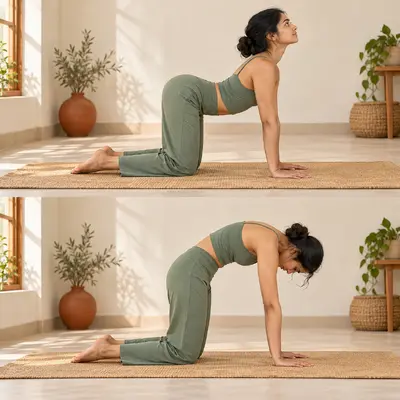 AfterCat–Cow
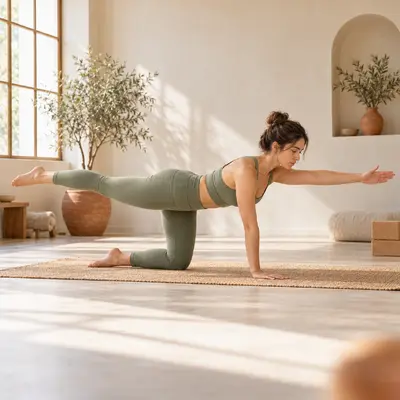 AfterBird Dog
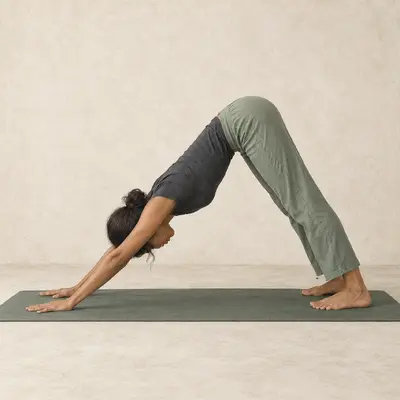 AfterDownward-Facing Dog
Good to know
Questions
How do I protect my wrists in Tabletop?
Spread the fingers, press through the knuckles, and try a folded mat under the wrist heels or come onto forearms.
A modern teaching posture rather than a classical asana; widely used as a neutral base.
What helps
Props that make this easier
- Non-slip yoga mat A 4–6 mm mat with good grip makes standing poses steadier. View on Amazon
- Cork yoga block Brings the floor closer in forward folds and supported poses. View on Amazon
- Cotton yoga strap Extends your reach in hamstring and shoulder stretches. View on Amazon
As an Amazon Associate, YogiSoul earns from qualifying purchases. Links open Amazon in your country’s store.
Keep exploring