Locust Pose
Salabhasana builds the back strength that supports good posture and deeper backbends.
- Level
- Intermediate
- Hold
- 3–5 breaths, 2–3 rounds
- Focus
- Back-body strength
- Steps
- 5 cues · ~1 min

- Length before height
- Reach back
- Gaze down
Step by step
How to do Locust Pose
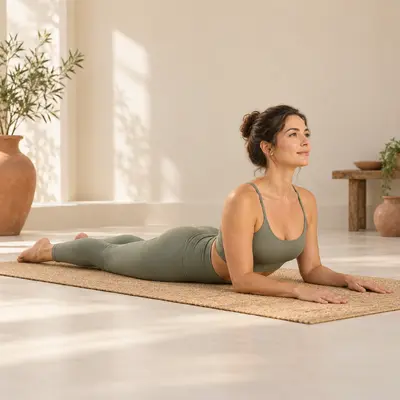
StartLie on your belly, arms by your sides.
- 1
Lie on your belly, arms alongside the body, palms down or up.
- 2
Rest the forehead on the mat, legs hip-width.
- 3
Inhale and lift the head, chest, arms and legs.
- 4
Reach back through the fingertips and toes.
- 5
Keep the neck long, gaze down and slightly forward.
- ↩
Coming out. Exhale, lower everything and rest with head turned to one side.
Breath
Short, steady breaths during the hold.
Focus
Back-body strength
Why practise it
Strengthens back, glutes and legs; improves posture.
Alignment
Cues & common mistakes
Aim for Lengthen as you lift; legs hip-width, not squeezed together.
Teacher’s cues
- “Length before height”
- “Reach back”
- “Gaze down”
Watch out for
Cranking the neck back and gripping the buttocks hard.
Make it yours
Easier, harder, supported
Lift only the upper body or one leg at a time.
- Arms forward (Superman)
- Hands clasped behind back
- Blanket under hips
In a sequence
Where it fits in a flow
 BeforeSphinx Pose
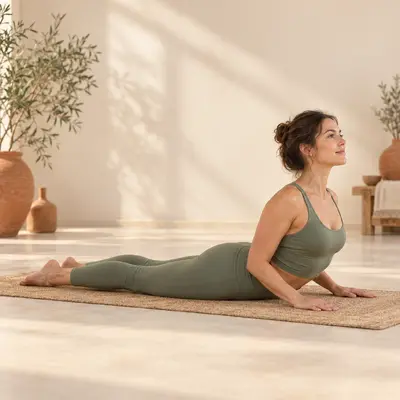 BeforeCobra Pose
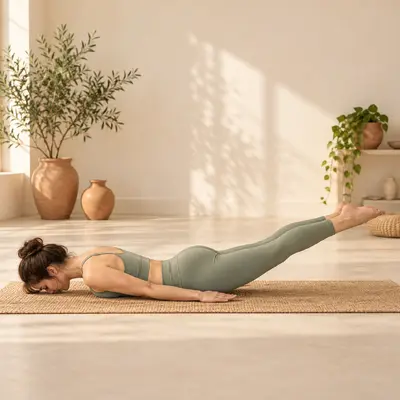 This poseLocust Pose
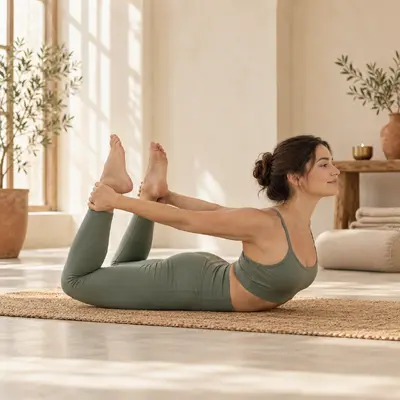 AfterBow Pose
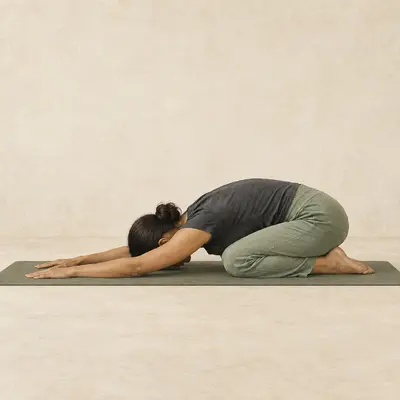 AfterChild’s Pose
Good to know
Questions
Is Locust Pose hard?
It takes effort; start by lifting the chest or the legs separately.
Salabha means locust; described in the Gheranda Samhita.
What helps
Props that make this easier
- Non-slip yoga mat A 4–6 mm mat with good grip makes standing poses steadier. View on Amazon
- Cork yoga block Brings the floor closer in forward folds and supported poses. View on Amazon
- Cotton yoga strap Extends your reach in hamstring and shoulder stretches. View on Amazon
As an Amazon Associate, YogiSoul earns from qualifying purchases. Links open Amazon in your country’s store.