मार्जार्यासन–बितिलासन
Cat–Cow
Cat–Cow moves the spine through flexion and extension in time with the breath. It is one of the most accessible ways to warm up and to learn breath-movement coordination.

- Hold
- 5–10 rounds
- Level
- Beginner
- Family
- Backbend, kneeling
- Focus
- Spinal mobility linked to breath
- Works
- Spine
- Neck
- Core
- You’ll need
- Blanket under knees
- Found in
- Hatha, Gentle
- “Move from the tailbone first”
- “Broad collarbones in Cow”
- “Push the floor away in Cat”
Step by step
How to do Cat–Cow
StartBegin in Tabletop with hands under shoulders and knees under hips.
- 1
From Tabletop, inhale: tilt the pelvis forward, let the belly soften down and lift the chest and gaze (Cow).
- 2
Exhale: press the floor away, round the spine toward the ceiling and release the head (Cat).
- 3
Initiate each movement from the pelvis and let it ripple up the spine to the head.
- 4
Keep arms straight and weight even between hands and knees.
- 5
Continue for 5–10 slow rounds, letting the breath set the pace.
- Out
Coming out. Return to a neutral Tabletop, then rest in Child's Pose if you like.
Breath
Inhale into Cow, exhale into Cat. Keep the breath smooth and unhurried.
Focus
Spinal mobility linked to breath
Why practise it
Warms up and mobilises the whole spine, gently stretches the back and the front of the body, and teaches you to move with the breath. It is one of the easiest ways to ease morning stiffness or the effects of long sitting.
Go deeper
Cat–Cow: what to know
The breath leads the movement
Cat–Cow is a moving pair rather than a held pose. Inhale as you drop the belly, lift the chest and tailbone into Cow; exhale as you round the back, tuck the tailbone and draw the chin towards the chest into Cat. Let each movement take as long as the breath, and start the wave at the tailbone so the neck moves last.
What Cat–Cow works
- Moves the spine through flexion (Cat) and extension (Cow)
- Gently stretches the back muscles in Cat and the chest and abdomen in Cow
- Builds awareness of the pelvis, which helps in many other poses
- Coordinates breath with movement, a foundation for flowing yoga
Seated and standing Cat–Cow
You do not need to get on the floor. Sitting on a chair with hands on the knees, round the back on the exhale and lift the chest on the inhale. Standing, bend the knees, rest the hands on the thighs and make the same movement. Both are useful at a desk or for anyone who finds kneeling painful.
Cat–Cow in pregnancy
On hands and knees the weight of the belly is supported, which is why Cat–Cow is a favourite in pregnancy yoga for easing back ache. Keep Cow shallow so the belly doesn’t sag deeply, and focus on the rounding of Cat. Check with your midwife or doctor if you have any pregnancy complications.
Alignment
Cues & common mistakes
Aim for Movement comes from the whole spine, not just the neck; shoulders stay away from the ears in Cow.
Teacher’s cues
- “Move from the tailbone first”
- “Broad collarbones in Cow”
- “Push the floor away in Cat”
Watch out for
Overarching the neck in Cow, rushing the breath, and moving only the head.
Make it yours
Easier, harder, supported
Practise seated in a chair with hands on knees. Pad the knees or use fists for sensitive wrists.
- Add hip circles
- Seated Cat–Cow
- Blanket under knees
In a sequence
Where it fits in a flow
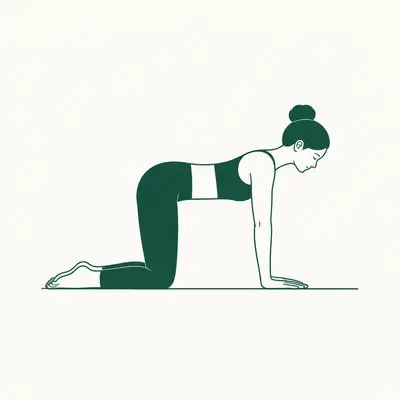 BeforeTabletop
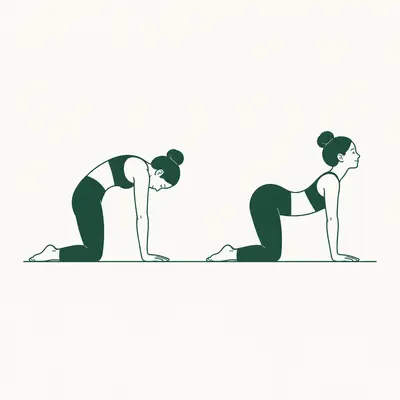 This poseCat–Cow
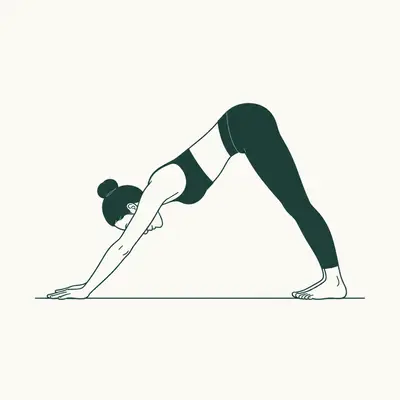 AfterDownward-Facing Dog
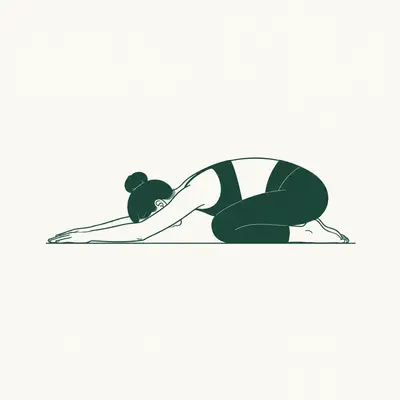 AfterChild’s Pose
 AfterBird Dog
Good to know
Questions
Do you inhale or exhale in Cat?
Exhale as you round into Cat; inhale as you arch into Cow.
Is Cat–Cow good for back pain?
Many people find gentle spinal movement eases stiffness. With diagnosed back conditions, check with your health professional.
How many rounds of Cat–Cow should I do?
Five to ten slow rounds as a warm-up. You can do more as a short mobility break during the day.
My wrists hurt on all fours. What can I do?
Spread the fingers wide, make fists, come onto the forearms, or do the seated version on a chair.
Why is it called Cat–Cow?
The rounded back looks like a cat stretching and the dipped back like a cow’s spine. In Sanskrit, marjari means cat and bitila means cow.
Marjari means cat and bitila cow; this pairing is a modern sequencing convention rooted in hatha practice.
What helps
Props that make this easier
- Non-slip yoga mat A 4–6 mm mat with good grip makes standing poses steadier. View on Amazon
- Cork yoga block Brings the floor closer in forward folds and supported poses. View on Amazon
- Cotton yoga strap Extends your reach in hamstring and shoulder stretches. View on Amazon
As an Amazon Associate, YogiSoul earns from qualifying purchases. Links open Amazon in your country’s store.
More backbend poses
All backbend poses
Wheel Pose
Urdhva Dhanurasana

Bridge Pose
Setu Bandha Sarvangasana

Cobra Pose
Bhujangasana