Bridge Pose
Bridge is often the first backbend people learn. It strengthens the back of the body and opens the front, and can be made restorative with a block.
- Level
- Beginner
- Hold
- 5–8 breaths
- Focus
- Glute strength and chest opening
- Steps
- 7 cues · ~1 min

- Press the feet, lift the hips
- Knees stay hip-width
- Neck stays still
Step by step
How to do Bridge Pose
StartLie on your back with knees bent and feet flat.
- 1
Lie on your back, knees bent, feet hip-width and parallel, heels close to the hips.
- 2
Rest arms by your sides, palms down.
- 3
Press through the feet and lift the hips toward the ceiling.
- 4
Keep knees pointing forward, not splaying out.
- 5
Roll the shoulders slightly under and broaden the chest.
- 6
Optionally interlace the hands under the back.
- 7
Keep the neck still and gaze toward the ceiling.
- ↩
Coming out. Release the hands and roll down slowly, one vertebra at a time.
Breath
Inhale to lift; breathe steadily while holding; exhale to roll down.
Focus
Glute strength and chest opening
Why practise it
Strengthens glutes and hamstrings; opens chest and hip flexors; energising yet accessible.
Alignment
Cues & common mistakes
Aim for Knees over ankles, thighs parallel, weight on shoulders and feet — not the neck.
Teacher’s cues
- “Press the feet, lift the hips”
- “Knees stay hip-width”
- “Neck stays still”
Watch out for
Turning the head while lifted, knees splaying, and pushing up from the lower back rather than the legs.
Make it yours
Easier, harder, supported
Place a block under the sacrum for Supported Bridge. Keep the lift low.
- Single-leg Bridge
- Supported Bridge
- Block under sacrum
- Block between thighs
In a sequence
Where it fits in a flow
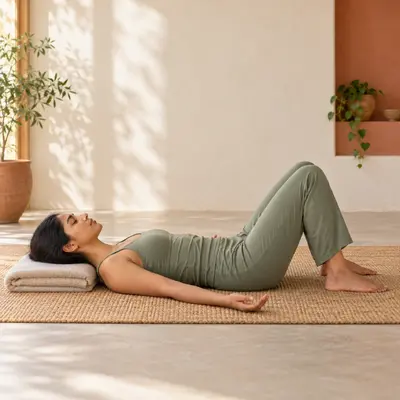 BeforeConstructive Rest
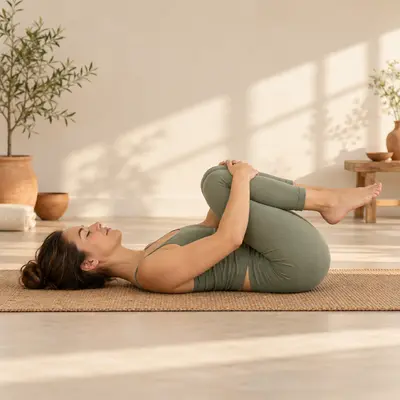 BeforeKnees-to-Chest
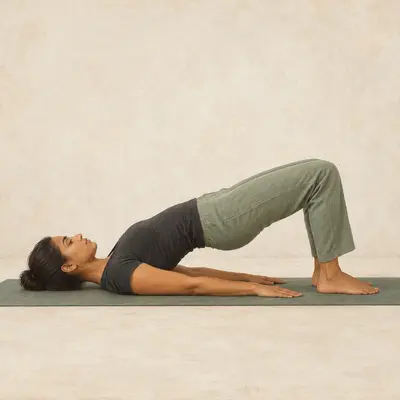 This poseBridge Pose
- AfterKnees-to-Chest
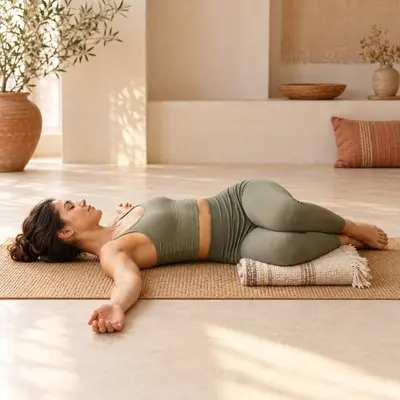 AfterReclined Twist
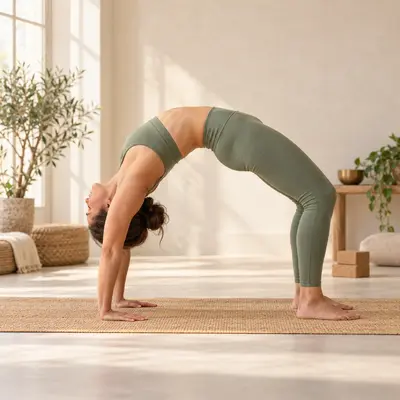 AfterWheel Pose
Good to know
Questions
Why do my hamstrings cramp in Bridge?
Feet may be too far from the hips. Walk them closer and press through the heels.
Setu means bridge, bandha lock; in classical sequences it follows shoulderstand.
What helps
Props that make this easier
- Non-slip yoga mat A 4–6 mm mat with good grip makes standing poses steadier. View on Amazon
- Cork yoga block Brings the floor closer in forward folds and supported poses. View on Amazon
- Cotton yoga strap Extends your reach in hamstring and shoulder stretches. View on Amazon
As an Amazon Associate, YogiSoul earns from qualifying purchases. Links open Amazon in your country’s store.