धनुरासन
Bow Pose
Dhanurasana shapes the body into a bow. The lift comes from pressing the feet into the hands.

- Hold
- 3–5 breaths
- Level
- Intermediate
- Family
- Backbend, prone
- Focus
- Full-front body opening
- Works
- Chest
- Quads
- Hip flexors
- Shoulders
- You’ll need
- Strap
- Found in
- Hatha
- “Kick into the hands”
- “Lift the chest”
Step by step
How to do Bow Pose
StartLie on your belly.
- 1
Lie on your belly and bend the knees.
- 2
Reach back and hold the outer ankles.
- 3
Keep the knees hip-width.
- 4
Inhale and press the feet into the hands, lifting chest and thighs.
- 5
Draw the shoulders back; gaze forward.
- Out
Coming out. Exhale, lower down and release the ankles.
Breath
Short, steady breaths into the back.
Focus
Full-front body opening
Why practise it
Opens the chest, shoulders and the front of the hips and thighs, and strengthens the muscles along the back, the glutes and the hamstrings. It is a strong backbend that prepares the body for deeper ones such as Wheel Pose.
Go deeper
Bow Pose: what to know
Kick into the hands
The lift in Bow Pose comes from the legs, not the arms. Once you hold the ankles, press the feet back and up into the hands; that pressure lifts the thighs and the chest together, like drawing a bow. The arms stay straight and act as the bowstring. If you only pull with the arms, the shoulders strain and the back takes all the load.
How to do Bow Pose
- Lie on your front, forehead down, arms by your sides
- Bend the knees and reach back to hold the outside of the ankles
- Keep the knees about hip-width apart
- Inhale and kick the feet into the hands to lift the chest and thighs
- Gaze forward, keep breathing, and hold for 3 to 5 breaths
- Exhale to lower slowly, rest the head to one side, and repeat once or twice
Easier options
- Half Bow: hold one ankle at a time, with the other arm forward for support
- Strap: loop a strap around the ankles if you cannot reach them
- Locust Pose first, to build back strength without the bind
- A folded blanket under the hips if the hip bones press into the floor
Who should avoid it
Avoid Bow Pose during pregnancy, after recent abdominal surgery, and with a back injury, a hernia or uncontrolled high blood pressure. Take care with knee or shoulder problems. Follow it with a gentle counterpose such as Child’s Pose or Knees to Chest.
Alignment
Cues & common mistakes
Aim for Knees no wider than hips.
Teacher’s cues
- “Kick into the hands”
- “Lift the chest”
Watch out for
Pulling up with the arms instead of kicking the feet into the hands, letting the knees splay wide, compressing the lower back, holding the breath, and craning the neck back.
Make it yours
Easier, harder, supported
Use a strap; one leg at a time (Half Bow).
- Rocking Bow
- Strap
In a sequence
Where it fits in a flow
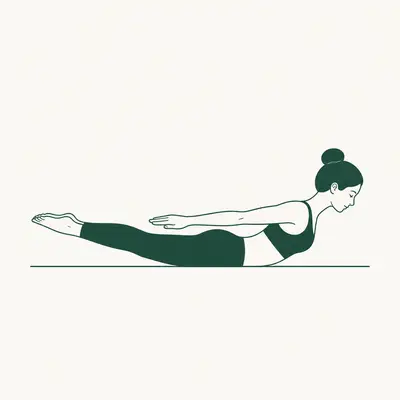 BeforeLocust Pose
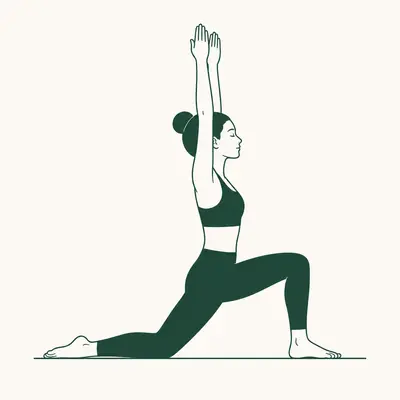 BeforeLow Lunge
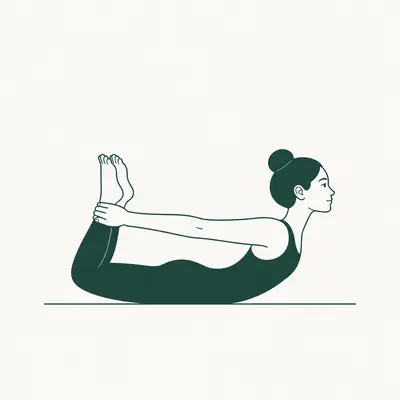 This poseBow Pose
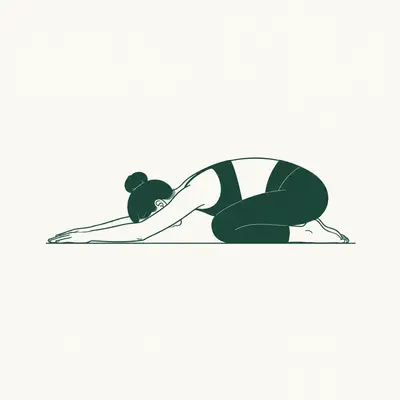 AfterChild’s Pose
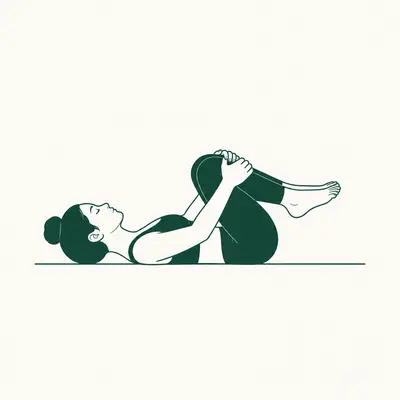 AfterKnees-to-Chest
Good to know
Questions
What is Bow Pose good for?
Opening the chest, shoulders and front of the hips, and strengthening the back, glutes and hamstrings.
I can’t reach my ankles in Bow Pose. What can I do?
Loop a strap around the ankles and hold that, or practise Half Bow one side at a time.
How long should I hold Bow Pose?
3 to 5 breaths, repeated two or three times with rest between.
Why does Bow Pose hurt my lower back?
Often the arms are pulling instead of the legs pressing back, or the knees are too wide. Kick into the hands, keep the knees narrower and lift less.
Is Bow Pose good for digestion?
It is traditionally said to stimulate digestion, but there is little evidence for that. Avoid it on a full stomach.
Dhanu means bow; described in classical hatha texts.
What helps
Props that make this easier
- Non-slip yoga mat A 4–6 mm mat with good grip makes standing poses steadier. View on Amazon
- Cork yoga block Brings the floor closer in forward folds and supported poses. View on Amazon
- Cotton yoga strap Extends your reach in hamstring and shoulder stretches. View on Amazon
As an Amazon Associate, YogiSoul earns from qualifying purchases. Links open Amazon in your country’s store.
More backbend poses
All backbend poses
Wheel Pose
Urdhva Dhanurasana

Cat–Cow
Marjaryasana–Bitilasana

Bridge Pose
Setu Bandha Sarvangasana