Knees-to-Chest
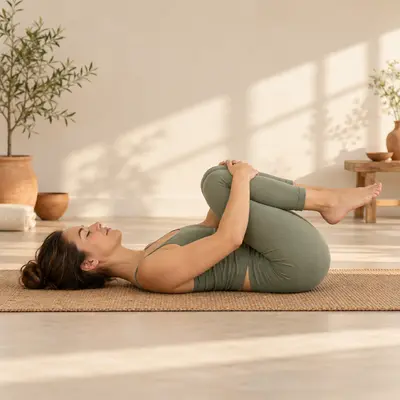
Apanasana is a soothing pose that gently rounds the lower back. It is a common counterpose after backbends.
- Level
- Beginner
- Hold
- 5–10 breaths
- Focus
- Lower-back release
- Steps
- 5 cues · ~1 min

- Hug and release with the breath
- Shoulders heavy
Step by step
How to do Knees-to-Chest
StartLie on your back.
- 1
Lie on your back and draw both knees toward the chest.
- 2
Hold the shins or the backs of the thighs.
- 3
Let the shoulders and head relax on the floor.
- 4
Gently draw the knees in on exhales and soften on inhales.
- 5
Optionally rock side to side to massage the back.
- ↩
Coming out. Release the feet to the floor.
Breath
Exhale to hug in; inhale to release a little.
Focus
Lower-back release
Why practise it
Releases lower back and is traditionally said to aid digestion (apana = downward energy).
Alignment
Cues & common mistakes
Aim for Lower back heavy; neck relaxed.
Teacher’s cues
- “Hug and release with the breath”
- “Shoulders heavy”
Watch out for
Lifting the head and tensing the neck.
Make it yours
Easier, harder, supported
Hold behind the thighs; one knee at a time.
- Single-knee Apanasana
- Circles
- Blanket under head
In a sequence
Where it fits in a flow
 This poseKnees-to-Chest
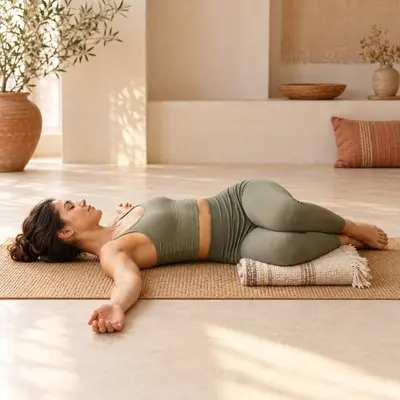 AfterReclined Twist
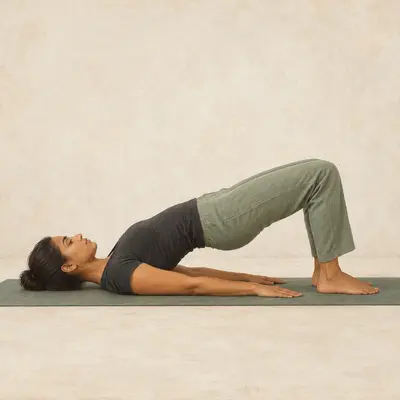 AfterBridge Pose
Good to know
Questions
Why is it called Wind-Relieving Pose?
Its name refers to apana vayu, the downward-moving energy associated with digestion and elimination.
Named after apana, one of the five vayus (energy currents) in yogic physiology.
What helps
Props that make this easier
- Non-slip yoga mat A 4–6 mm mat with good grip makes standing poses steadier. View on Amazon
- Cork yoga block Brings the floor closer in forward folds and supported poses. View on Amazon
- Cotton yoga strap Extends your reach in hamstring and shoulder stretches. View on Amazon
As an Amazon Associate, YogiSoul earns from qualifying purchases. Links open Amazon in your country’s store.
Keep exploring