जानु शीर्षासन
Head-to-Knee Pose
Janu Sirsasana stretches one leg at a time, which many people find more accessible than a two-legged fold.

- Hold
- 1–2 minutes per side
- Level
- Beginner
- Family
- Forward fold, seated
- Focus
- Single-leg hamstring stretch
- Works
- Hamstrings
- Back
- Hips
- You’ll need
- Blanket under hips, Strap, Block under bent knee
- Found in
- Hatha, Gentle
- “Navel over the thigh”
- “Long front body”
- “Soften the shoulders”
Step by step
How to do Head-to-Knee Pose
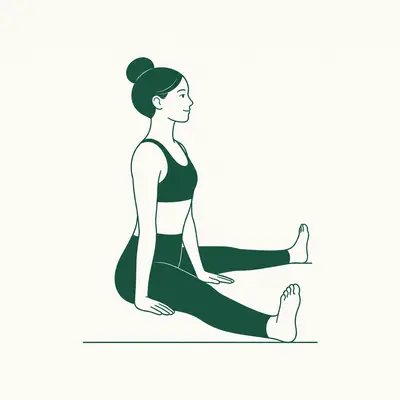
StartBegin in Staff Pose.
- 1
From Staff Pose, bend the left knee and place the left sole against the inner right thigh.
- 2
Let the left knee drop out; support it with a block if needed.
- 3
Turn the torso slightly to face the straight leg.
- 4
Inhale and lengthen the spine.
- 5
Exhale and fold over the right leg from the hips.
- 6
Hold the shin, foot or a strap.
- Out
Coming out. Inhale to rise, extend the bent leg and switch sides.
Breath
Steady breathing; fold gradually with exhales.
Focus
Single-leg hamstring stretch
Why practise it
Stretches the hamstrings and calf of the straight leg, the inner thigh of the bent leg and the back of the body. Because it works one leg at a time, many people find it more approachable than folding over both legs. Forward folds like this are often described as calming, though that is a common experience rather than a proven effect.
Go deeper
Head-to-Knee Pose: what to know
The name is not the goal
Despite the name, the head does not need to reach the knee. Folding from the hips with a long spine stretches the hamstring far more usefully than rounding the back to bring the forehead down. Sitting on a folded blanket tilts the pelvis forward and makes this much easier, especially with tight hamstrings.
How to do Head-to-Knee Pose
- Sit in Staff Pose with both legs straight, on a folded blanket if the lower back rounds
- Bend the right knee and place the sole of the right foot against the inner left thigh
- Let the right knee drop out to the side; support it with a block or cushion if it does not reach the floor
- Turn the chest slightly towards the straight left leg and lengthen the spine as you breathe in
- Breathing out, fold forward from the hips, holding the shin, foot or a strap around the foot
- Hold for 5 to 10 breaths, come up slowly and switch sides
Head-to-Knee vs Seated Forward Fold
- Head-to-Knee (Janu Sirsasana): one leg bent, so one hamstring is stretched at a time with a slight twist towards the straight leg
- Seated Forward Fold (Paschimottanasana): both legs straight, a deeper and more symmetrical stretch
- Seated Wide Angle (Upavistha Konasana): legs wide, adding the inner thighs
Making it work for you
Bend the straight knee slightly if the hamstring pulls sharply or the back of the knee aches. Loop a strap around the foot rather than straining to reach it. Support the bent knee if it hurts, or place the foot lower on the shin rather than high on the thigh. Ease off with a hamstring or lower-back injury.
Alignment
Cues & common mistakes
Aim for Torso centred over the straight leg; straight-leg kneecap pointing up.
Teacher’s cues
- “Navel over the thigh”
- “Long front body”
- “Soften the shoulders”
Watch out for
Forcing the head to the knee and rounding through the lower back.
Make it yours
Easier, harder, supported
Bend the straight leg slightly; use a strap.
- Revolved Head-to-Knee (side bend)
- Blanket under hips
- Strap
- Block under bent knee
In a sequence
Where it fits in a flow
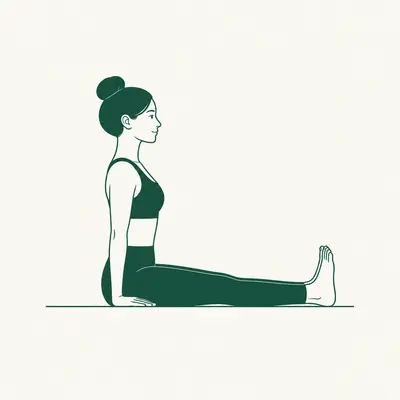 BeforeStaff Pose
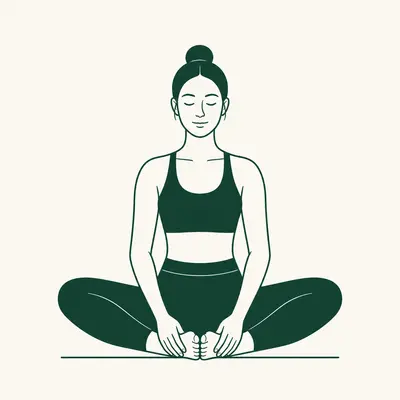 BeforeBound Angle Pose
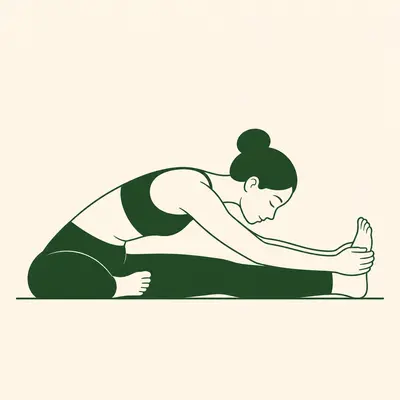 This poseHead-to-Knee Pose
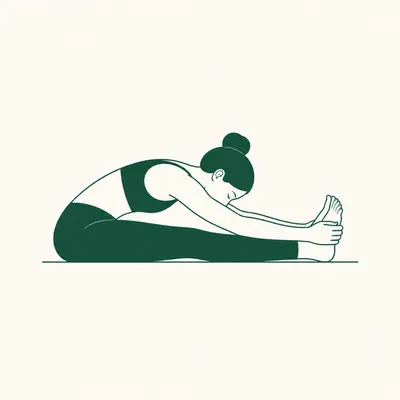 AfterSeated Forward Fold
 AfterSeated Wide Angle
Good to know
Questions
What is Janu Sirsasana good for?
Stretching the hamstrings, calves and inner thighs one side at a time, and mobilising the back of the body.
Do I have to touch my head to my knee?
No. Fold from the hips with a long spine; how far you go depends on your hamstrings, not effort.
How long should I hold Head-to-Knee Pose?
5 to 10 breaths per side, or 1 to 3 minutes in a slower or Yin-style practice.
Why does my bent knee hurt?
It may be hanging unsupported or twisting. Place a block under it or move the foot lower down the leg.
Is Head-to-Knee easier than Seated Forward Fold?
For many people, yes. Working one leg at a time usually allows a longer spine and a more even stretch.
Janu means knee, sirsa head; part of the Ashtanga primary series.
What helps
Props that make this easier
- Non-slip yoga mat A 4–6 mm mat with good grip makes standing poses steadier. View on Amazon
- Cork yoga block Brings the floor closer in forward folds and supported poses. View on Amazon
- Cotton yoga strap Extends your reach in hamstring and shoulder stretches. View on Amazon
As an Amazon Associate, YogiSoul earns from qualifying purchases. Links open Amazon in your country’s store.
More forward fold poses
All forward fold poses
Child’s Pose
Balasana

Downward-Facing Dog
Adho Mukha Svanasana

Standing Forward Fold
Uttanasana