15min
Relaxation
Yin: Stillness on the Floor
Settle into Bound Angle, a supported fold and gentle twists, without rushing between them.
Beginner · 11 poses
Slow down, breathe and settle
Calming breathing, slow movement and short meditations for busy, stressful days.
When you are stressed, the breath often becomes fast and high in the chest. Slowing it down, especially lengthening the exhale, is one of the simplest ways yoga can help you feel calmer. Many people find that steady, gentle movement also gives a restless mind something to focus on.
Begin with breathing, even for two minutes. Then choose a slow practice: yin and restorative yoga hold supported poses for longer, giving the nervous system time to settle. A short meditation can help on days when practice feels like too much.
If anxiety or low mood is affecting your daily life, please talk to a doctor or mental health professional. If you are in crisis, contact your local emergency number or a crisis line.
Settle into Bound Angle, a supported fold and gentle twists, without rushing between them.
A quiet floor practice with legs supported on a chair, side-lying rest and a longer final pause. Arrange blankets and pillows for comfort rather than a deeper stretch.
Move from Cat–Cow and Sphinx into seated folds and reclined twists, then finish with Legs Up the Wall and rest.
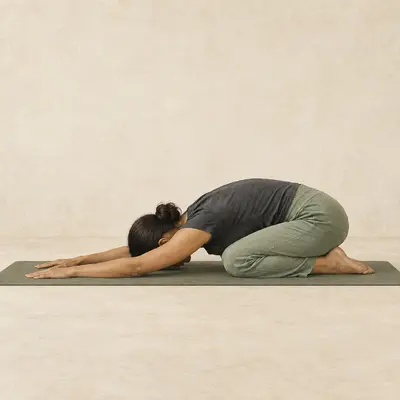
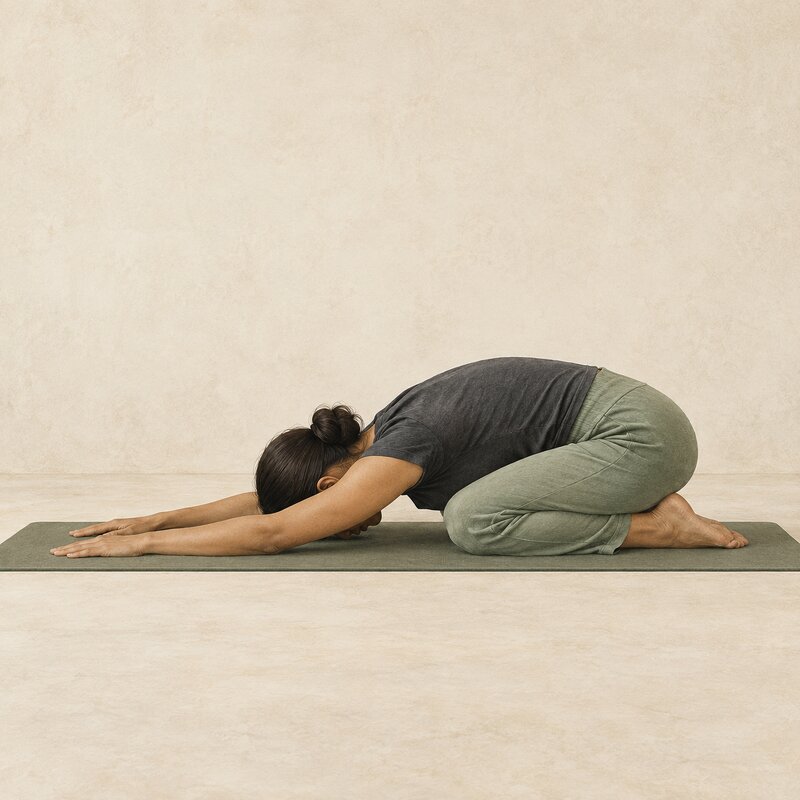
Balasana
Viparita Karani
Paschimottanasana
Setu Bandha (supported)
Marjaryasana–Bitilasana
Savasana
Making the exhale slightly longer than the inhale is simple and suits most people. Box breathing and humming breath (bhramari) are other options.
Slow styles such as restorative, yin and gentle Hatha are usually a better starting point than fast, intense classes.
No. Yoga can be a supportive part of daily life, but it is not a replacement for professional care.