शवासन
Corpse Pose
Savasana is often called the most important and the hardest pose: lying completely still while staying aware. It lets the body and mind integrate the practice.

- Hold
- 5–15 minutes
- Level
- Beginner
- Family
- Restorative, supine
- Focus
- Deep relaxation
- Works
- Whole body
- You’ll need
- Bolster under knees, Blanket, Eye pillow
- Found in
- Hatha, Gentle
- “Let the floor hold you”
- “Nothing to do”
- “Release the jaw”
Step by step
How to do Corpse Pose
StartLie on your back.
- 1
Lie on your back with legs extended slightly wider than the hips.
- 2
Let the feet fall open naturally.
- 3
Rest the arms a little away from the body, palms up.
- 4
Place a bolster under the knees if the lower back is uncomfortable.
- 5
Close your eyes and release effort from the face, jaw and shoulders.
- 6
Let the breath become natural and simply rest.
- Out
Coming out. Deepen the breath, move fingers and toes, roll onto your right side, then press up slowly to sit.
Breath
Natural, unforced breathing.
Focus
Deep relaxation
Why practise it
Gives the body a chance to rest and settle after practice, slows the breath and heart rate, and trains the skill of relaxing while staying aware. Many people find it the part of a class they miss most when it is skipped.
Go deeper
Corpse Pose: what to know
What Savasana means
Shava means corpse in Sanskrit, and the pose is lying completely still on the back, like a body at rest. It is spelled both Savasana and Shavasana; both are transliterations of the same word (शवासन) and are pronounced shah-VAH-suh-nuh. The Hatha Yoga Pradipika says it removes fatigue and gives rest to the mind.
Setting up for real comfort
- A bolster or rolled blanket under the knees takes pressure off the lower back
- A folded blanket under the head if the chin tips up
- A blanket over the body: you cool down quickly when you stop moving
- An eye pillow or folded cloth over the eyes if the room is bright
- Feet about hip-width or wider, arms a little away from the body, palms up
If you can’t relax
Lying still with nothing to do is hard for a busy mind, which is why Savasana is often called the most difficult pose. Give the attention something simple: feel the weight of the body sink into the floor, follow the breath at the belly, or move slowly from the feet to the head, softening each area. Thoughts will come; let them pass without following them. If lying flat is uncomfortable, lie on your side or rest with the legs up a wall.
Savasana vs Yoga Nidra
Savasana is the pose: lying still and resting with awareness, usually for five to fifteen minutes at the end of practice. Yoga Nidra is a guided practice done in Savasana, in which a voice leads you through stages such as body scanning and breath awareness, often for 20 to 40 minutes. Both are restful; Yoga Nidra gives the mind more structure.
Alignment
Cues & common mistakes
Aim for Body symmetrical; neck long; supported where needed.
Teacher’s cues
- “Let the floor hold you”
- “Nothing to do”
- “Release the jaw”
Watch out for
Skipping it, or fidgeting; feeling cold — use a blanket.
Make it yours
Easier, harder, supported
Bolster under knees; blanket for warmth; lie on the side in pregnancy.
- Supported Savasana with bolster
- Yoga Nidra guided relaxation
- Bolster under knees
- Blanket
- Eye pillow
In a sequence
Where it fits in a flow
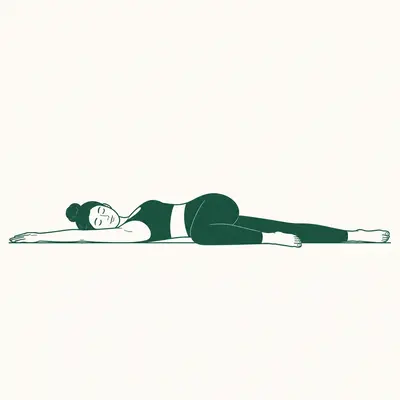 BeforeReclined Twist
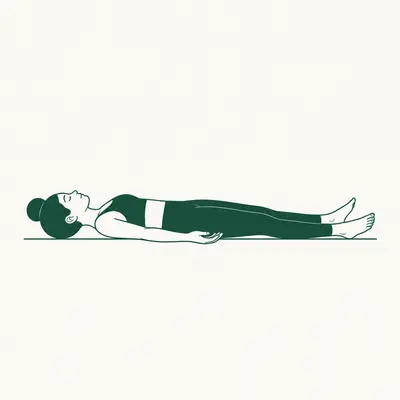 This poseCorpse Pose
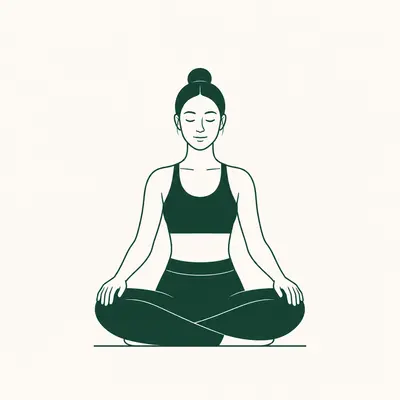 AfterEasy Seat
Good to know
Questions
How long should Savasana be?
A common guide is about five minutes for every 30 minutes of practice.
Is it OK to fall asleep?
It happens, but the aim is relaxed awareness.
Is it Savasana or Shavasana?
Both. They are two spellings of the same Sanskrit word, shava (corpse) plus asana (pose).
Why do I feel emotional in Savasana?
Stillness after movement can bring up feelings that were pushed aside. That is common and usually passes. Sit up and open your eyes if it becomes overwhelming.
How do I come out of Savasana?
Deepen the breath, move the fingers and toes, roll onto your right side and rest there for a few breaths before pressing up to sit.
Described in the Hatha Yoga Pradipika as removing fatigue and bringing rest to the mind.
What helps
Props that make this easier
- Non-slip yoga mat A 4–6 mm mat with good grip makes standing poses steadier. View on Amazon
- Cork yoga block Brings the floor closer in forward folds and supported poses. View on Amazon
- Cotton yoga strap Extends your reach in hamstring and shoulder stretches. View on Amazon
As an Amazon Associate, YogiSoul earns from qualifying purchases. Links open Amazon in your country’s store.
More restorative poses
All restorative poses
Supported Legs on a Chair

Supported Bridge
Setu Bandha (supported)

Legs Up the Wall
Viparita Karani