एक पाद उत्कटासन
Standing Figure Four
Standing Figure Four is a balancing hip opener — like Pigeon Pose on one leg.

- Hold
- 5 breaths per side
- Level
- Intermediate
- Family
- Balance, standing
- Focus
- Outer-hip stretch with balance
- Works
- Outer hips
- Glutes
- Standing leg
- You’ll need
- Wall or chair
- Found in
- Hatha
- “Flex the foot”
- “Sit back”
Step by step
How to do Standing Figure Four
StartStand in Mountain Pose.
- 1
Shift weight into the left foot.
- 2
Cross the right ankle over the left thigh just above the knee.
- 3
Flex the right foot to protect the knee.
- 4
Bend the left knee and sit the hips back as in Chair.
- 5
Bring palms to the heart or reach forward.
- 6
Hinge forward slightly for more stretch.
- Out
Coming out. Rise, uncross the leg and switch sides.
Breath
Steady breathing.
Focus
Outer-hip stretch with balance
Why practise it
Stretches the outer hip and glutes of the crossed leg, including the area around the piriformis, while the standing version also strengthens the standing leg and builds balance. Because there are standing, seated and lying versions, it suits almost everyone, and it is a common stretch for runners, cyclists and people who sit a lot.
Go deeper
Standing Figure Four: what to know
Three ways to do a figure four stretch
- Lying (reclined): on your back, cross the right ankle over the left knee, then draw the left thigh towards you; the most relaxed, knee-friendly option
- Seated: on a chair, cross the right ankle over the left knee and hinge forward from the hips with a long back; easy to do at a desk
- Standing (Eka Pada Utkatasana): from Chair Pose, cross the right ankle over the left knee and sit back; adds balance and leg strength
Protect the knee
In every version, flex the foot of the crossed leg, drawing the toes back towards the shin. This keeps the ankle and knee stable so the stretch goes into the outer hip, not the knee. Keep the crossed ankle just beyond the opposite knee rather than resting the shin on it. If you feel the stretch in the knee instead of the hip, ease off or move to the lying version.
Standing version step by step
- Stand in Mountain Pose, near a wall or chair if you like
- Shift your weight into the left foot and bend the left knee
- Cross the right ankle over the left thigh, just above the knee, and flex the right foot
- Sit the hips back as if into a chair, keeping the chest lifted and hands at the heart or on the hips
- Hold for 5 breaths, then step down slowly and switch sides
Figure four vs Pigeon Pose
Figure four and Pigeon stretch the same outer-hip area of the front leg. Pigeon also opens the hip flexor of the back leg but puts more load on the front knee and needs you to kneel. Figure four is easier to control, which is why it is the usual alternative when Pigeon is uncomfortable.
Alignment
Cues & common mistakes
Aim for Lifted foot flexed; hips level; spine long.
Teacher’s cues
- “Flex the foot”
- “Sit back”
Watch out for
Letting the crossed foot go floppy so the knee takes the strain, rounding the back to fold deeper, pushing down hard on the crossed knee, and in the standing version locking the standing knee instead of bending it.
Make it yours
Easier, harder, supported
Hold a wall or chair; reclined Figure Four.
- Hands to floor in fold
- Wall or chair
In a sequence
Where it fits in a flow
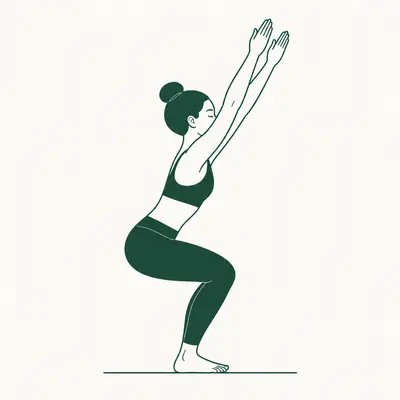 BeforeChair Pose
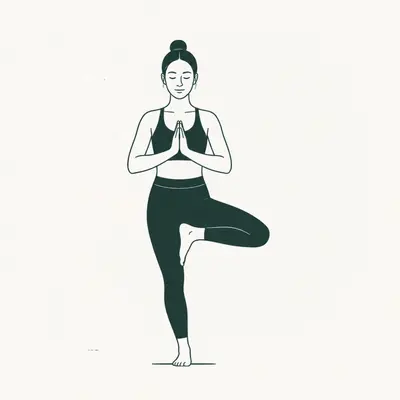 BeforeTree Pose
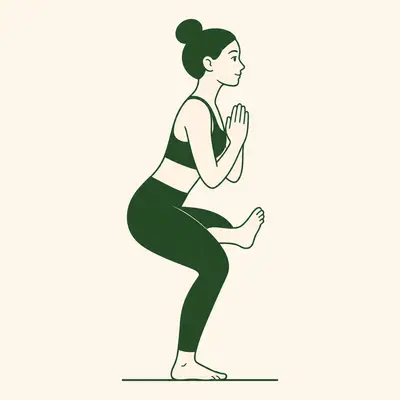 This poseStanding Figure Four
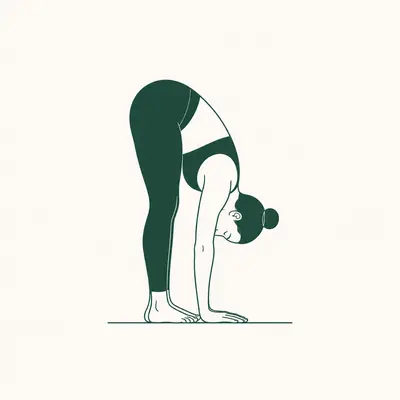 AfterStanding Forward Fold
 AfterPigeon Pose
Good to know
Questions
What does the figure four stretch stretch?
The outer hip and glutes of the crossed leg, including the piriformis area. The standing version also works the standing leg.
How long should I hold a figure four stretch?
Around 30 seconds to a minute in the lying or seated versions, and about 5 breaths in the standing version. Do both sides.
Is the figure four stretch good for sciatica?
Some people with tight glutes find it eases discomfort, but sciatica has several causes. Get advice from a physiotherapist or doctor, and stop if pain or tingling travels down the leg.
Why does my knee hurt in figure four?
Usually the crossed foot is relaxed or the hip is very tight. Flex the foot, keep the ankle beyond the knee, and use the lying version.
Can I do a figure four stretch at my desk?
Yes. Sit tall on a chair, cross one ankle over the opposite knee, and hinge forward slightly from the hips.
A modern vinyasa variation of Chair Pose.
What helps
Props that make this easier
- Non-slip yoga mat A 4–6 mm mat with good grip makes standing poses steadier. View on Amazon
- Cork yoga block Brings the floor closer in forward folds and supported poses. View on Amazon
- Cotton yoga strap Extends your reach in hamstring and shoulder stretches. View on Amazon
As an Amazon Associate, YogiSoul earns from qualifying purchases. Links open Amazon in your country’s store.
More balance poses
All balance poses
Tree Pose
Vrksasana

Warrior III
Virabhadrasana III

Half Moon
Ardha Chandrasana