वृक्षासन
Tree Pose
Vrksasana roots you through one leg like a tree. It is one of the oldest recorded standing postures and a favourite for building focus.

- Hold
- 5–10 breaths per side
- Level
- Beginner
- Family
- Balance, standing
- Focus
- Balance and concentration
- Works
- Ankles
- Legs
- Hips
- Core
- You’ll need
- Wall or chair for support, Block under raised foot
- Found in
- Hatha, Gentle
- “Root down through the standing foot”
- “Foot and thigh press into each other”
- “Soft gaze, steady breath”
Step by step
How to do Tree Pose
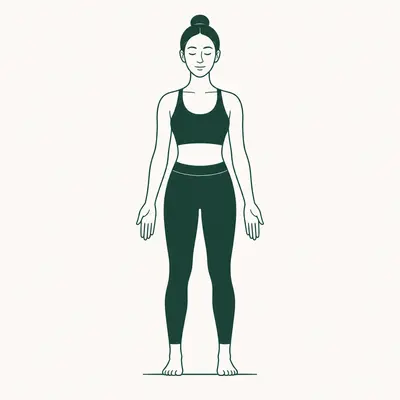
StartBegin in Mountain Pose.
- 1
From Mountain Pose, shift weight into the left foot.
- 2
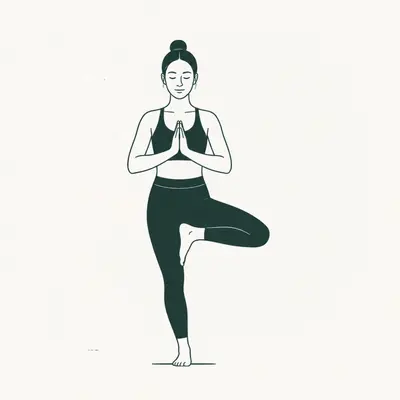
Bend the right knee and place the right foot on the left inner ankle, calf or thigh — never on the knee joint.
- 3
Press foot and leg into each other to stabilise.
- 4
Lengthen the tailbone toward the floor and keep the hips level.
- 5
Bring palms together at the chest or extend arms overhead like branches.
- 6
Fix your gaze on a still point in front of you (drishti).
- Out
Coming out. Lower the foot slowly, return to Mountain Pose and switch sides.
Breath
Slow, even breathing helps balance; if you hold your breath, you will wobble more.
Focus
Balance and concentration
Why practise it
Improves balance and steadiness, strengthens the feet, ankles and legs, opens the hip of the lifted leg and trains focused attention. Regular single-leg balance practice is linked with better balance, which matters more and more with age.
Go deeper
Tree Pose: what to know
Where to put the foot
- Kickstand: heel against the standing ankle, toes on the floor; the easiest version
- Calf: sole against the inner calf, below the knee
- Inner thigh: sole high against the inner thigh, above the knee
- Never on the side of the knee joint itself
How to balance better
Fix your gaze on a point that does not move, a little below eye level. Spread the toes of the standing foot and press down through the big toe, little toe and heel. Press the lifted foot and the standing leg into each other so they hold each other steady. Breathe slowly; holding the breath usually makes you wobble more. Wobbling is part of the pose: the small corrections are what build balance.
Arms and variations
Hands can rest at the heart in prayer position, on the hips, or reach overhead like branches. Closing the eyes makes Tree much harder because you lose visual cues, which is a good challenge once the basic pose is steady. In Half Lotus Tree, the lifted foot rests on the top of the opposite thigh; only try it with open, pain-free hips and knees.
An old pose
Standing on one leg is one of the oldest known yogic postures. A seventh-century rock carving at Mamallapuram in southern India shows an ascetic balancing on one leg with arms overhead, and the pose appears in later hatha texts as Vrksasana, from vrksa, tree.
Alignment
Cues & common mistakes
Aim for Standing knee soft, pelvis level, raised knee opens to the side.
Teacher’s cues
- “Root down through the standing foot”
- “Foot and thigh press into each other”
- “Soft gaze, steady breath”
Watch out for
Placing the foot on the knee, hiking the hip of the standing leg, and holding the breath.
Make it yours
Easier, harder, supported
Keep the toes on the floor (kickstand), or stand next to a wall.
- Arms overhead
- Eyes closed
- Half Lotus Tree for advanced practitioners
- Wall or chair for support
- Block under raised foot
In a sequence
Where it fits in a flow
Good to know
Questions
Why can’t I put my foot on my knee in Tree?
Pressure on the side of the knee joint can strain it. Place the foot above or below the knee.
How can I balance better in Tree Pose?
Fix your gaze on a still point, press foot and leg together, and breathe slowly.
How long should I hold Tree Pose?
Five to ten breaths per side. As balance improves, build up to a minute.
Is Tree Pose good for seniors?
Yes, with support. Stand beside a wall or chair and start with the kickstand version. Balance practice is one of the most useful things for staying steady with age.
Why is one side harder than the other?
Almost everyone has a steadier side. Practise both, and give the harder side a few extra breaths.
Described in medieval hatha texts and depicted in temple carvings; one of the few standing poses with a long recorded history.
What helps
Props that make this easier
- Non-slip yoga mat A 4–6 mm mat with good grip makes standing poses steadier. View on Amazon
- Cork yoga block Brings the floor closer in forward folds and supported poses. View on Amazon
- Cotton yoga strap Extends your reach in hamstring and shoulder stretches. View on Amazon
As an Amazon Associate, YogiSoul earns from qualifying purchases. Links open Amazon in your country’s store.
More balance poses
All balance poses
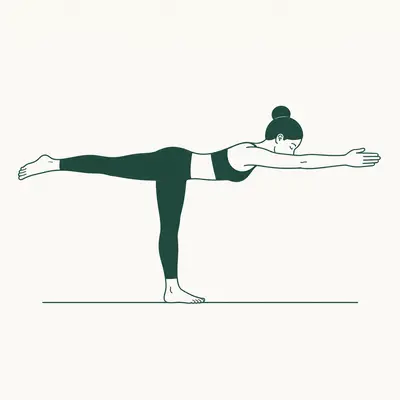
Warrior III
Virabhadrasana III

Half Moon
Ardha Chandrasana

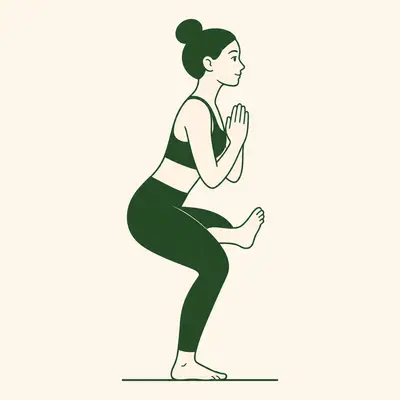
Eagle Pose
Garudasana