अर्ध चन्द्रासन
Half Moon
Ardha Chandrasana balances on one leg with the body open to the side. A block under the hand and practising against a wall make it accessible.

- Hold
- 3–6 breaths per side
- Level
- Intermediate
- Family
- Balance, standing
- Focus
- Lateral balance
- Works
- Legs
- Glutes
- Core
- Hips
- You’ll need
- Block, Wall
- Found in
- Hatha
- “Reach through the lifted heel”
- “Open the chest to the side”
- “Hand light on the block”
Step by step
How to do Half Moon
StartBegin in Triangle or Extended Side Angle.
- 1
From Triangle on the right, bend the right knee.
- 2
Place the right hand on a block about 30 cm ahead of the right foot.
- 3
Shift weight into the right foot and lift the left leg to hip height.
- 4
Straighten the standing leg without locking.
- 5
Stack the left hip over the right and open the chest.
- 6
Extend the left arm up; gaze forward or up.
- Out
Coming out. Bend the standing knee, lower the back leg and return to Triangle or step back.
Breath
Steady breaths to stay balanced.
Focus
Lateral balance
Why practise it
Strengthens the standing leg, ankle, glutes and core, opens the hips and chest, and builds balance and coordination. Working on one leg with the body open to the side also trains the small stabilising muscles around the hip and ankle.
Go deeper
Half Moon: what to know
How to get into Half Moon
- Start in Triangle or Warrior II with the right foot forward and a block near the right foot
- Bend the right knee and place the right hand on the block about 30 cm in front of and slightly outside the little-toe side of the foot
- Shift your weight into the right foot and lift the left leg as you straighten the right leg
- Raise the left leg to about hip height, toes pointing forward, foot flexed
- Stack the left hip over the right and reach the left arm up
- Hold for 3 to 6 breaths, then bend the standing knee and step back to come out
Use a block, not the floor
Most people find Half Moon much steadier with the bottom hand on a block on its tallest or middle height. Reaching for the floor often makes the chest turn down and the standing knee lock. The bottom hand should take only light weight: your standing leg and core hold the pose, the hand just helps you balance.
The wall trick
Practise with your back against a wall, or with the lifted foot pressing into a wall behind you. The wall shows you whether the hips and shoulders are stacked and lets you find the shape without worrying about falling. Gaze down at the floor first; when steady, look forward and only then try looking up at the top hand.
Half Moon vs other standing balances
- Warrior III: the hips face the floor and both arms reach forward
- Half Moon: the hips and chest open to the side, one hand down and one up
- Revolved Half Moon (Parivrtta Ardha Chandrasana): the opposite hand comes down and the chest twists towards the standing leg
- Sugarcane Pose: Half Moon with the top hand holding the lifted foot behind you
Alignment
Cues & common mistakes
Aim for Lifted leg active, foot flexed; hips stacked; shoulders stacked.
Teacher’s cues
- “Reach through the lifted heel”
- “Open the chest to the side”
- “Hand light on the block”
Watch out for
Putting too much weight into the bottom hand and turning the chest to the floor.
Make it yours
Easier, harder, supported
Back against a wall; block on highest height.
- Sugarcane (hold the lifted foot)
- Block
- Wall
In a sequence
Where it fits in a flow
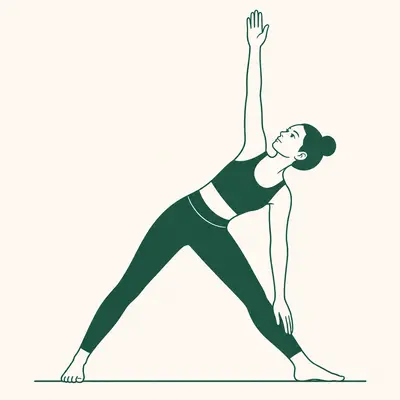 BeforeTriangle Pose
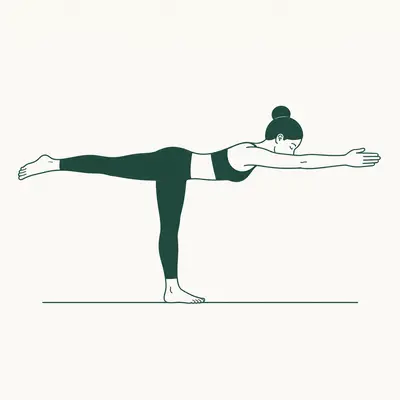 BeforeWarrior III
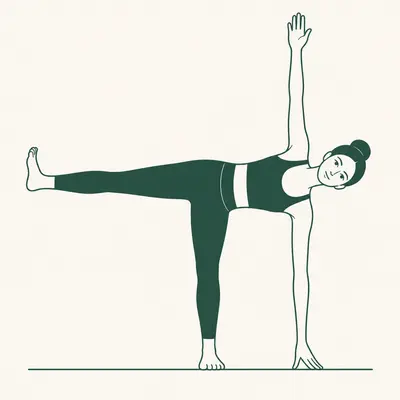 This poseHalf Moon
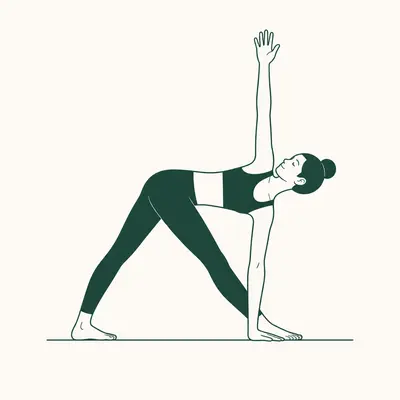 AfterRevolved Triangle
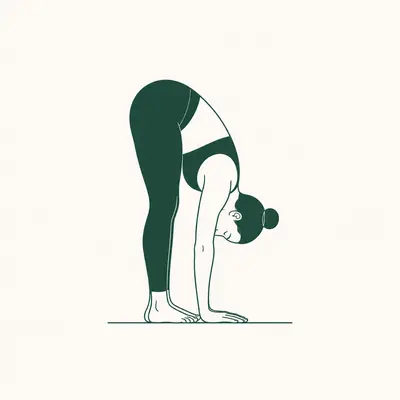 AfterStanding Forward Fold
Good to know
Questions
What is Half Moon Pose good for?
Strengthening the legs, glutes and core, opening the hips and chest, and improving balance and coordination.
Why is Half Moon so hard to balance?
You stand on one leg with the body open to the side. Use a block under the hand, practise against a wall and gaze down until you feel steady.
How long should I hold Half Moon?
3 to 6 breaths per side, building to 30 seconds as your balance improves.
Where should I look in Half Moon?
Down at the floor is easiest. Forward or up at the top hand is harder; avoid looking up if you have neck problems.
What does Ardha Chandrasana mean?
Ardha means half and chandra means moon. The pose is said to evoke the shape of a half or crescent moon.
Chandra means moon; the pose evokes a crescent's shape.
What helps
Props that make this easier
- Non-slip yoga mat A 4–6 mm mat with good grip makes standing poses steadier. View on Amazon
- Cork yoga block Brings the floor closer in forward folds and supported poses. View on Amazon
- Cotton yoga strap Extends your reach in hamstring and shoulder stretches. View on Amazon
As an Amazon Associate, YogiSoul earns from qualifying purchases. Links open Amazon in your country’s store.
More balance poses
All balance poses
Tree Pose
Vrksasana

Warrior III
Virabhadrasana III

Eagle Pose
Garudasana