वसिष्ठासन
Side Plank
Vasisthasana is named after the sage Vasistha. It strengthens the obliques and shoulders.

- Hold
- 3–5 breaths per side
- Level
- Intermediate
- Family
- Core, prone
- Focus
- Lateral core strength
- Works
- Obliques
- Shoulders
- Wrists
- You’ll need
- Yoga mat
- Found in
- Hatha
- “Lift the hips”
- “Stack the shoulders”
Step by step
How to do Side Plank
StartBegin in Plank.
- 1
From Plank, shift weight into the right hand.
- 2
Roll onto the outer edge of the right foot.
- 3
Stack the left foot on the right, or stagger it in front.
- 4
Lift the hips and extend the left arm up.
- 5
Form a straight line from head to heels.
- Out
Coming out. Return to Plank and switch sides.
Breath
Steady breaths.
Focus
Lateral core strength
Why practise it
Strengthens the obliques and the deep muscles along the side of the trunk, as well as the shoulders, wrists, glutes and outer hips. It trains the body to resist bending sideways, which supports a stable spine, and it builds balance and focus.
Go deeper
Side Plank: what to know
Setting up the base
- Place the bottom hand slightly in front of the shoulder, fingers spread, and press the floor away
- Keep the bottom shoulder away from the ear so you are not hanging in the joint
- Stack the feet for the full pose, or stagger the top foot in front for a wider, steadier base
- Lift the hips until the body forms one straight line from head to heels
- Reach the top arm up, or rest the top hand on the hip if the shoulder is tired
Knee-down and forearm versions
Knee-Supported Side Plank, with the bottom knee on the mat and the lower leg angled back, keeps the same line through the trunk with much less load. It is the best place to start if a full side plank is shaky or uncomfortable. The forearm version, with the elbow under the shoulder, takes the wrist out of the pose and is a common choice in strength and back-care routines.
How long to hold
Start with 3 to 5 steady breaths per side, or about 10 to 20 seconds. Build towards 30 to 60 seconds over a few weeks. Several shorter holds with good form are more useful than one long hold where the hips drop. Always work both sides, and expect one to feel harder.
Variations to progress
- Tree leg: place the top foot on the inner thigh or calf of the bottom leg
- Top leg lift: raise the top leg towards hip height
- Hip dips: lower the hips a few centimetres and lift them back up, slowly
- Hand-to-big-toe (Vasisthasana proper): hold the top big toe and extend the leg upwards; advanced
Alignment
Cues & common mistakes
Aim for Hand slightly ahead of shoulder; hips lifted.
Teacher’s cues
- “Lift the hips”
- “Stack the shoulders”
Watch out for
Letting the hips sag towards the floor, piking the hips back behind the line of the body, sinking into the bottom shoulder, and placing the hand directly under or behind the shoulder so the joint takes the strain.
Make it yours
Easier, harder, supported
Lower knee (Knee-Supported Side Plank); stagger feet.
- Tree leg variation
- Yoga mat
In a sequence
Where it fits in a flow
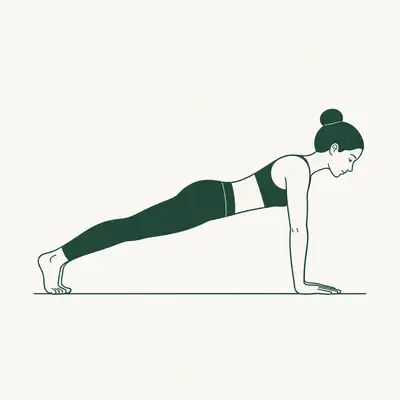 BeforePlank Pose
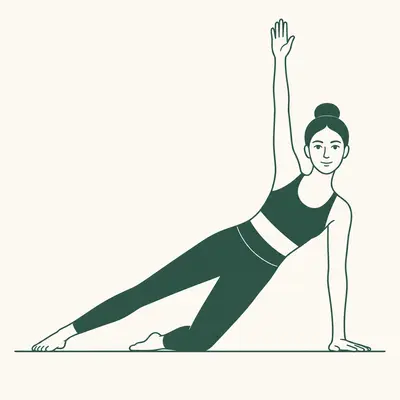 BeforeKnee-Supported Side Plank
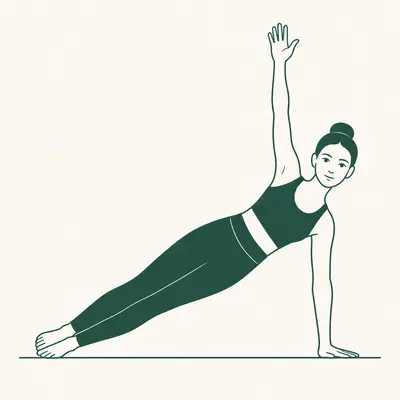 This poseSide Plank
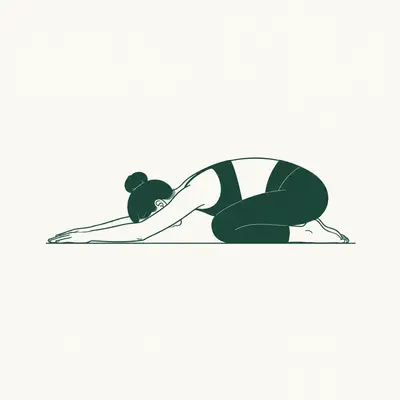 AfterChild’s Pose
Good to know
Questions
How long should I hold a side plank?
Start with 10 to 20 seconds per side and build towards 30 to 60 seconds, keeping the hips lifted throughout.
What muscles does Side Plank work?
Mainly the obliques and other muscles along the side of the trunk, plus the shoulders, wrists, glutes and outer hips.
Why does side plank hurt my wrist?
Often because the hand is under or behind the shoulder, or the shoulder is sinking. Move the hand slightly forward and press the floor away, or switch to the forearm version.
Is side plank better than a regular plank?
They train different things. A regular plank resists the back arching; a side plank resists bending sideways. Doing both gives a more complete core routine.
Is Side Plank good for back pain?
It is often included in back-stability routines because it trains the trunk with little load on the spine. If you have back pain, start with the knee-down version and follow a professional’s advice.
Honours the sage Vasistha.
What helps
Props that make this easier
- Non-slip yoga mat A 4–6 mm mat with good grip makes standing poses steadier. View on Amazon
- Cork yoga block Brings the floor closer in forward folds and supported poses. View on Amazon
- Cotton yoga strap Extends your reach in hamstring and shoulder stretches. View on Amazon
As an Amazon Associate, YogiSoul earns from qualifying purchases. Links open Amazon in your country’s store.


