Knee-Supported Side Plank
Also called Half Side Plank
This variation builds side-body strength with the bottom knee providing support.

- Hold
- 3–5 breaths per side
- Level
- Beginner
- Family
- Core, side-lying
- Focus
- Lateral core strength
- Works
- Obliques
- Shoulders
- You’ll need
- Blanket under knee
- Found in
- Hatha
- “Lift the hips”
Step by step
How to do Knee-Supported Side Plank
StartBegin in Tabletop.
- 1
From Tabletop, extend the left leg out to the side.
- 2
Place the right hand under the shoulder, right knee down.
- 3
Rotate the torso open to the left.
- 4
Lift the left arm toward the ceiling.
- 5
Keep the hips lifted.
- Out
Coming out. Return to Tabletop and switch sides.
Breath
Steady breaths.
Focus
Lateral core strength
Why practise it
Builds side-body strength.
Go deeper
Knee-Supported Side Plank: what to know
Side-body strength with a wider base
Keeping the bottom knee down gives this side plank a much more stable base, so you can focus on lifting the hips and opening the chest. It works the obliques and the muscles around the shoulder and outer hip, which often get less attention in everyday movement. It is a good first step if full Side Plank feels too heavy on the wrist or too hard to balance.
How to do a side plank on your knees
- Start in Tabletop with a blanket under the knees if needed
- Place the right hand directly under the right shoulder, or slightly forward of it
- Extend the left leg back or out to the side, with the left foot on the floor
- Turn the chest to the left and stack the left shoulder over the right
- Lift the hips away from the floor so the right thigh and torso form a long line
- Raise the left arm, hold for 3 to 5 breaths, then return to Tabletop and change sides
Options
- Forearm down: takes the load off the wrist, with the elbow under the shoulder
- Top hand on the hip: easier on the shoulder and steadier for balance
- From lying on your side: rest on the forearm with knees bent and stacked, then lift the hips
- Full Side Plank: lift the bottom knee when 5 steady breaths feel easy
Common mistakes
- Letting the bottom hip sink toward the floor
- Sinking into the supporting shoulder instead of pressing the floor away
- Placing the hand too far from the shoulder, which strains the joint
- Rolling the chest toward the floor rather than keeping it open
Who should take care
Come down to the forearm with a sore wrist, and skip the pose with a recent shoulder injury. Pad the bottom knee, since it carries a good part of your weight. In later pregnancy, or after abdominal surgery, ask a qualified teacher or your clinician whether this kind of core work suits you.
Alignment
Cues & common mistakes
Aim for Hips lifted; shoulder over wrist.
Teacher’s cues
- “Lift the hips”
Watch out for
Sinking the hip.
Make it yours
Easier, harder, supported
Forearm down.
- Side Plank
- Blanket under knee
In a sequence
Where it fits in a flow
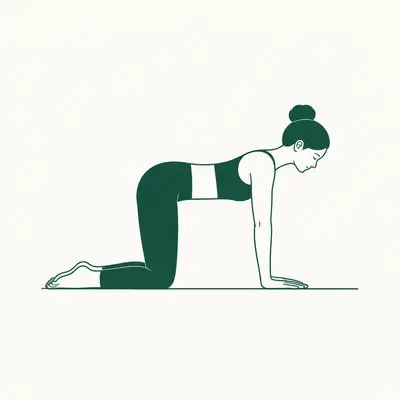 BeforeTabletop
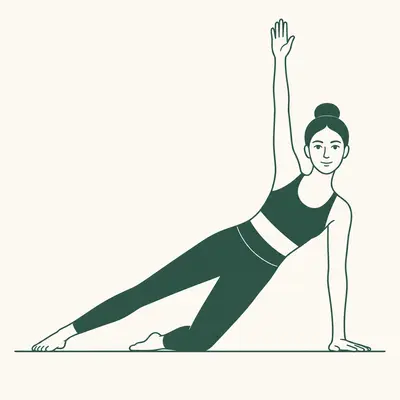 This poseKnee-Supported Side Plank
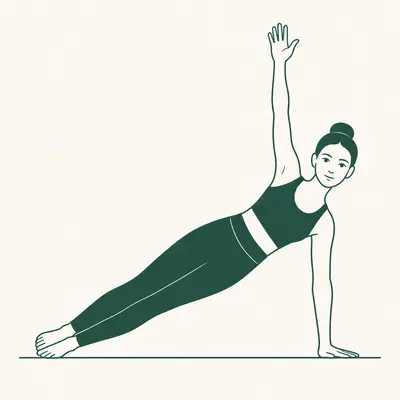 AfterSide Plank
Good to know
Questions
What does a side plank on the knees work?
Mainly the obliques, shoulder stabilisers and outer hip of the supporting side.
How long should I hold it?
3 to 5 breaths per side to start. Build up to 10 breaths with your hips still lifted.
When can I move on to full Side Plank?
When you can hold 5 steady breaths on each side without your hip sinking, try lifting the bottom knee.
Can I do it if my wrists hurt?
Yes. Lower onto the forearm with the elbow under the shoulder.
What is the difference between this and Side Plank?
In Vasisthasana only the hand and foot touch the floor. Here the bottom knee also supports you, which makes it steadier and lighter.
A modern modification.
What helps
Props that make this easier
- Non-slip yoga mat A 4–6 mm mat with good grip makes standing poses steadier. View on Amazon
- Cork yoga block Brings the floor closer in forward folds and supported poses. View on Amazon
- Cotton yoga strap Extends your reach in hamstring and shoulder stretches. View on Amazon
As an Amazon Associate, YogiSoul earns from qualifying purchases. Links open Amazon in your country’s store.


