Kneeling Plank
Also called Half Plank, Knees-Down Plank
Kneeling Plank keeps the alignment of full Plank while reducing the load.

- Hold
- 5–10 breaths
- Level
- Beginner
- Family
- Core, prone
- Focus
- Foundational core strength
- Works
- Core
- Shoulders
- Arms
- You’ll need
- Blanket under knees
- Found in
- Hatha
- “Hips in line”
- “Press away”
Step by step
How to do Kneeling Plank
StartBegin in Tabletop.
- 1
From Tabletop, walk the knees back slightly.
- 2
Lower the hips to form a line from head to knees.
- 3
Hands under shoulders.
- 4
Engage the core and press the floor away.
- Out
Coming out. Return to Tabletop or Child's Pose.
Breath
Steady breathing.
Focus
Foundational core strength
Why practise it
Builds core and arm strength.
Go deeper
Kneeling Plank: what to know
The same line, with less weight
Kneeling Plank keeps the body in a straight line from the head to the knees while the knees take some of the load. Because the lever is shorter, the arms and abdominals have less weight to hold up, so you can practise good form for longer. The most common error is leaving the hips high in a Tabletop shape, which takes the work away from the core.
How to do Kneeling Plank
- Start in Tabletop with the hands under the shoulders and a blanket under the knees if needed
- Walk the knees back until the hips can lower into a straight line with the shoulders
- Tuck the tailbone slightly and draw the lower belly in
- Press the floor away so the upper back does not sink between the shoulder blades
- Keep the neck long and look at the floor just ahead of the hands
- Hold for 5 to 10 breaths, then rest in Child's Pose
Kneeling Plank vs full Plank
- Kneeling Plank: the line runs from head to knees, for a lighter load on the arms and core
- Plank Pose: the line runs from head to heels, and the whole body weight is carried
- Forearm Plank: elbows down, which takes the load off the wrists and asks more of the abdominals
How to progress
- Build up to 10 steady breaths with the hips in line
- Lift one knee at a time for a breath or two, keeping the hips level
- Hold full Plank for a few breaths, then lower the knees when your form starts to slip
- Repeat short holds rather than one long one that ends with a sagging back
Who should take care
Pad the knees if they are sensitive. For sore wrists, spread the fingers and press through the whole hand, or come down onto the forearms. Stop if the lower back aches, as that usually means the hips have sagged. In pregnancy or after abdominal surgery, ask a qualified teacher or your clinician about suitable core work, and ease off if the belly domes along the midline.
Alignment
Cues & common mistakes
Aim for Straight line from head to knees.
Teacher’s cues
- “Hips in line”
- “Press away”
Watch out for
Hips too high.
Make it yours
Easier, harder, supported
Pad the knees.
- Plank Pose
- Blanket under knees
In a sequence
Where it fits in a flow
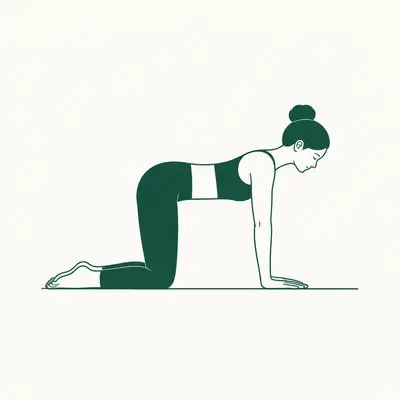 BeforeTabletop
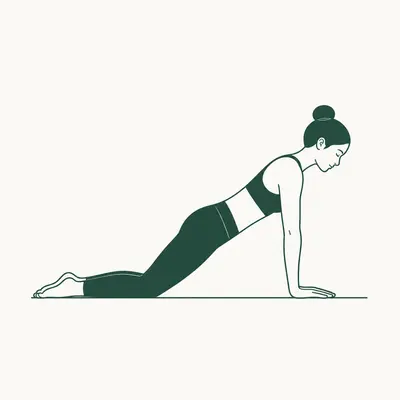 This poseKneeling Plank
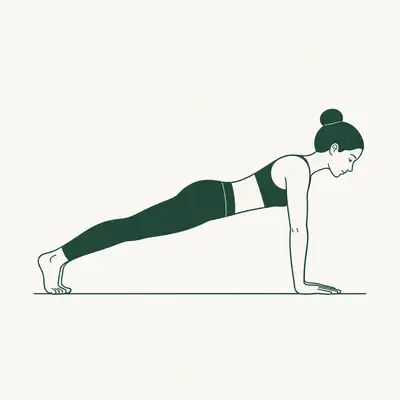 AfterPlank Pose
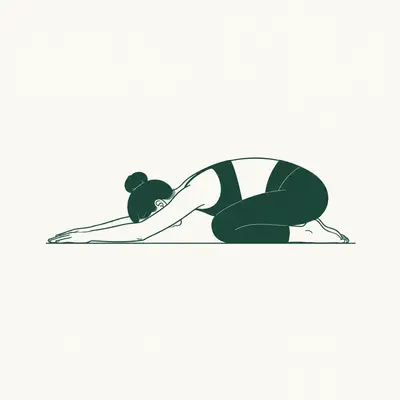 AfterChild’s Pose
Good to know
Questions
Is a kneeling plank effective?
Yes. It trains the same alignment as full Plank with a lighter load, which makes it a useful way to build strength.
What muscles does a kneeling plank work?
Mainly the abdominals, shoulders, chest and arms, with some work for the glutes.
How long should I hold a kneeling plank?
Start with 5 to 10 breaths and repeat two or three times. Stop when your hips begin to drop.
Why do my knees hurt in a kneeling plank?
They may need more padding. Fold a blanket under them, and try to rest above the kneecap rather than directly on it.
When can I move on to a full plank?
When you can hold 10 steady breaths with your hips in line, try full Plank for a few breaths at a time.
A modern modification.
What helps
Props that make this easier
- Non-slip yoga mat A 4–6 mm mat with good grip makes standing poses steadier. View on Amazon
- Cork yoga block Brings the floor closer in forward folds and supported poses. View on Amazon
- Cotton yoga strap Extends your reach in hamstring and shoulder stretches. View on Amazon
As an Amazon Associate, YogiSoul earns from qualifying purchases. Links open Amazon in your country’s store.


