अधो मुख वृक्षासन
Handstand
Handstand is a joyful advanced pose. Build it gradually with wall drills.

- Hold
- 3–10 breaths
- Level
- Advanced
- Family
- Inversion, inversion
- Focus
- Advanced arm balance
- Works
- Shoulders
- Wrists
- Core
- You’ll need
- Wall
- Found in
- Hatha
- “Push the floor away”
Step by step
How to do Handstand
StartDownward Dog with hands about 10 cm from a wall.
- 1
Place hands shoulder-width, a hand's length from the wall.
- 2
Walk the feet in toward the hands.
- 3
Lift one leg up.
- 4
Hop lightly off the bottom foot to bring both legs to the wall.
- 5
Press the floor away and stack shoulders over wrists.
- 6
Engage the core.
- Out
Coming out. Lower one leg at a time and rest in Child's Pose.
Breath
Steady breathing.
Focus
Advanced arm balance
Why practise it
Builds strength in the shoulders, arms, wrists and core, improves body awareness and balance, and trains you to stay calm and focused while upside down. Learning it step by step is also a good way to build confidence.
Go deeper
Handstand: what to know
What you need before you start
- Comfortable in Downward-Facing Dog for about a minute
- A steady Plank and Forearm Plank for 30 seconds or more
- Shoulders that can lift the arms fully overhead without the back arching
- Wrists that are warmed up and pain-free when bearing weight
- A clear space and a wall, with nothing breakable nearby
Learn to come down first
Before you go up, practise getting out. Facing away from a wall, if you tip over, turn one hand out and step down sideways in a cartwheel exit, rather than falling straight over onto your back. Practise it from a low kick a few times so it becomes automatic. Knowing you can bail safely makes the rest of the learning much less frightening.
Wall drills step by step
- L-shape: hands on the floor a leg’s length from the wall, walk the feet up the wall to hip height so the body makes an L; hold for 5 to 10 breaths
- Wall walk: from plank with the feet at the wall, walk the feet up and the hands in until the chest faces the wall
- Kick-ups: facing the wall, hands about a hand’s length away, practise small, controlled hops before full kicks
- Wall hold: once up, press the floor away, draw the ribs in and stack hips over shoulders over wrists
- Toe taps: slowly take one foot and then the other off the wall to find balance
Who should avoid it
Skip handstands, or ask a doctor first, if you have high blood pressure, glaucoma or other eye pressure problems, a heart condition, a recent head, neck, shoulder or wrist injury, or are pregnant and not already practised in them. Come down straight away if you feel dizzy, a headache or pressure in the eyes.
Alignment
Cues & common mistakes
Aim for Shoulders over wrists.
Teacher’s cues
- “Push the floor away”
Watch out for
Kicking up too hard and flipping over, bending the elbows, letting the back arch into a banana shape, looking too far forward or back, and practising without first learning how to come down.
Make it yours
Easier, harder, supported
L-shape at a wall.
- Free-standing handstand
- Wall
In a sequence
Where it fits in a flow
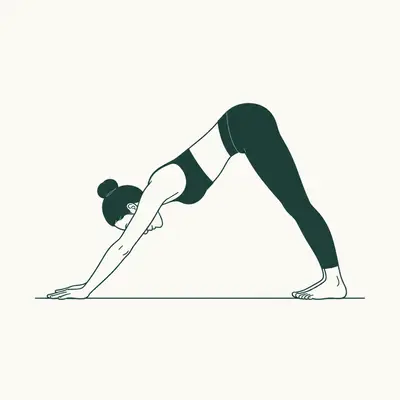 BeforeDownward-Facing Dog
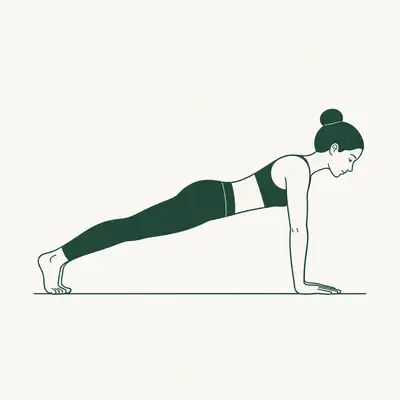 BeforePlank Pose
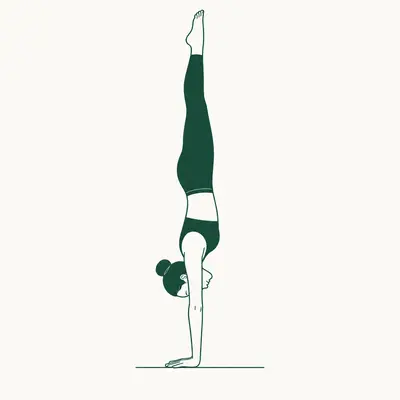 This poseHandstand
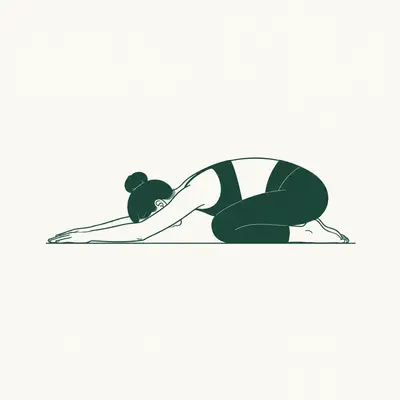 AfterChild’s Pose
Good to know
Questions
How long does it take to learn a handstand?
It varies a lot. With regular practice a few times a week, many adults can hold a wall handstand within a few weeks; a free-standing handstand usually takes months.
How do I stop falling over in a handstand?
Kick up gently rather than hard, keep the arms straight and the fingers pressing into the floor, and practise the cartwheel exit so falling becomes a controlled step-down.
Should I face the wall or have my back to it?
Back to the wall (kicking up) is the usual start. Chest to the wall (walking up) trains a straighter line and is a great second drill.
Is a handstand bad for your wrists?
Not if you build up gradually. Warm the wrists first, spread the fingers and press through the whole hand, and stop if you feel pain.
What does Adho Mukha Vrksasana mean?
Downward-facing tree pose: adho means downward, mukha means face and vrksa means tree.
A modern addition to yoga practice.
What helps
Props that make this easier
- Non-slip yoga mat A 4–6 mm mat with good grip makes standing poses steadier. View on Amazon
- Cork yoga block Brings the floor closer in forward folds and supported poses. View on Amazon
- Cotton yoga strap Extends your reach in hamstring and shoulder stretches. View on Amazon
As an Amazon Associate, YogiSoul earns from qualifying purchases. Links open Amazon in your country’s store.
More inversion poses
All inversion poses
Supported Shoulderstand
Salamba Sarvangasana

Headstand
Salamba Sirsasana