नटराजासन
Dancer Pose
Natarajasana honours Shiva as the cosmic dancer. It blends balance, strength and a backbend.

- Hold
- 3–5 breaths per side
- Level
- Intermediate
- Family
- Balance, standing
- Focus
- Balance with backbend
- Works
- Quads
- Hip flexors
- Chest
- Shoulders
- You’ll need
- Strap, Wall
- Found in
- Hatha
- “Kick into the hand”
- “Reach forward and back equally”
Step by step
How to do Dancer Pose
StartStand in Mountain Pose.
- 1
Shift weight into the left foot.
- 2
Bend the right knee and hold the inside of the right foot or ankle with the right hand.
- 3
Extend the left arm forward.
- 4
Press the right foot into the hand and begin to tip forward.
- 5
Lift the right leg behind you, opening the chest.
- 6
Keep the hips square and the standing leg strong.
- Out
Coming out. Return upright, release the foot and switch sides.
Breath
Smooth, steady breathing.
Focus
Balance with backbend
Why practise it
Builds balance and strength in the standing leg and ankle, stretches the front of the lifted thigh, the hip flexors, the chest and the shoulders, and works the back muscles. It also needs focus, which many people find absorbing.
Go deeper
Dancer Pose: what to know
How to do Dancer Pose
- Stand in Mountain Pose and shift your weight into the left foot
- Bend the right knee and hold the inside of the right foot or ankle with the right hand
- Bring the knees side by side and lift the left arm up
- Press the right foot back into the hand and slowly tip the chest forward
- Let the right leg rise behind you as the left arm reaches forward
- Hold for 3 to 5 breaths, then come back up slowly and switch sides
Kick back, don’t pull
As in Bow Pose, the lift comes from pressing the foot back into the hand, not pulling the foot up with the arm. Kicking back opens the chest and lifts the leg together. Keep the lifted knee pointing back rather than swinging out to the side, and keep the standing hip from pushing out.
Easier ways in
- Stay upright, holding the foot, as a standing quad stretch
- Hold a wall or the back of a chair with the free hand
- Loop a strap around the lifted foot if you cannot reach it
- Keep the chest higher and the leg lower until balance improves
Safety
Avoid the deep backbend with a lower back injury, and keep the shape small if you have knee or shoulder problems. Practise near a wall if balance is an issue. Follow it with a gentle forward fold to release the back.
Alignment
Cues & common mistakes
Aim for Knee of lifted leg in line with hip; hips level.
Teacher’s cues
- “Kick into the hand”
- “Reach forward and back equally”
Watch out for
Lifted knee swinging out wide; collapsing the standing hip.
Make it yours
Easier, harder, supported
Use a strap; keep upright; hand on wall.
- Full Dancer with both hands overhead
- Strap
- Wall
In a sequence
Where it fits in a flow
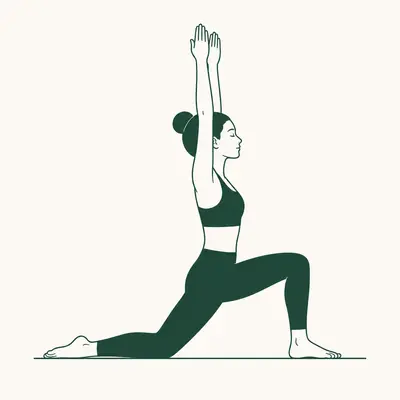 BeforeLow Lunge
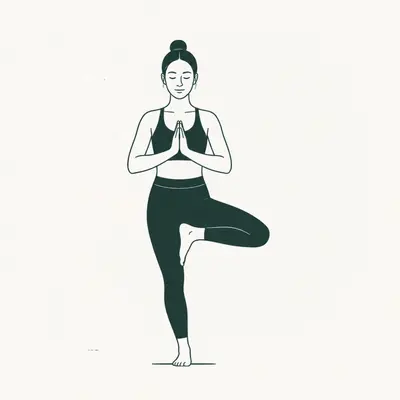 BeforeTree Pose
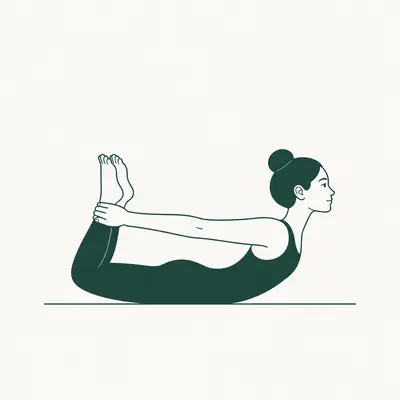 BeforeBow Pose
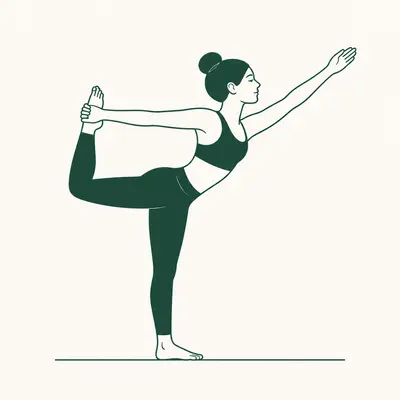 This poseDancer Pose
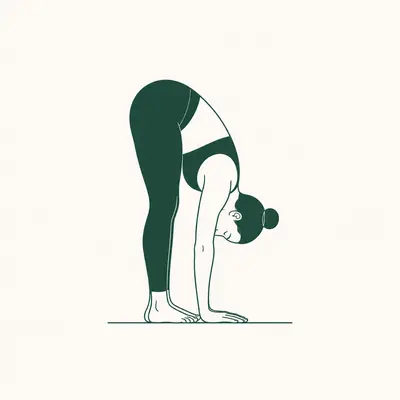 AfterStanding Forward Fold
Good to know
Questions
What is Dancer Pose good for?
Improving balance, strengthening the standing leg and stretching the hip flexors, thighs, chest and shoulders.
How long should I hold Dancer Pose?
3 to 5 breaths per side, building to 30 seconds.
I keep falling out of Dancer. What helps?
Fix the gaze on one point, keep the standing leg strong and use a wall. Lower the leg and keep the chest higher until you feel steady.
Can I use a strap in Dancer Pose?
Yes. Loop it around the lifted foot and hold it with one or both hands.
What does Natarajasana mean?
Nataraja means lord of the dance, a form of the Hindu god Shiva shown dancing.
Inspired by the Nataraja form of Shiva in Indian iconography.
What helps
Props that make this easier
- Non-slip yoga mat A 4–6 mm mat with good grip makes standing poses steadier. View on Amazon
- Cork yoga block Brings the floor closer in forward folds and supported poses. View on Amazon
- Cotton yoga strap Extends your reach in hamstring and shoulder stretches. View on Amazon
As an Amazon Associate, YogiSoul earns from qualifying purchases. Links open Amazon in your country’s store.
More balance poses
All balance poses
Tree Pose
Vrksasana

Warrior III
Virabhadrasana III

Half Moon
Ardha Chandrasana