Constructive Rest
Also called Semi-Supine, Hook-Lying Rest
Constructive Rest is a simple, supported resting position used in yoga, somatics and the Alexander Technique. It is a gentle alternative to flat-backed lying.

- Hold
- 3–10 minutes
- Level
- Beginner
- Family
- Supine, supine
- Focus
- Rest and lower-back release
- Works
- Lower back
- Hips
- You’ll need
- Folded blanket under head, Strap around thighs (optional)
- Found in
- Hatha, Gentle
- “Let the floor hold you”
- “Knees lean on each other”
- “Long, slow exhales”
Step by step
How to do Constructive Rest
StartLie on your back on the mat.
- 1
Lie on your back with knees bent and feet flat, hip-width apart or wider.
- 2
Let the knees rest against each other if this feels easier.
- 3
Place a folded blanket under the head so the chin is level.
- 4
Rest hands on the belly or by your sides.
- 5
Allow the back to settle into the floor without pressing it down.
- Out
Coming out. Roll onto one side, rest for a breath, then press up to sit.
Breath
Slow, relaxed breathing, feeling the belly rise and fall under your hands.
Focus
Rest and lower-back release
Why practise it
Many people find Constructive Rest an easy way to let the back, hips and shoulders release, because the bent knees take the arch out of the lower back. It is often used in movement teaching, such as Alexander Technique, as a way to notice and let go of unnecessary tension. Claims that it releases the psoas or resets the nervous system are common, but there is little direct research behind them.
Go deeper
Constructive Rest: what to know
What Constructive Rest is
Constructive Rest is a lying-down position with the knees bent and the feet on the floor. It is used in yoga, Alexander Technique and some physiotherapy settings as a resting position that is often more comfortable for the lower back than lying with the legs straight. Nothing has to be done in it; the aim is simply to rest without holding effort.
How to do Constructive Rest
- Lie on your back with the knees bent and the feet flat on the floor
- Place the feet wider than the hips and let the knees fall in towards each other, so the legs lean together without effort
- Rest the head on a folded blanket or thin book if the chin tips up
- Rest the hands on the belly or let the arms lie on the floor by the sides
- Let the breath move on its own
- Rest for 5 to 15 minutes, then roll to one side before getting up
Constructive Rest vs Savasana
- Constructive Rest: knees bent, lower back supported, often easier for a sensitive back
- Savasana: legs extended, usually at the end of a practice
- Either can be used for relaxation; choose the one that is more comfortable for your back
Making it work for you
If keeping the knees together takes effort, tie a strap loosely around the thighs. Place a cushion under the head or a rolled blanket under the knees if needed. In later pregnancy, or if lying on the back makes you dizzy or short of breath, rest on your side instead. It is a resting position, not a treatment; see a professional for persistent back pain.
Alignment
Cues & common mistakes
Aim for Head supported, neck long; feet wide enough that the legs can rest.
Teacher’s cues
- “Let the floor hold you”
- “Knees lean on each other”
- “Long, slow exhales”
Watch out for
Holding the legs up with effort; letting the head tip back.
Make it yours
Easier, harder, supported
Use a strap around the thighs so legs need no effort.
- Supported Bridge
- Legs on a Chair
- Folded blanket under head
- Strap around thighs (optional)
In a sequence
Where it fits in a flow
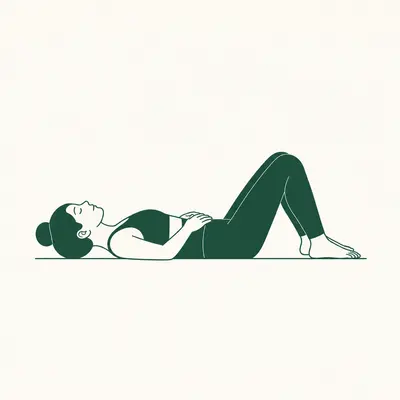 This poseConstructive Rest
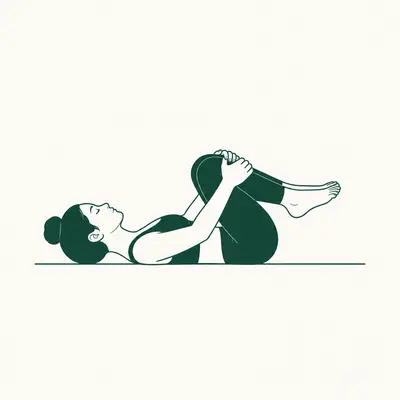 AfterKnees-to-Chest
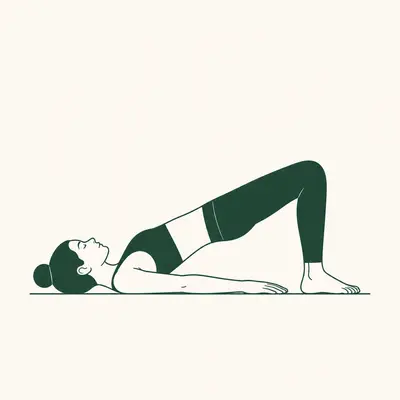 AfterBridge Pose
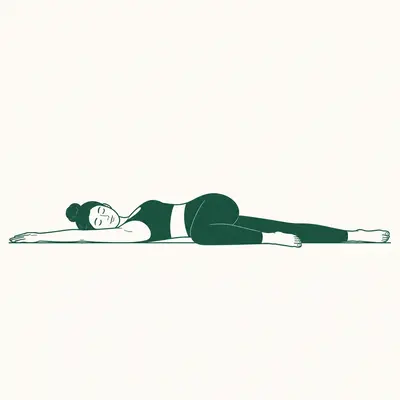 AfterReclined Twist
Good to know
Questions
What is the Constructive Rest Position good for?
Resting with the lower back supported, and letting tension in the back, hips and shoulders release.
How long should I stay in Constructive Rest?
5 to 15 minutes is common. Even a few minutes can feel restful.
Does Constructive Rest release the psoas?
That is often claimed, but there is little direct research on it. Many people simply find it a comfortable, relaxing position.
Is Constructive Rest good for lower back pain?
Many people find it more comfortable than lying flat. It is not a treatment, so see a professional for persistent pain.
Why do my knees fall apart in Constructive Rest?
Place the feet wider and let the knees lean in, or loop a strap around the thighs.
Comes from modern somatic and movement education rather than classical yoga texts.
What helps
Props that make this easier
- Non-slip yoga mat A 4–6 mm mat with good grip makes standing poses steadier. View on Amazon
- Cork yoga block Brings the floor closer in forward folds and supported poses. View on Amazon
- Cotton yoga strap Extends your reach in hamstring and shoulder stretches. View on Amazon
As an Amazon Associate, YogiSoul earns from qualifying purchases. Links open Amazon in your country’s store.
More supine poses
All supine poses
Knees-to-Chest
Apanasana

Reclined Hand-to-Big-Toe
Supta Padangusthasana