प्रसारित पादोत्तानासन
Wide-Legged Forward Fold
The wide stance makes this fold feel more stable than Uttanasana, and the head moves toward the floor in a gentle half-inversion.

- Hold
- 5–10 breaths
- Level
- Beginner
- Family
- Forward fold, standing
- Focus
- Hamstring and inner-thigh stretch
- Works
- Hamstrings
- Inner thighs
- Back
- You’ll need
- Block under head or hands
- Found in
- Hatha, Gentle
- “Lift the arches”
- “Fold from the hips”
- “Weight slightly forward”
Step by step
How to do Wide-Legged Forward Fold
StartStand facing the long side of the mat.
- 1
Step feet wide, 1–1.3 metres apart, toes slightly in.
- 2
Place hands on hips and lengthen the spine.
- 3
Exhale and hinge forward from the hips with a flat back.
- 4
Place hands on the floor or blocks under the shoulders.
- 5
Fold deeper, bending elbows back and letting the head release.
- 6
Press into the outer edges of the feet.
- Out
Coming out. Bring hands to hips, inhale and rise with a long back; step feet together.
Breath
Exhale to deepen; keep the breath relaxed with the head low.
Focus
Hamstring and inner-thigh stretch
Why practise it
Stretches hamstrings and inner legs and is traditionally considered calming.
Go deeper
Wide-Legged Forward Fold: what to know
Find the right width
A wider stance is not automatically deeper. If the feet are so far apart that they slide or the inner knees strain, the legs stop supporting you. A good starting point is about a leg’s length apart, with the outer edges of the feet parallel. Bend the knees as much as needed so that you fold from the hips rather than rounding the back.
How to do Wide-Legged Forward Fold
- Stand facing the long side of the mat with the feet wide and parallel, or the toes turned in slightly
- Place the hands on the hips and lengthen the spine as you breathe in
- Breathing out, fold forward from the hips with a long back
- Bring the hands to the floor or blocks under the shoulders
- Bend the elbows back and let the crown of the head move towards the floor, without resting weight on it
- Hold for 5 to 10 breaths; to come up, bring the hands to the hips, bend the knees slightly and rise slowly with a long spine
Hand variations
- A: hands on the floor between the feet
- B: hands stay on the hips
- C: fingers interlaced behind the back, arms reaching over the head
- D: first two fingers hooked around the big toes
Making it work for you
Rest the hands or head on a block if the floor is far away. Bend the knees with tight hamstrings or a sensitive lower back. Come up slowly, especially if you feel light-headed when standing. Avoid long head-down holds with glaucoma or uncontrolled high blood pressure; keep the back flat and the head above the heart instead.
Alignment
Cues & common mistakes
Aim for Feet parallel or toes slightly in; hips over heels; spine long.
Teacher’s cues
- “Lift the arches”
- “Fold from the hips”
- “Weight slightly forward”
Watch out for
Stance too wide causing strain, and rounding the back.
Make it yours
Easier, harder, supported
Bend the knees; hands on blocks; head on a block.
- Hands clasped behind the back
- Twist variation
- Block under head or hands
In a sequence
Where it fits in a flow
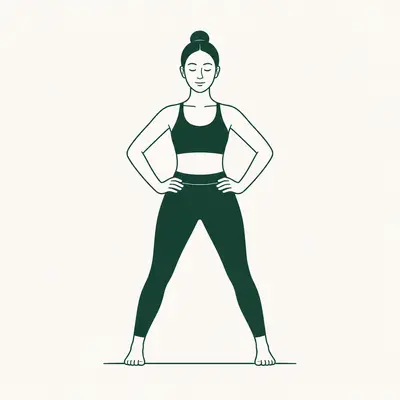 BeforeWide-Legged Standing
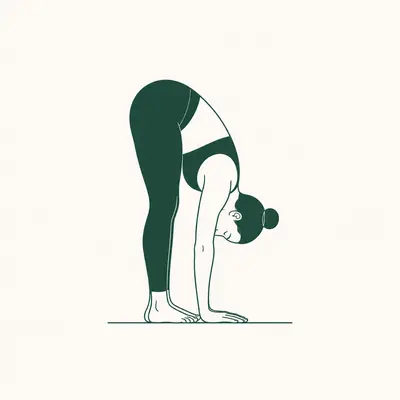 BeforeStanding Forward Fold
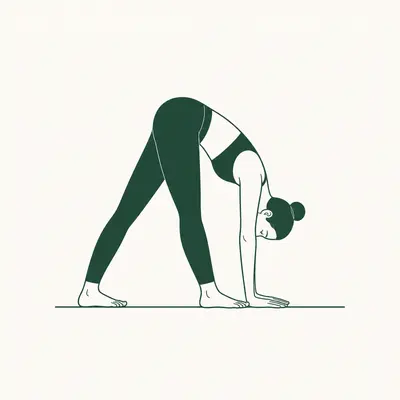 This poseWide-Legged Forward Fold
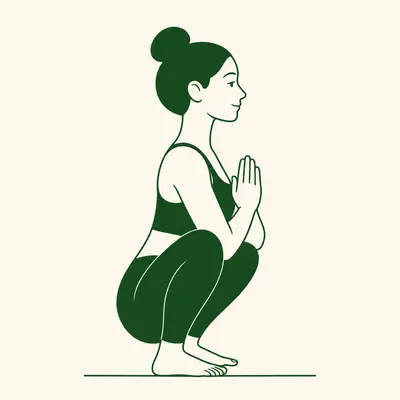 AfterGarland Pose
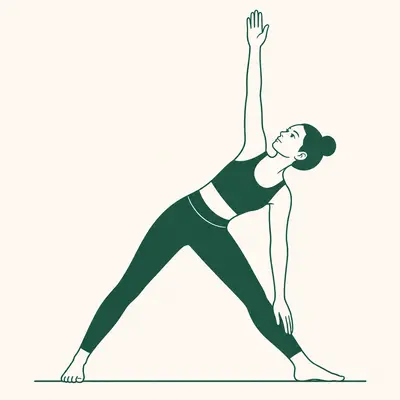 AfterTriangle Pose
Good to know
Questions
What is Wide-Legged Forward Fold good for?
Stretching the hamstrings, inner thighs and calves, with a broad, stable base that many people find easier than folding with the feet together.
How wide should my feet be?
About a leg’s length apart is a good start. Narrow the stance if the feet slide or the knees strain.
Should my head touch the floor?
Not necessarily. It depends on your proportions; a block under the head works well if you want support.
Is Prasarita Padottanasana an inversion?
It is a mild one, as the head goes below the heart. Rise slowly to avoid dizziness.
How long should I hold Wide-Legged Forward Fold?
5 to 10 breaths, or up to a minute or two in a slower practice.
Prasarita means spread out; a staple of the Ashtanga standing series.
What helps
Props that make this easier
- Non-slip yoga mat A 4–6 mm mat with good grip makes standing poses steadier. View on Amazon
- Cork yoga block Brings the floor closer in forward folds and supported poses. View on Amazon
- Cotton yoga strap Extends your reach in hamstring and shoulder stretches. View on Amazon
As an Amazon Associate, YogiSoul earns from qualifying purchases. Links open Amazon in your country’s store.
More forward fold poses
All forward fold poses
Child’s Pose
Balasana

Downward-Facing Dog
Adho Mukha Svanasana

Standing Forward Fold
Uttanasana