अर्ध मत्स्येन्द्रासन
Gentle Seated Twist
Twists rotate the spine and help balance forward folds and backbends. This gentle variation keeps the legs simple so you can focus on lengthening before you turn.

- Hold
- 5–8 breaths per side
- Level
- Beginner
- Family
- Twist, seated
- Focus
- Spinal rotation
- Works
- Spine
- Chest
- Shoulders
- Hips
- You’ll need
- Folded blanket under hips, Block behind you for the back hand
- Found in
- Hatha, Gentle
- “Inhale tall, exhale turn”
- “Twist from the belly, not the neck”
- “Sitting bones stay heavy”
Step by step
How to do Gentle Seated Twist
StartSit tall in Easy Seat or with legs extended.
- 1
Sit cross-legged or with legs extended, on a blanket for height.
- 2
Inhale and lengthen up through the spine.
- 3
Exhale and turn the torso to the right, starting from the belly.
- 4
Place the left hand on the right knee and the right hand behind you.
- 5
Keep both sitting bones grounded.
- 6
Turn the head last, only as far as is comfortable.
- Out
Coming out. Inhale to return to centre, then repeat to the left.
Breath
Inhale to lengthen; exhale to turn a little more.
Focus
Spinal rotation
Why practise it
Rotates the spine and stretches the muscles around it, the outer hip and the chest and shoulders. Twists are often used to balance forward bends and backbends in a practice, and many people find they ease stiffness after sitting.
Go deeper
Gentle Seated Twist: what to know
Lengthen first, then turn
A good twist starts with a tall spine. Sit on a folded blanket so the pelvis is upright, inhale to grow taller, and exhale to turn a little further. Turn from the belly and lower ribs first, then the chest, and finally the head. If you round or slump to twist further, you lose the length that makes the twist comfortable and safe.
How to do a gentle seated twist
- Sit with the legs crossed or extended, on a blanket or cushion
- Bend the right knee and place the right foot outside the left knee, or keep both legs crossed
- Place the right hand on the floor behind you, close to the hip, fingers pointing back
- Hug the right knee with the left arm, or hook the left elbow outside it
- Inhale to lengthen and exhale to turn to the right, keeping both sit bones down
- Hold for 5 to 8 breaths, then unwind slowly and switch sides
Use the arms lightly
The arms help you stay upright and add a little turn, but they should not crank you into the twist. Pressing hard with the elbow against the knee often puts the force into the lower back or the knee. Think of the arms as guides, and let the twist come from the spine and the breath.
Chair twist and safety
Sitting sideways on a chair and holding the backrest gives a simple, steady twist that is easy to do at a desk. Keep twists gentle and smaller with a disc problem or sacroiliac joint pain. In pregnancy, choose open twists that turn away from the bent knee, so the belly is not squeezed, and check with your midwife or doctor.
Alignment
Cues & common mistakes
Aim for Lengthen first, then twist; shoulders stay level and relaxed.
Teacher’s cues
- “Inhale tall, exhale turn”
- “Twist from the belly, not the neck”
- “Sitting bones stay heavy”
Watch out for
Leveraging hard with the arms and collapsing the spine to turn further.
Make it yours
Easier, harder, supported
Sit on a chair and twist using the backrest.
- Ardha Matsyendrasana (full)
- Reclined Twist
- Folded blanket under hips
- Block behind you for the back hand
In a sequence
Where it fits in a flow
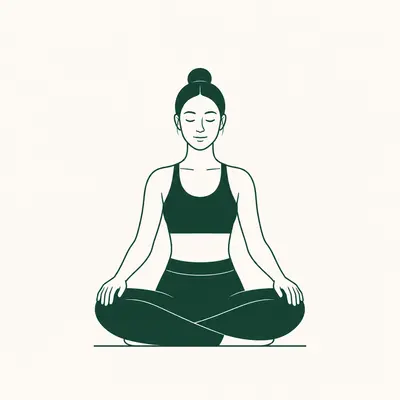 BeforeEasy Seat
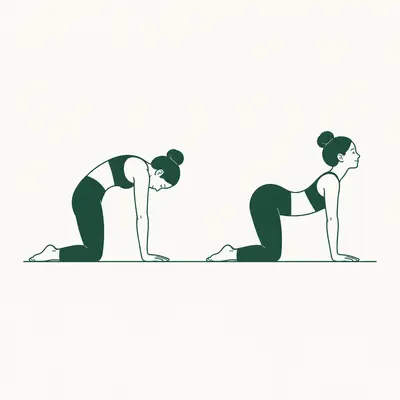 BeforeCat–Cow
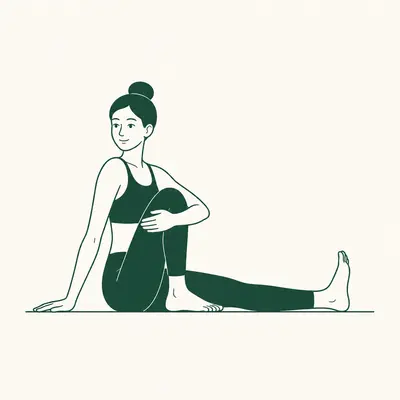 This poseGentle Seated Twist
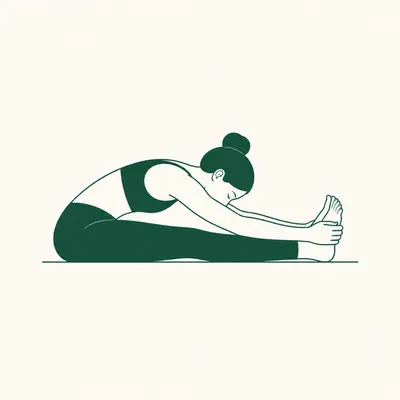 AfterSeated Forward Fold
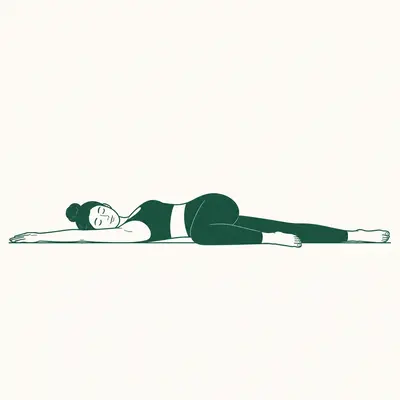 AfterReclined Twist
Good to know
Questions
What is a seated twist good for?
Gently rotating the spine, stretching the outer hip, chest and shoulders, and easing stiffness from sitting.
Which way should I twist first?
Traditionally to the right first, then the left, but the order makes little difference. Always do both sides.
How long should I hold a seated twist?
5 to 8 breaths per side, or up to a minute.
Is a seated twist good for back pain?
Many people find gentle twisting eases stiffness. Keep it small and stop if it hurts or causes pain down the leg.
What does Ardha Matsyendrasana mean?
Half lord of the fishes pose, named after the sage Matsyendra, said to be one of the founders of hatha yoga.
Named after the sage Matsyendra, said to be a founder of hatha yoga.
What helps
Props that make this easier
- Non-slip yoga mat A 4–6 mm mat with good grip makes standing poses steadier. View on Amazon
- Cork yoga block Brings the floor closer in forward folds and supported poses. View on Amazon
- Cotton yoga strap Extends your reach in hamstring and shoulder stretches. View on Amazon
As an Amazon Associate, YogiSoul earns from qualifying purchases. Links open Amazon in your country’s store.
More twist poses
All twist poses
Reclined Twist
Supta Matsyendrasana

Revolved Triangle
Parivrtta Trikonasana

Revolved Side Angle
Parivrtta Parsvakonasana