Thunderbolt Seat
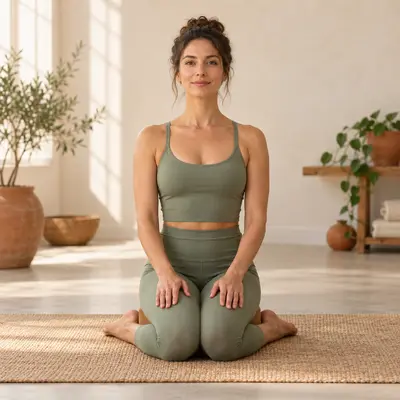
Vajrasana is one of the most widely used kneeling seats in yoga and is traditionally practised after meals.
- Level
- Beginner
- Hold
- 1–10 minutes
- Focus
- Upright kneeling seat
- Steps
- 5 cues · ~1 min

- Spine tall
- Shoulders soft
Step by step
How to do Thunderbolt Seat
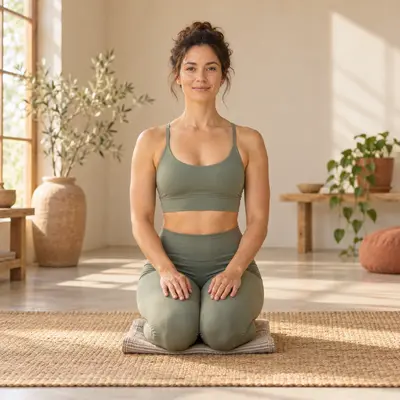
StartKneel with knees together.
- 1
Kneel with knees together and big toes touching.
- 2
Sit back onto the heels.
- 3
Place a cushion between heels and hips if needed.
- 4
Rest hands on the thighs.
- 5
Lengthen the spine and relax the shoulders.
- ↩
Coming out. Lean forward and come onto hands and knees; stretch the feet.
Breath
Slow, steady nasal breathing.
Focus
Upright kneeling seat
Why practise it
A steady seat for breathwork; traditionally associated with supporting digestion.
Alignment
Cues & common mistakes
Aim for Spine upright; weight even on both heels.
Teacher’s cues
- “Spine tall”
- “Shoulders soft”
Watch out for
Slumping; ignoring numbness in the feet.
Make it yours
Easier, harder, supported
Cushion between hips and heels; blanket under ankles.
- Toes tucked for a foot stretch
- Cushion between hips and heels
- Blanket under ankles
In a sequence
Where it fits in a flow
 This poseThunderbolt Seat
 AfterHero Pose
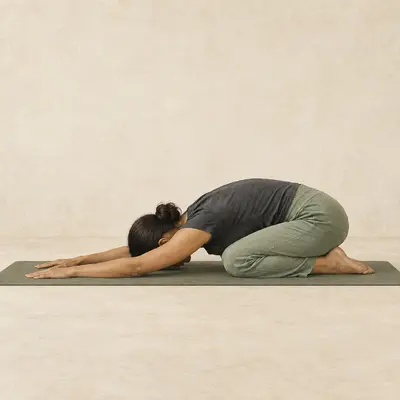 AfterChild’s Pose
Good to know
Questions
Why sit in Vajrasana after eating?
It is a traditional recommendation in hatha yoga, associated with comfortable digestion.
Vajra means thunderbolt or diamond; described in the Gheranda Samhita.
What helps
Props that make this easier
- Non-slip yoga mat A 4–6 mm mat with good grip makes standing poses steadier. View on Amazon
- Cork yoga block Brings the floor closer in forward folds and supported poses. View on Amazon
- Cotton yoga strap Extends your reach in hamstring and shoulder stretches. View on Amazon
As an Amazon Associate, YogiSoul earns from qualifying purchases. Links open Amazon in your country’s store.
Keep exploring