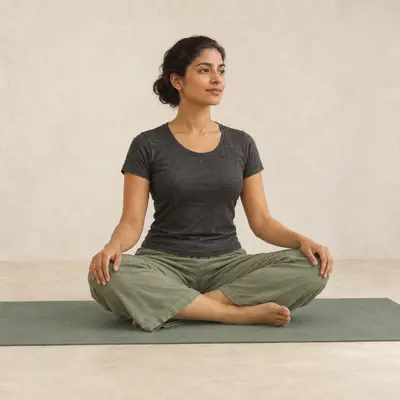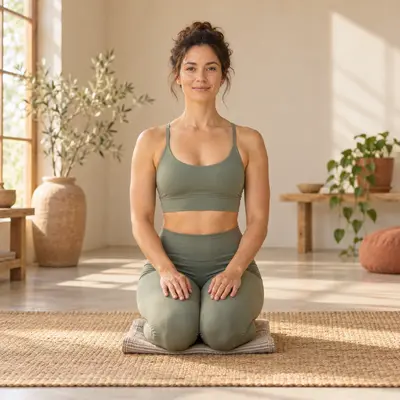
Lotus Pose
Padmasana is the iconic meditation posture of yoga. Many people never need it; Easy Seat serves meditation just as well.
- Level
- Advanced
- Hold
- 1–20 minutes
- Focus
- Stable meditation seat
- Steps
- 5 cues · ~1 min

- Only with open hips
- Never force the knees
Step by step
How to do Lotus Pose
StartSit on a cushion with legs extended.
- 1
Begin in Half Lotus with the right foot on the left thigh.
- 2
Cradle the left shin and rotate from the hip.
- 3
Lift the left foot over onto the right thigh.
- 4
Both knees rest toward the floor.
- 5
Lengthen the spine and rest the hands on the knees.
- ↩
Coming out. Release the top foot first with your hands, then the other.
Breath
Slow, steady nasal breathing.
Focus
Stable meditation seat
Why practise it
Traditionally regarded as the most stable seat for meditation and pranayama.
Alignment
Cues & common mistakes
Aim for Hips externally rotated; knees pain-free.
Teacher’s cues
- “Only with open hips”
- “Never force the knees”
Watch out for
Forcing the second foot into place.
Make it yours
Easier, harder, supported
Half Lotus or Easy Seat.
- Bound Lotus (advanced)
- Cushion
In a sequence
Where it fits in a flow
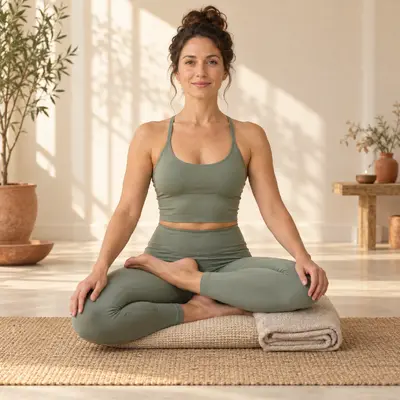 BeforeHalf Lotus
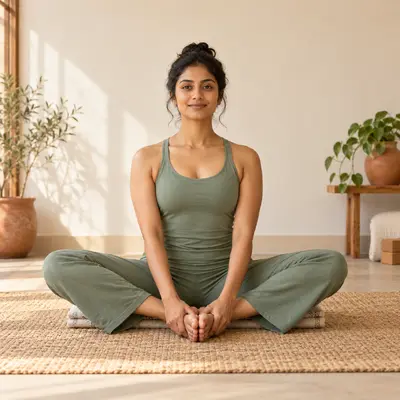 BeforeBound Angle Pose
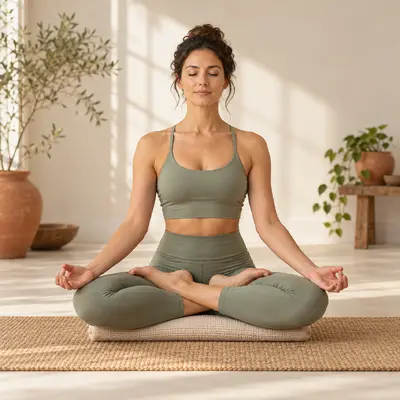 This poseLotus Pose
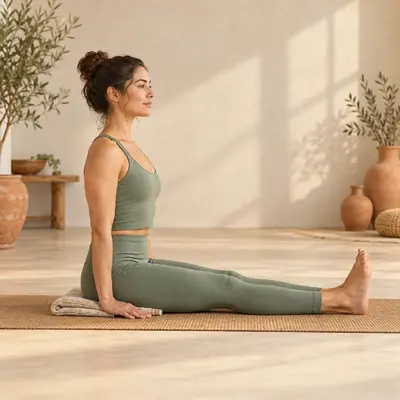 AfterStaff Pose
Good to know
Questions
Do I need Lotus to meditate?
No. Any comfortable, upright seat — including a chair — works.
Described in the Hatha Yoga Pradipika as destroyer of all diseases (a traditional claim).
What helps
Props that make this easier
- Non-slip yoga mat A 4–6 mm mat with good grip makes standing poses steadier. View on Amazon
- Cork yoga block Brings the floor closer in forward folds and supported poses. View on Amazon
- Cotton yoga strap Extends your reach in hamstring and shoulder stretches. View on Amazon
As an Amazon Associate, YogiSoul earns from qualifying purchases. Links open Amazon in your country’s store.
Keep exploring