विपरीत वीरभद्रासन
Reverse Warrior
Reverse Warrior balances the strength of Warrior II with a spacious side stretch.

- Hold
- 3–5 breaths per side
- Level
- Beginner
- Family
- Standing, standing
- Focus
- Side stretch with leg strength
- Works
- Side body
- Legs
- Shoulders
- You’ll need
- Yoga mat
- Found in
- Hatha
- “Keep the front knee bent”
- “Lift before you lean”
- “Light hand on the back leg”
Step by step
How to do Reverse Warrior
StartBegin in Warrior II.
- 1
From Warrior II with the right knee bent, turn the right palm up.
- 2
Inhale and reach the right arm up and back.
- 3
Slide the left hand lightly down the back leg.
- 4
Keep the front knee bent over the ankle.
- 5
Lengthen both sides of the waist.
- Out
Coming out. Return to Warrior II and switch sides.
Breath
Inhale to reach up; breathe into the stretching side.
Focus
Side stretch with leg strength
Why practise it
Stretches side body; strengthens legs.
Go deeper
Reverse Warrior: what to know
Keep the front knee bent
The most common thing that happens in Reverse Warrior is that the front leg straightens as the arm reaches back. The pose is a side bend on top of Warrior II, so the front knee stays bent over the ankle the whole time. Think of reaching up and over rather than back and down, and let the back hand rest lightly on the back leg rather than sliding down it.
How to do Reverse Warrior
- Start in Warrior II with the right knee bent and the arms out at shoulder height
- Turn the right palm up
- Breathing in, reach the right arm up and slightly back, lengthening the right side of the body
- Rest the left hand lightly on the back of the left thigh or calf, without leaning on it
- Keep the front knee bent over the ankle and the hips low
- Hold for 3 to 5 breaths, return to Warrior II and switch sides
Reverse Warrior in a flow
- Warrior II to Reverse Warrior and back is a common pairing in Vinyasa classes
- Reverse Warrior often leads into Extended Side Angle by bringing the front forearm to the thigh
- In some classes it is called Peaceful Warrior
Making it work for you
Keep the top hand on the hip if the shoulder hurts, or shorten the stance if the front knee will not stay bent. Look forward or at the floor rather than up at the top hand if the neck is sensitive. Keep the side bend modest if the lower back pinches; the length comes from the ribs, not from arching the lower back.
Alignment
Cues & common mistakes
Aim for Front knee stays bent; weight stays centred.
Teacher’s cues
- “Keep the front knee bent”
- “Lift before you lean”
- “Light hand on the back leg”
Watch out for
Straightening the front leg and leaning on the back leg.
Make it yours
Easier, harder, supported
Hand on hip; shorter stance.
- Bound Reverse Warrior
- Yoga mat
In a sequence
Where it fits in a flow
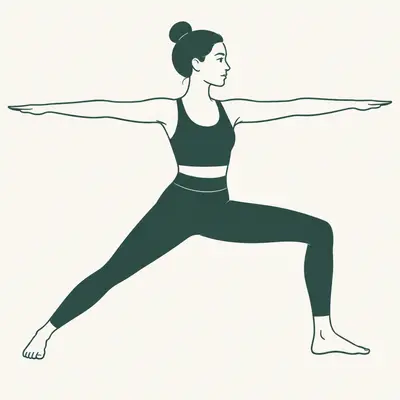 BeforeWarrior II
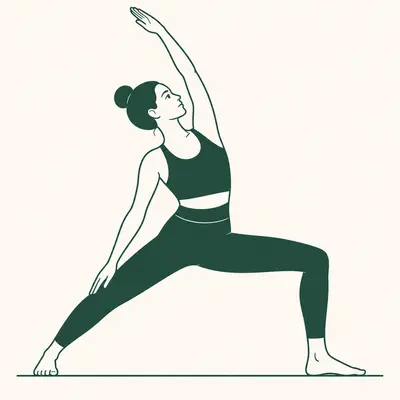 This poseReverse Warrior
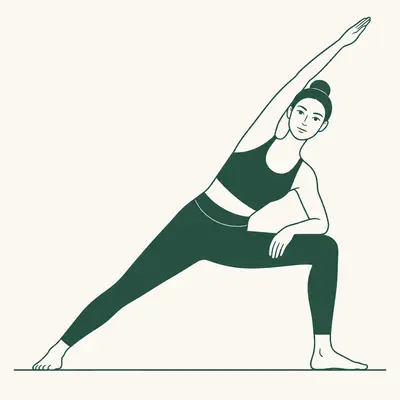 AfterExtended Side Angle
Good to know
Questions
What is Reverse Warrior good for?
Stretching the side body and intercostal muscles while the legs and glutes work to hold Warrior II.
Is Reverse Warrior the same as Peaceful Warrior?
Yes, they are common names for the same pose, Viparita Virabhadrasana.
Should I lean on my back leg in Reverse Warrior?
No. Rest the back hand lightly and keep the weight between both feet.
Why does my front knee straighten in Reverse Warrior?
Usually because the body tips back. Reach up more than back and press the front knee forward.
How long should I hold Reverse Warrior?
3 to 5 breaths per side is typical, often as part of a flow.
A modern vinyasa addition to the warrior family.
What helps
Props that make this easier
- Non-slip yoga mat A 4–6 mm mat with good grip makes standing poses steadier. View on Amazon
- Cork yoga block Brings the floor closer in forward folds and supported poses. View on Amazon
- Cotton yoga strap Extends your reach in hamstring and shoulder stretches. View on Amazon
As an Amazon Associate, YogiSoul earns from qualifying purchases. Links open Amazon in your country’s store.
More standing poses
All standing poses
Mountain Pose
Tadasana

Warrior II
Virabhadrasana II

Chair Pose
Utkatasana