अर्ध नावासन
Half Boat
Half Boat lowers the torso and legs toward the floor, increasing the core challenge.

- Hold
- 3–5 breaths
- Level
- Intermediate
- Family
- Core, seated
- Focus
- Deep core strength
- Works
- Abdominals
- Hip flexors
- You’ll need
- Yoga mat
- Found in
- Hatha
- “Lower back heavy”
Step by step
How to do Half Boat
StartBegin in Boat Pose.
- 1
From Boat, exhale and lower the torso and legs.
- 2
Hover the shoulders and feet just off the floor.
- 3
Keep the lower back lightly connected to the floor.
- 4
Extend arms forward or alongside the body.
- Out
Coming out. Return to Boat or lower down to rest.
Breath
Steady, short breaths.
Focus
Deep core strength
Why practise it
Builds abdominal strength.
Go deeper
Half Boat: what to know
Low and controlled
Half Boat lowers both the chest and the legs from Boat Pose until they hover just above the floor, balancing on the buttocks and lower back. That makes it much harder for the abdominal muscles. The key is to stop at the height where the lower back stays close to the floor, rather than letting it arch as the legs come down.
How to do Half Boat
- Sit with the knees bent and the feet on the floor, then lean back and lift the feet into Boat Pose
- Reach the arms forward, parallel to the floor
- Breathing out, lower the upper back and the legs together, keeping the knees bent at first
- Stop where the lower back stays heavy and close to the floor
- Straighten the legs if you can keep that position
- Hold for 3 to 5 breaths, then return to Boat Pose or bring the knees to the chest
Half Boat vs Boat vs Hollow Hold
- Boat Pose (Navasana): torso and legs form a V, balancing on the sitting bones
- Half Boat (Ardha Navasana): torso and legs lowered close to the floor, harder on the abdominals
- Hollow Hold, from gymnastics: very similar, lying with the lower back pressed into the floor
Who should take care
Keep the knees bent, or do Boat Pose instead, if the lower back arches or hurts. Avoid it in pregnancy, after abdominal surgery, with a hernia or with a lower-back injury. If you notice the belly doming along the midline, which can be a sign of abdominal separation, choose a gentler core exercise.
Alignment
Cues & common mistakes
Aim for Lower back stays supported.
Teacher’s cues
- “Lower back heavy”
Watch out for
Lower back arching off the floor.
Make it yours
Easier, harder, supported
Bend the knees.
- Boat Pose
- Yoga mat
In a sequence
Where it fits in a flow
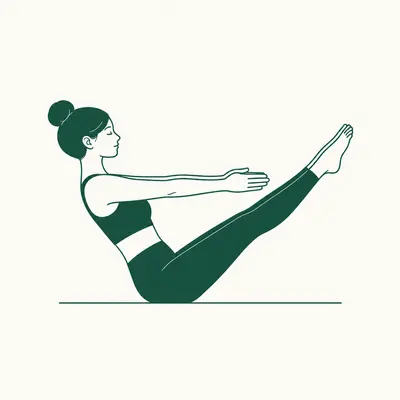 BeforeBoat Pose
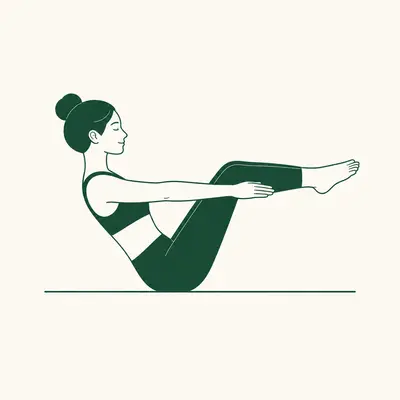 This poseHalf Boat
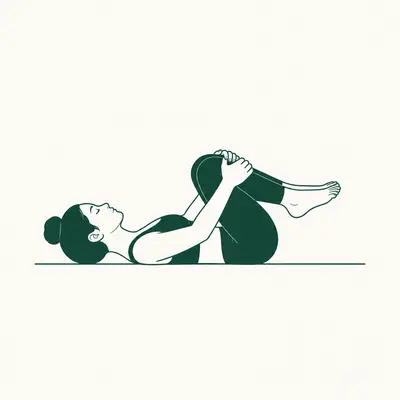 AfterKnees-to-Chest
Good to know
Questions
What is Half Boat Pose good for?
Building strength in the abdominal muscles and hip flexors.
What is the difference between Half Boat and Boat Pose?
Half Boat lowers the chest and legs close to the floor, which makes it harder for the core than the V shape of Boat.
Why does my lower back hurt in Half Boat?
The legs are probably too low for your current strength. Bend the knees or lift the legs higher.
How long should I hold Half Boat?
3 to 5 breaths, repeated a few times with rests.
Is Half Boat safe in pregnancy?
It is usually avoided in pregnancy. Ask a qualified prenatal teacher about suitable core work.
A variation of Navasana.
What helps
Props that make this easier
- Non-slip yoga mat A 4–6 mm mat with good grip makes standing poses steadier. View on Amazon
- Cork yoga block Brings the floor closer in forward folds and supported poses. View on Amazon
- Cotton yoga strap Extends your reach in hamstring and shoulder stretches. View on Amazon
As an Amazon Associate, YogiSoul earns from qualifying purchases. Links open Amazon in your country’s store.


