- Reflection
- Astrology
Learn the language of a chart.
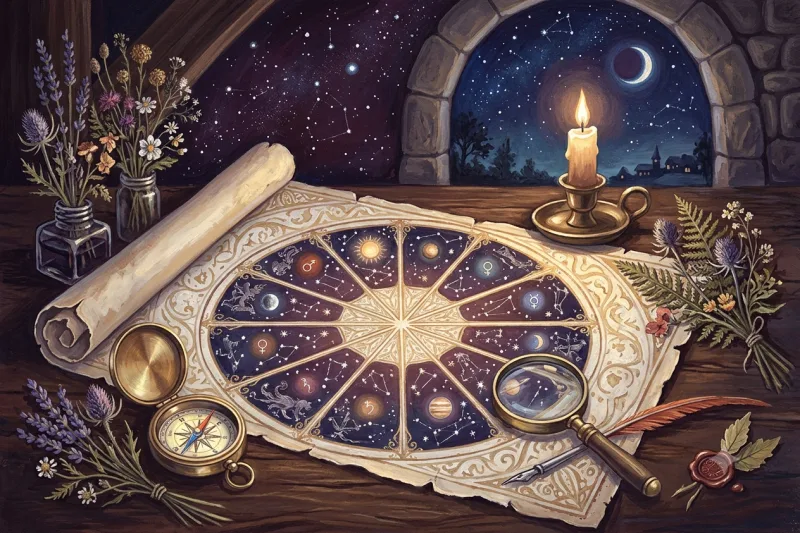
A birth chart is a map of the sky for a particular moment and place. Astrology gives that map a symbolic language; you decide what, if anything, helps you reflect.
Start with three familiar points
In Western astrology, the Sun is often read through purpose and expression, the Moon through feeling and belonging, and the rising sign through how you meet a situation. These are themes to explore rather than measurements of personality.
Planets, signs and houses
A planet supplies a symbolic theme. Its sign describes a style of expression, and its house places that theme in an area of life. Mercury in a sign, for example, can become a question about how you learn or communicate.
What the lines mean
Aspects are angular relationships between planets. A conjunction puts two bodies near the same longitude; a square is close to 90 degrees, a trine to 120 and an opposition to 180. Astrologers interpret these relationships in different ways. Our chart lists five major aspects within a six-degree orb.
The system used here
YogiSoul uses the Western tropical zodiac, twelve equal signs measured from the March equinox. Whole-sign houses place the entire rising sign in the first house and follow the signs from there. Other traditions use different zodiacs and house systems, so charts can differ.
Why birth time matters
The rising sign and houses depend on time and location. If you do not know your birth time, choose that option: the chart uses local noon for an approximate sky map and leaves rising sign and houses blank. The Moon may cross a sign during that day.
Keep room for your own experience
A chart can offer a language for journaling. Its symbolic interpretation is not scientifically established as a way to predict events or define a person. Your choices, relationships and lived experience remain your own.