
- Home
- Teacher training
- Yin yoga
Teach a slower practice
Yin yoga teacher training
Learn to teach a slower class with attention to each student. A Yin course should help you understand the poses, offer choices and guide time in stillness.
Understand the practice before you share it.
- Focus
- Yin poses and individual differences
- Before joining
- Check whether yoga teacher training is required
- Look for
- Anatomy, alternatives and practice teaching
The starting point
There is more to teaching than holding a pose.
Yin training looks closely at slower, floor-based practice. Time in a pose gives a teacher different decisions to make: how to offer an alternative, when to speak and how to help someone leave a position.
Course lengths vary. YinYoga.com describes a 50-hour specialist course, while Yin Therapy describes a 200-hour programme taught in four modules. Read the full outline; the words “Yin training” do not tell you how broad the course is.
Choose a course for your experience.
An existing yoga teacher may want to add Yin classes to their timetable. A regular student may want to understand their practice better. Check which of these the course is designed to support.
If you have not trained to teach before, ask whether this is a complete foundation or further study for teachers. Confirm the requirements of any studio or insurer you hope to work with.
Inside the training
Learn the choices behind a Yin class.
Look for anatomy, practical alternatives and time to teach.
Explore the poses
Study alternatives rather than one fixed shape.
Understand differences
Connect anatomy with practical teaching choices.
Plan the class
Consider holds, transitions and space for quiet.
Teach with feedback
Practise offering choices in clear language.
Read the curriculum checklist
Look for teaching that helps you understand differences between bodies. You should have time to discuss why students may need different positions or supports.
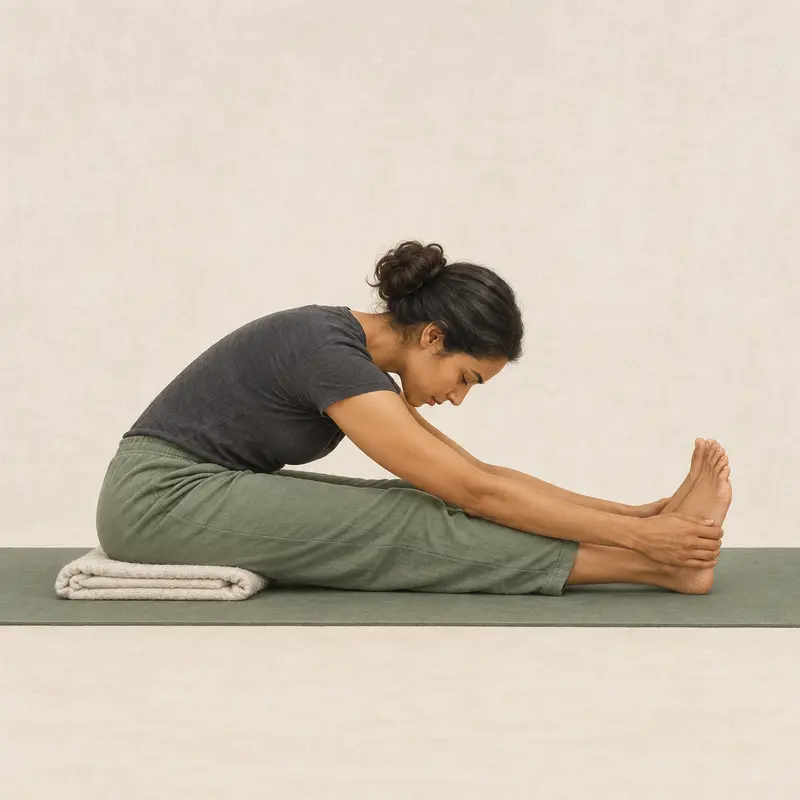
For a practical example, ask how you will learn to offer several versions of a seated fold. The answer should explain the teaching process, rather than promise one position that suits everyone.
Look for guided practice, pose options, class planning and time to teach. Find out how you learn to choose holds and transitions for the people in front of you.
Ask how the training covers props, clear instructions and changes of position. Students need permission to move, choose another option or stop. Longer holds should not become a test of endurance.
Some courses include meridians, chakras or other traditional ideas. These deserve context. A trainer should distinguish traditional teachings from evidence about anatomy and health.
Plan your study
Time, format and fees.
Check the timetable, full costs and help available from teachers.
Questions to ask a school ↓How will you learn to teach longer holds?
Check whether the course includes observed teaching. Leaving space for quiet can feel unfamiliar at first. Feedback on your timing and language is useful alongside learning the poses.
For recorded study, ask how you can raise questions and receive feedback on a class you lead. A library of demonstrations alone does not show how your own teaching develops.
Which extras should you budget for?
Confirm the tuition, manuals, assessments and any required props. For a course taught in modules, check whether the price includes every part.
Find out whether access to recordings expires and whether feedback or reassessment costs extra. Read the cancellation and missed-session rules before paying.
Try a small class before expanding
Give yourself time to practise guiding a short sequence and ask for feedback. Notice whether your instructions make it easy to choose a different option.
Keep notes about questions from students. Bring them to a mentor or trainer rather than filling gaps with claims about healing or guaranteed results.
Your training and certificate
Check what your certificate recognises.
A specialist Yin certificate describes study with that provider. It does not automatically replace foundation yoga teacher training or grant a separate Yoga Alliance teacher credential.
If continuing-education credit matters to you, confirm the course’s current status with the relevant organisation. Check what is required beyond attendance, such as a teaching assignment.
Learn the poses and different ways to practise.
Guide a class with feedback from a trainer.
Before you book
Questions to ask a school.
Use these questions when you speak to the course team.
Is this a full foundation or further study for existing teachers?
How will I learn to adapt poses for different bodies?
Will a trainer observe me teach?
How do you discuss discomfort, choice and leaving a pose?
Which anatomy and traditional subjects are included?
What work must I complete to receive the certificate?
Common questions
What else would you like to know?
Here are a few things to check before joining.
Do I need a 200-hour certificate first?
It depends on the course. Some specialist programmes expect earlier teacher training; others welcome students studying for themselves. Check what the course prepares you to do.
Is a longer course always a better choice?
Hours alone do not tell you the quality or focus. Compare the syllabus, access to teachers and feedback on your own teaching.
Does Yin training cover Restorative yoga too?
Not necessarily. Check the syllabus. Restorative teaching has its own focus on support and rest; a few shared props do not make the training the same.
Find a school
Find a place to learn.
Read about yoga schools and contact the course team to discuss your experience and questions.
Explore yoga schools ↗Further reading
Check current requirements with the provider or relevant organisation before applying.