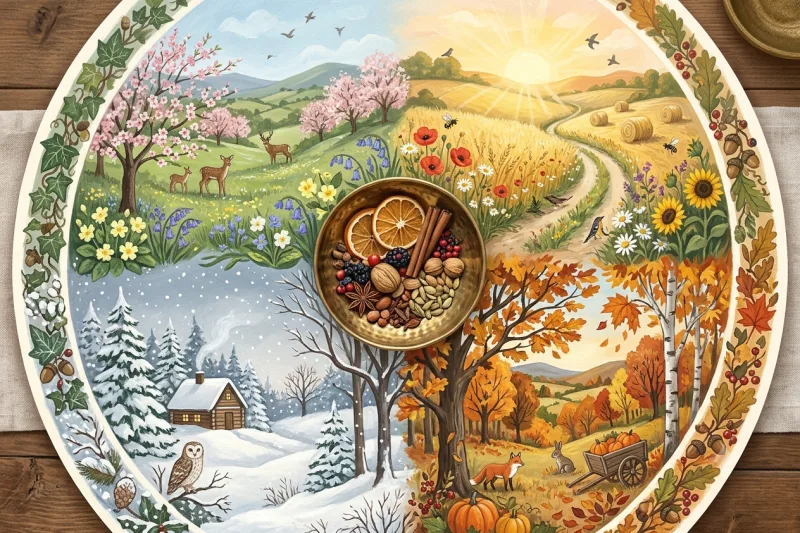
Home Ayurveda Seasonal guide Eat and live with the seasons.
Ayurveda’s ritucharya, or seasonal routine, adjusts food, sleep and movement as the year turns. Here is what to favour in each season.
Late winter & spring
Kapha season
Cool, damp and heavy. Kapha that built up in winter melts in spring, which can show up as colds, congestion and sluggishness.
Favour Light, warm, dry and spiced food; bitter greens; ginger tea; early rising and brisk, energising exercise. Reduce Heavy, oily and very sweet foods, cold drinks, daytime naps.
Summer & early autumn
Pitta season
Hot, bright and intense. Heat builds in the body and mind, and can show up as irritability, skin rashes or acidity.
Favour Cooling, juicy foods — cucumber, melon, coconut, leafy greens; time near water; exercise in the cool of the morning. Reduce Chilli, fried and salty food, alcohol, midday sun and over-competitive effort.
Autumn & early winter
Vata season
Cool, dry, windy and changeable. Vata rises, which can show up as dry skin, restless sleep, worry and irregular digestion.
Favour Warm, cooked, moist food — soups, stews, root vegetables, ghee; warm oil self-massage; a steady daily routine. Reduce Raw and cold food, skipping meals, late nights and too much travel or rushing.
The six traditional seasons
Classical Ayurveda, developed in India, divides the year into six two-month seasons called ritus. Dates are approximate and shift with your climate — notice the weather around you rather than the calendar.
Ritu Roughly Character Focus
Shishira late winter mid-Jan – mid-Mar Cold, dry; strong appetite Warm, nourishing meals; stay warm; oil massage Vasanta spring mid-Mar – mid-May Kapha melts; heaviness, allergies Lighter food, honey, ginger; vigorous exercise Grishma summer mid-May – mid-Jul Hot, dry; energy drops Cooling drinks, sweet fruit; rest in the shade Varsha monsoon mid-Jul – mid-Sep Damp; digestion weakens, vata rises Warm, freshly cooked, easy-to-digest food Sharad autumn mid-Sep – mid-Nov Hot days after rain; pitta peaks Bitter and sweet tastes, ghee; avoid excess heat Hemanta early winter mid-Nov – mid-Jan Cool; strong digestion Hearty, warming meals; regular exercise
Tradition and modern care Ayurveda is a traditional system of medicine. These tools are educational. They are not a diagnosis or treatment — never stop prescribed medication or replace professional care based on them.